
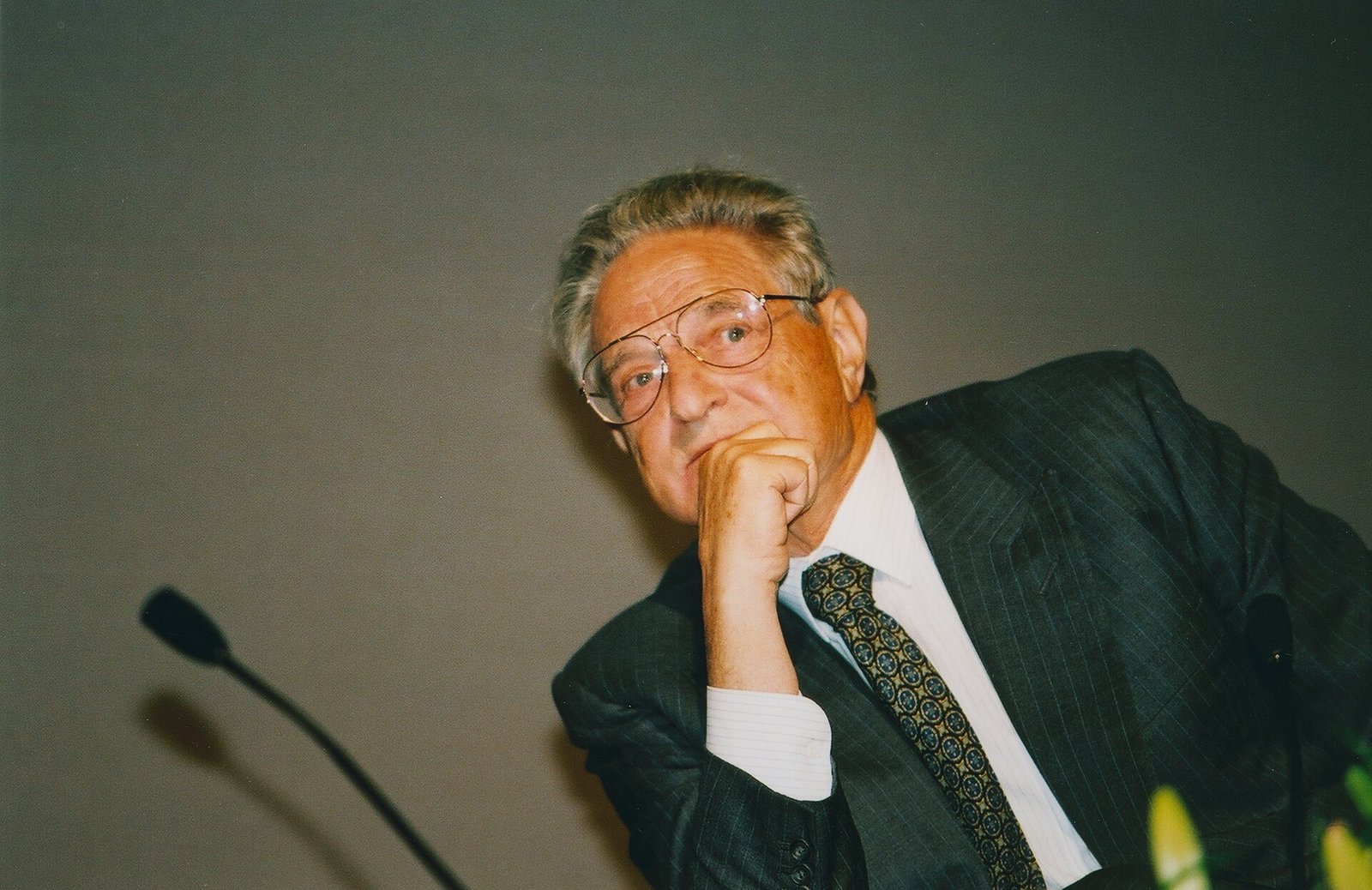
In the summer of 2011, George Soros made a decision that puzzled the hedge fund world: he gave his outside investors their money back. Soros Fund Management, the firm he built into one of the most profitable investment operations in history, would stop running money for clients and manage only his own fortune and that of his foundations.
The move was a response to new rules under the Dodd-Frank Act that would have forced the firm to register with the Securities and Exchange Commission. By converting to a family office, the firm slipped outside that requirement and, in the process, changed what it was. The hedge fund became something quieter.
Thirteen years on, the family office runs about $28 billion, according to its own disclosures, and is the principal asset manager for the Open Society Foundations, the charitable network Soros built to fund work on democracy, rights and independent media. The foundation money flows through three entities, the Open Society Institute, the Foundation to Promote Open Society and the Fund for Policy Reform. The firm employs roughly 200 people across offices in New York, Greenwich, London and Dublin.
The organization is layered by design. At the top sits a strategy function that sets the direction of the firm’s macro bets. Below it, a group of core fund managers runs the firm’s main books. Research and trading teams supply them with ideas and execution, and a risk and back-office layer polices the whole operation, setting limits on how much any single position can cost the firm. The firm invests across public equities, fixed income, currencies and commodities worldwide, alongside private equity and venture capital.
Compensation follows the structure of the old hedge fund, translated inward. Staff are paid a base salary plus a share of fees, roughly 1% of assets under management and 20% of profits, according to a detailed account of the firm’s operations, with the most senior managers able to take home as much as half of the profits they generate. It is a model built to keep the people who make the big bets attached to the outcome.
The approach descends from Soros’s own history. He founded the firm in 1973 with his partner Jim Rogers, running a partnership that would become the Quantum Fund. That fund earned its place in financial lore in 1992, when Soros bet against the British pound in the run-up to “Black Wednesday” and walked away with a profit of roughly a billion dollars, earning him the nickname “the man who broke the Bank of England.”
The returns were not steady. The fund posted spectacular years and punishing ones, losing hundreds of millions on Japanese stocks before the 1987 crash and billions in Russia during the 1998 crisis. Over four decades it averaged roughly 20% a year, a record that placed it among the most profitable firms in the industry. What survived the swings was a discipline: bet big when the conviction is strong, and cut fast when it is not. The firm’s risk controls were the thing that let the conviction survive.
Becoming a family office changed the incentives. With no outside investors to answer to, the firm could hold positions longer and think in terms of decades rather than quarters. It also meant the Open Society Foundations’ money, around $18.3 billion at the end of 2024 and roughly three-quarters of the firm’s assets, now sits inside an operation whose risk appetite is set by one family’s view of the world.
That concentration has consequences. A family office managing a foundation’s endowment answers to different masters than a hedge fund. The delegation the firm is known for, giving managers real authority over their books, is balanced against risk limits that have kept the operation alive through decades of markets that punished many of its peers.
Soros himself has stepped back from day-to-day management, and the firm is run by a professional team rather than the founder’s direct hand. Day-to-day investing is overseen by Dawn Fitzpatrick, a former UBS executive who became chief investment officer in 2017, the latest in a line of outside managers who took the wheel from the founder. Soros retains the title of chairman.
What the firm is now is a paradox: a family office with the footprint of a global asset manager, running a fortune measured in the tens of billions with a staff that would fit on a single floor of a midtown tower. The hedge fund that once made headlines by breaking a central bank now works mostly in silence, but the engine underneath is the same one Soros built: the search for large, lopsided bets, sized so that a wrong call hurts but does not kill, and the patience to hold them. Big convictions, tight limits, and a willingness to wait.



