
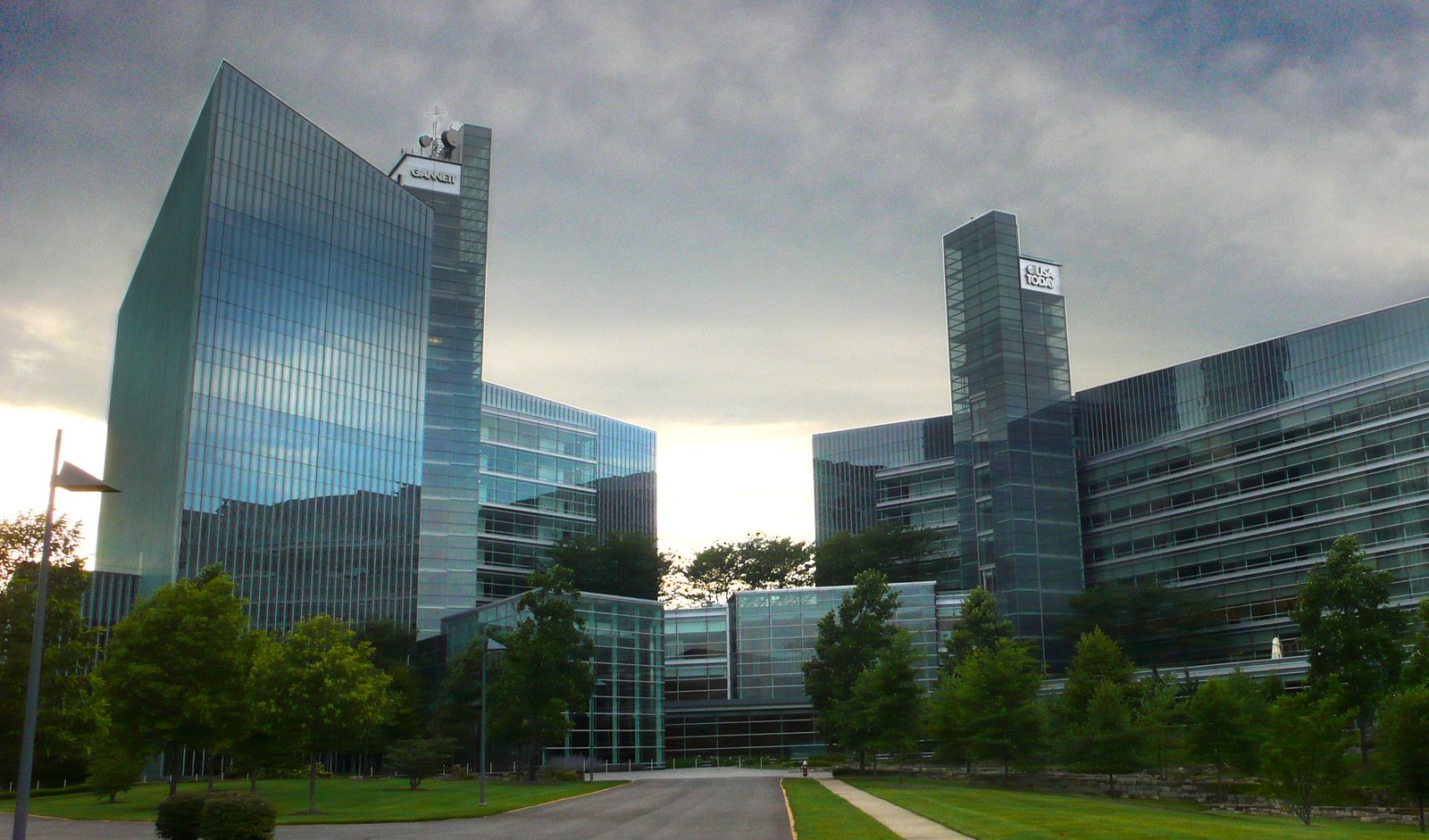
The publisher behind USA Today sued OpenAI on October 8 and asked a court to do what no major copyright plaintiff has yet achieved: order the models themselves destroyed. The demand reaches past damages and goes to whether the systems that absorbed the journalism may keep existing.
USA Today Co., Inc., the company formerly known as Gannett, filed the complaint with 13 affiliated entities in federal court in Manhattan. The plaintiffs own 19 publications, from the flagship USA Today to papers such as The Tennessean, the Arizona Republic and the Milwaukee Journal Sentinel, and they say OpenAI scraped hundreds of thousands of their articles without permission to train its models.
The claim is built on two datasets. The complaint says the plaintiffs’ content makes up more than 160,000 entries in WebText, the corpus OpenAI assembled to train its GPT-2 model, including roughly 83,000 from usatoday.com alone. It also says their content accounts for more than 122 million tokens in C4, a 2019 snapshot of the Common Crawl, with 23 million tokens coming from usatoday.com.
The money sought is substantial but bounded by statute. The plaintiffs are asking for more than 250 million dollars, a figure built from claims of up to 150,000 dollars for each work infringed willfully and up to 25,000 dollars for each time OpenAI stripped the copyright-management information that identifies an owner.
The destruction demand is the sharpest part. The suit asks the court to order the destruction of the GPT models and training sets that incorporate the plaintiffs’ content, and to bar OpenAI from using the articles in the future. Damages would compensate the publishers for the past; the injunction would reach the machine itself.
The publishers argue the infringement was knowing. Because OpenAI trained the models, it “knew or should have known” the systems were copying protected work at scale, the complaint says. The publishers add that OpenAI’s paid licensing deals with other news organizations prove it understands a licence is required, a point that turns the company’s own partnerships against it.
The case joins a crowded docket. OpenAI already faces suits from The New York Times, Ziff Davis and the Canadian Broadcasting Corporation, and has struck licensing agreements with a number of publishers while litigation with the rest proceeds. The USA Today action stands out for its reach: it comes from a chain of local papers, not a single national brand, and it claims a spread of regional reporting that stretches across the country.
What the publishers describe is a two-sided harm. Their work was taken to train a system, and that system now produces summaries and answers that can substitute for a visit to the original story, diverting the traffic their business depends on. The complaint frames the output as the second injury, after the scraping itself.
The local angle carries weight. Many of the papers in the case are regional titles whose archives represent decades of coverage that a national outlet could never reproduce. The publishers are arguing that this material was lifted at scale, and that the lifting happened without regard for the people who paid reporters to produce it.
The filing arrives as publishers have split into two camps. Some have licensed their archives to OpenAI and its rivals, taking a recurring fee for material the models would otherwise use anyway. Others, like the USA Today chain, have chosen court. The division runs through the industry, and it turns each new suit into a test of which side read the future correctly.
The complaint asks for a jury trial, which would put the question of willfulness to ordinary citizens rather than a judge schooled in the nuances of fair use. The publishers want the verdict on intent rendered by people who buy newspapers.
OpenAI has defended its use of public text as lawful and has framed its agreements with publishers as a good-faith path forward. A jury, the plaintiffs insist, should decide whether the copying was deliberate and what it cost.
The remedy question is the one the case will test hardest. Courts routinely award damages for infringement, but ordering the destruction of a trained model is a different matter, one that touches how far back a remedy can reach when the offending material has been compressed into weights that no one can fully audit.
For the newspaper industry, the suit is the latest attempt to put a price on what its archives are worth to the companies building AI. For OpenAI, it is one more claim that the data behind its models was never free.
The unresolved question is whether a court will accept the premise that a model can be unwound. Damages can be calculated; a trained network cannot be audited article by article. If a judge ever grants the destruction order, it will settle a question the industry has been circling for three years: whether the systems built on scraped text are property that can be confiscated or facts that must be lived with.



