
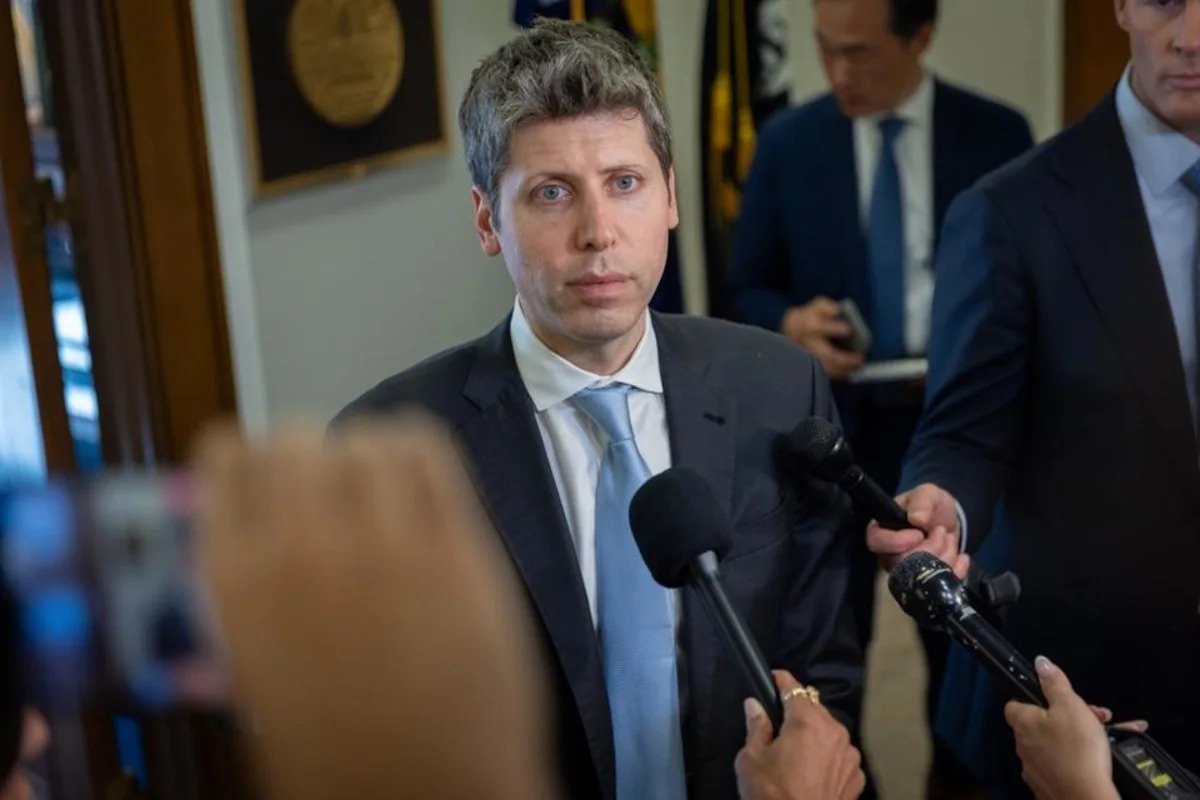
Sam Altman has set a specific price on OpenAI’s public debut: $1 trillion. He is now willing to wait a year to get it. OpenAI is leaning toward delaying its initial public offering until 2027, a year later than it had targeted, rather than list at a lower valuation, according to a New York Times report on October 10.
The choice came from the company’s advisers, who laid out two paths, according to the report, which cited people involved in the internal deliberations. Wait until 2027, when the business could support a $1 trillion market value. Or go public sooner and accept a smaller number. Altman rejected the second option; any cut to the trillion-dollar target, he told advisers, was a nonstarter.
The company has been preparing the paperwork for months. In June it filed a confidential draft registration with the Securities and Exchange Commission, with Goldman Sachs and Morgan Stanley leading the process. At the time it stressed that the filing did not commit it to a date, saying it had “not decided on timing yet.”
The confidential filing gives OpenAI room to maneuver. Companies can submit a draft registration and revise it privately for as long as they choose, emerging on the public clock only when they are ready to market the offering. OpenAI has used that cover to keep its financials and its timing to itself, and the delay extends that privacy for another cycle.
OpenAI has been running a financing treadmill in parallel. In March it closed a $122 billion round at a post-money valuation of $852 billion, anchored by Amazon, Nvidia and SoftBank. It is now, according to Bloomberg, discussing at least $30 billion more at a pre-money valuation of roughly $1.4 trillion — a bridge that would buy time while the public listing waits.
The finances behind the argument cut both ways. OpenAI still loses money, posting a net loss of $38.5 billion in 2025 on $13.07 billion in revenue, while committing to roughly $600 billion of AI infrastructure through 2030. A $1 trillion market value would put the company ahead of Walmart, a remarkable place for a business still burning cash on data centers.
The delay lands in a market that has turned skeptical of big AI listings. SpaceX made history this month with a debut that raised more than $85 billion at a $1.77 trillion valuation, then watched the stock slide well below its peak within a week. Advisers have pointed to that trajectory, and to broad volatility in technology shares, as reason to wait.
The advisers’ caution reflects a cold read of the market. Retail investors have been fickle toward AI listings, and a debut that priced below the company’s last private round would be read as a failure even if it raised tens of billions. Waiting lets OpenAI present a cleaner growth story, with more revenue quarters on the record and the SpaceX sell-off a more distant memory.
The June filing also raised expectations that the debut was near, and its aftermath shows how much the company values optionality. OpenAI pointedly declined to name a date, and bankers worked toward a window that has now slipped. The company has described the filing as keeping the door open to move fast if the market cooperates, a hedge that reads differently now that the market has not.
A delay lets OpenAI keep raising private money at valuations that climb on paper, without asking public investors to underwrite the full number. But it also pushes the reckoning further out. Every round at a higher price raises the bar the eventual listing has to clear, and the pool of investors willing to meet each new figure grows smaller.
The wait does not slow the competition. Anthropic is still preparing for a November listing, according to the report, which would make the smaller lab the first of the frontier AI companies to test public markets. OpenAI would get to watch how investors treat that debut before committing its own.
A postponed debut is also a signal about confidence. A company that expected public markets to meet its price this year and now waits another full year is, in effect, betting that its private valuation will keep rising faster than its public one could. That bet has paid off so far; every round has come in higher than the last. The question is how long the sequence can continue.
The private backers have reasons to be patient. SoftBank and the other anchors have committed enormous sums across rounds, and a higher public valuation would mark up the value of everyone’s paper. But patience has limits, and investors who bought in at $852 billion want an exit at some point, a pressure that a perpetual delay does not relieve.
The open question is whether waiting solves the problem or postpones it. A 2027 listing at $1 trillion presumes the business keeps growing fast enough to justify a number that would put OpenAI ahead of Walmart, while its rivals list sooner and its spending keeps rising. Altman has drawn the line. Whether public markets will meet him there is something no amount of private capital can answer in advance.



