
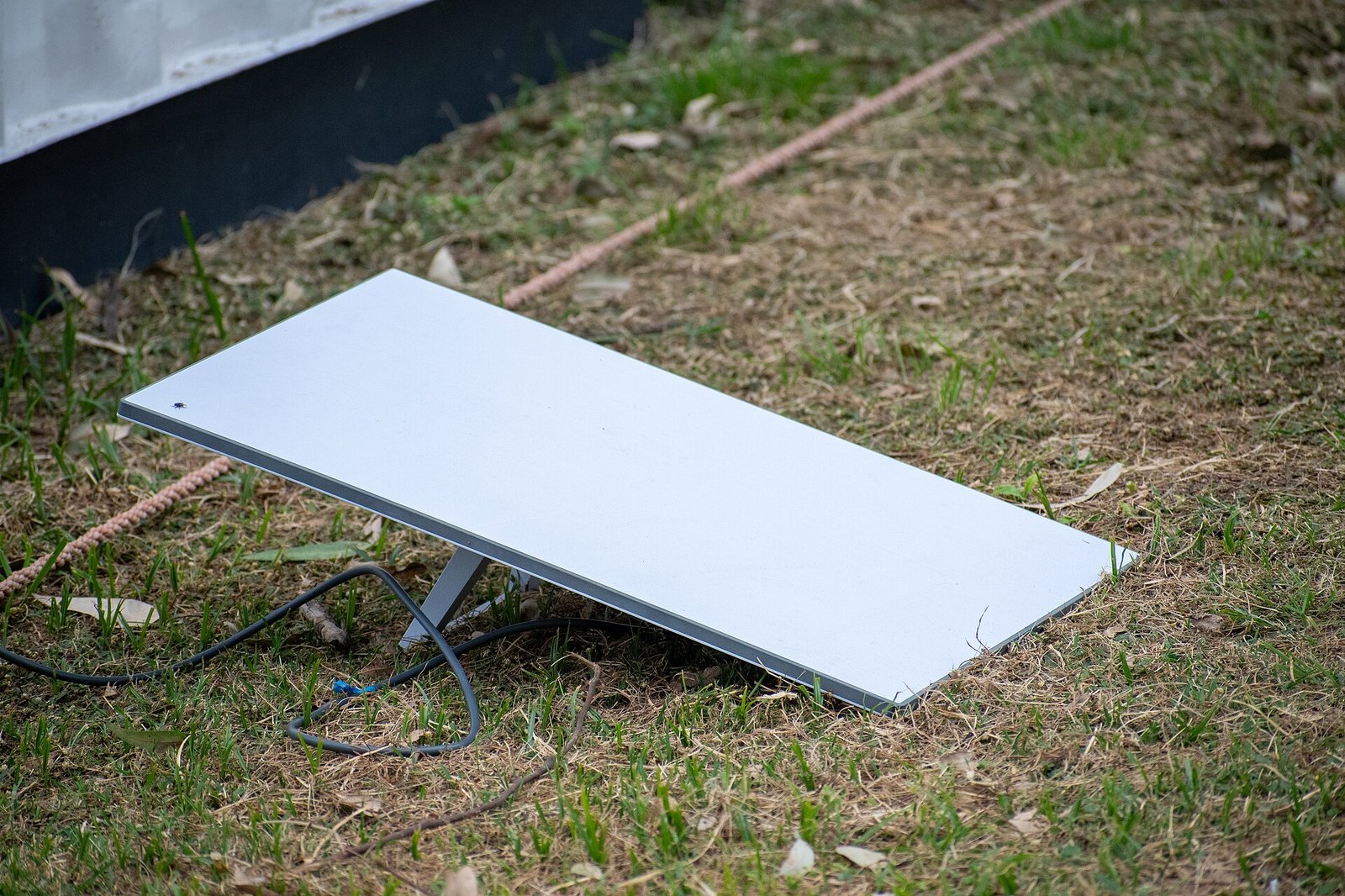
For more than two years, Starlink has reached Venezuelans the way many things reach Venezuelans: through informal channels, at prices set outside the rules. On October 9, the country’s telecommunications regulator moved that business onto the books, granting SpaceX’s local entity seven general concessions to operate the satellite-internet service formally across the entire country.
The decision came at an ordinary session of the board of Conatel, Venezuela’s National Telecommunications Commission. The regulator handed the concessions to Spacex VZ S.C.A., the corporate vehicle SpaceX created for the market, along with authorization to use the Ku band. In a statement, Conatel said the measure authorizes Starlink’s service throughout the national territory, “for a formal operation with domicile and fiscalization in the country.”
The route to a license ran through a disaster. On June 24, a double earthquake struck the state of La Guaira, severing much of the region’s land-based phone and internet infrastructure. Conatel issued temporary permits so Starlink could test new equipment during the emergency, and the company distributed more than 1,600 connectivity kits to rescue crews, medical staff and humanitarian groups, according to the U.S. Embassy in Caracas.
Those temporary permits did more than keep responders online. They let Starlink test direct-to-device messaging, carrying text messages through the satellite network among the country’s three mobile operators, and to run the Ku band with relaxed power-flux-density limits, Conatel said. The trials were judged a success, and after working sessions with the regulator the company filed a formal application.
The technical details matter more than they sound. Ku-band authorization gives Starlink a defined slice of spectrum to serve a dense user base, and the relaxed equivalent-power-flux-density limits the regulator allowed during the emergency effectively loosened a ceiling that would otherwise constrain how many terminals can operate in one area. Without that flexibility, a satellite service aimed at a mass market has trouble scaling past a niche.
The approval carries obligations along with the rights. Starlink must maintain a local address and submit to Venezuelan regulatory oversight. What it gains is the legal right to sell satellite internet anywhere in the country, a change from the current state of affairs, in which terminals have largely arrived through gray-market channels.
The scale of the pre-existing demand is the striking part. Figures from APNIC, the regional internet address registry, put Starlink at roughly 3.6 percent of Venezuela’s internet users, a sizable installed base built before the service had formal permission to exist. That informal footprint is part of what the regulator now wants to absorb into a licensed framework.
The country’s connectivity problems explain the appetite. Venezuela’s terrestrial networks are slow, expensive and patchy, the legacy of years of underinvestment and state control over the sector. A satellite service that can be switched on with a kit and a subscription skips around a grid that has failed large parts of the population, which is why demand grew on its own, ahead of any official approval.
For SpaceX, the license turns a tolerated presence into a recognized business. Venezuela joins a long list of markets where the company has sought legal standing, and the direct-to-device test that preceded the license feeds into a technology the company has positioned as its next major growth line: connecting ordinary phones to satellites without a dedicated terminal.
The government’s decision is a calculated opening. Venezuela’s authorities have long treated foreign connectivity with suspicion, and Musk is a polarizing figure in a country whose leadership has alternated between courting him and condemning him. Formalizing Starlink brings foreign exchange, jobs tied to installation and support, and a working network into the economy. It also cedes a slice of national connectivity to an American company run by the world’s richest man.
The timing fits a broader pattern. Starlink has spent recent years converting informal footholds into licensed operations across Latin America, and Venezuela, one of the region’s most disconnected countries, has long been an obvious target. The question was never whether Venezuelans would use the service; it was whether the state would let the market, and the money, stay onshore.
What the license does not settle is pricing and the fate of the existing gray-market terminals. The roughly 3.6 percent of users already on the network arrived outside domestic terms, and it is unclear whether they will be folded into the new framework or left where they are. Whether Starlink can price the service within reach of ordinary Venezuelan wages, in an economy where hard currency is scarce, will decide whether the paperwork becomes a real national rollout or a legal status for a service that was already there.
The clearest signal of intent may be the simplest. Venezuela chose to legalize Starlink rather than block it, and the regulator framed the move as the result of a service that proved itself when the ground network collapsed in June. A technology that worked during the emergency is now being asked to work as a permanent part of the network it was sent in to patch.



