
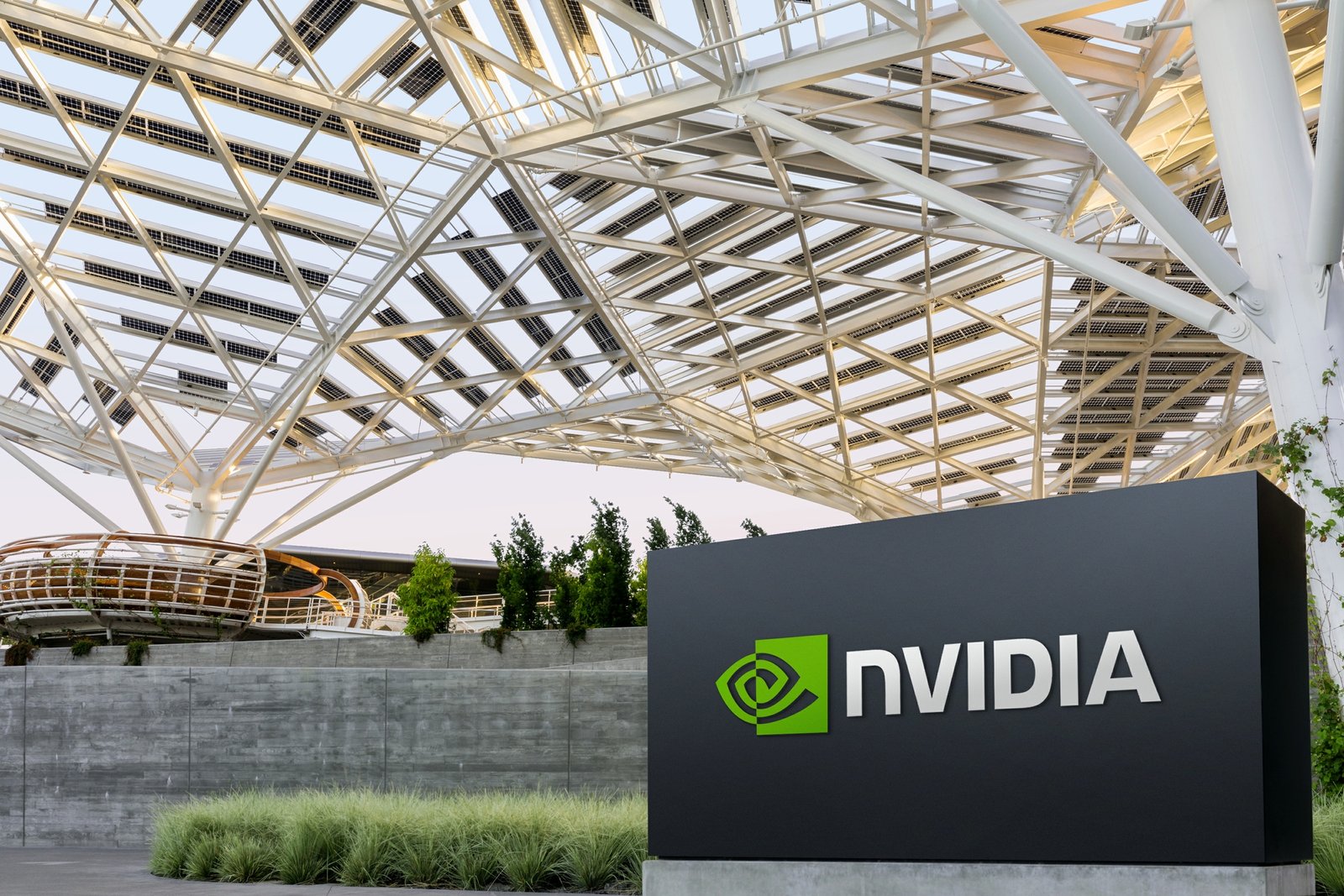
Nvidia is spending in Europe the way a company spends when it wants to be part of the plumbing rather than a supplier standing at the edge of it.
On Tuesday the chip maker said it will provide computing power valued at $250 million over five years to support research in Britain into the safety and security of agentic AI, the class of systems built to act on their own rather than answer a single question. Part of the commitment goes to named programs, including BOLD, SOFAIR and Imperial College London, working on foundation models for agents and on robotics safety.
The gift is compute rather than cash, and the distinction matters. Nvidia is handing researchers time on machines it builds, which keeps the work inside its software stack and produces benchmarks, tooling and engineers trained on its hardware. The company has treated research access as a distribution channel since the early years of its deep-learning business, and the British pledge is best read as research backing rather than as a customer order, analysts said.
The same day, at a stop in Paris, Nvidia added four French companies to its European portfolio: Doctolib, Genesis AI, Pigment and Entalpic. The stakes are minority positions and the amounts were not disclosed. Doctolib confirmed a minority investment in the healthcare platform, and Genesis AI confirmed Nvidia as a strategic investor.
The four cover the ground Nvidia needs covered. Doctolib builds agents that handle health appointments and patient follow-up. Genesis AI develops general-purpose robots and the foundation models behind them. Pigment sells planning software that businesses use to forecast finance, sales and workforce needs. Entalpic works on advanced materials at the atomic scale, with an emphasis on surfaces and interfaces for semiconductor manufacturing.
Buying into the customers who create demand for accelerated computing is a different move from buying into the hardware supply chain, and it is the one Nvidia is making. Each of these companies is a potential buyer of chips at scale, and each gives the vendor a reference case in an industry where European buyers weigh sovereignty alongside performance.
Jensen Huang, Nvidia’s chief executive, framed the trip as the opening leg of a European tour. He said the company will announce European investments worth about $2 billion over the coming week, and that it has invested $8 billion in Europe over the past year. Nvidia puts its cumulative commitments to the region’s technology ecosystem at close to $10 billion. GTC Berlin, scheduled for Oct. 20 to 22, is expected to carry the operational details.
His prescription for the continent is open-source models. Mr. Huang said they are cheaper, easier to customize and easier to maintain when a government wants to keep control of its own technology stack. He also delivered a warning rather than a compliment: Europe needs to join the race.
That argument fits the politics of the moment. European governments have spent two years debating how much of their computing, models and data should sit outside the United States and China, and the answer has generally involved buying more accelerators. A vendor that supplies the hardware and then funds the research, the startups and the local models is offering to be the common layer underneath all of it.
For the startups, the benefits are concrete. Compute is the largest line item for a company training models or running inference at volume, and an investor who pays in access to it can be more useful than a same-sized check from a financial buyer. A stake from Nvidia also functions as a credential with enterprise customers and with the next round of investors.
For Nvidia, the returns are less direct. Research commitments are not revenue, and minority stakes in private companies do not show up as orders in the data center segment that drives the stock. What the spending buys is adoption, goodwill and a position in procurement decisions that are increasingly made by governments rather than by engineering teams alone.
The open-source advice carries its own tension. Cheap, customizable models that anyone can run still require accelerators to run on, and the hardware bill rises with the number of models a country decides to host. Sovereignty in that arrangement means a national budget directed at the vendor giving the advice, which is why European officials have been receptive to the message without treating it as disinterested.
Competitors are moving on the same ground. Cloud providers are offering sovereign compute arrangements inside European borders, and rivals in the accelerator market are courting the same research communities with grants and access programs. The difference Nvidia has is the installed base and the software layer that most of the field already writes against.
The open questions are the ones a tour does not settle. How much of the promised $2 billion will be announced as equity rather than as collaborations and compute grants. Whether the British research program produces safety work that constrains the products Nvidia sells, or produces results that make agent systems easier to deploy. And whether a company that earns its margin on scarcity can keep telling its customers to build with free, interchangeable models.



