
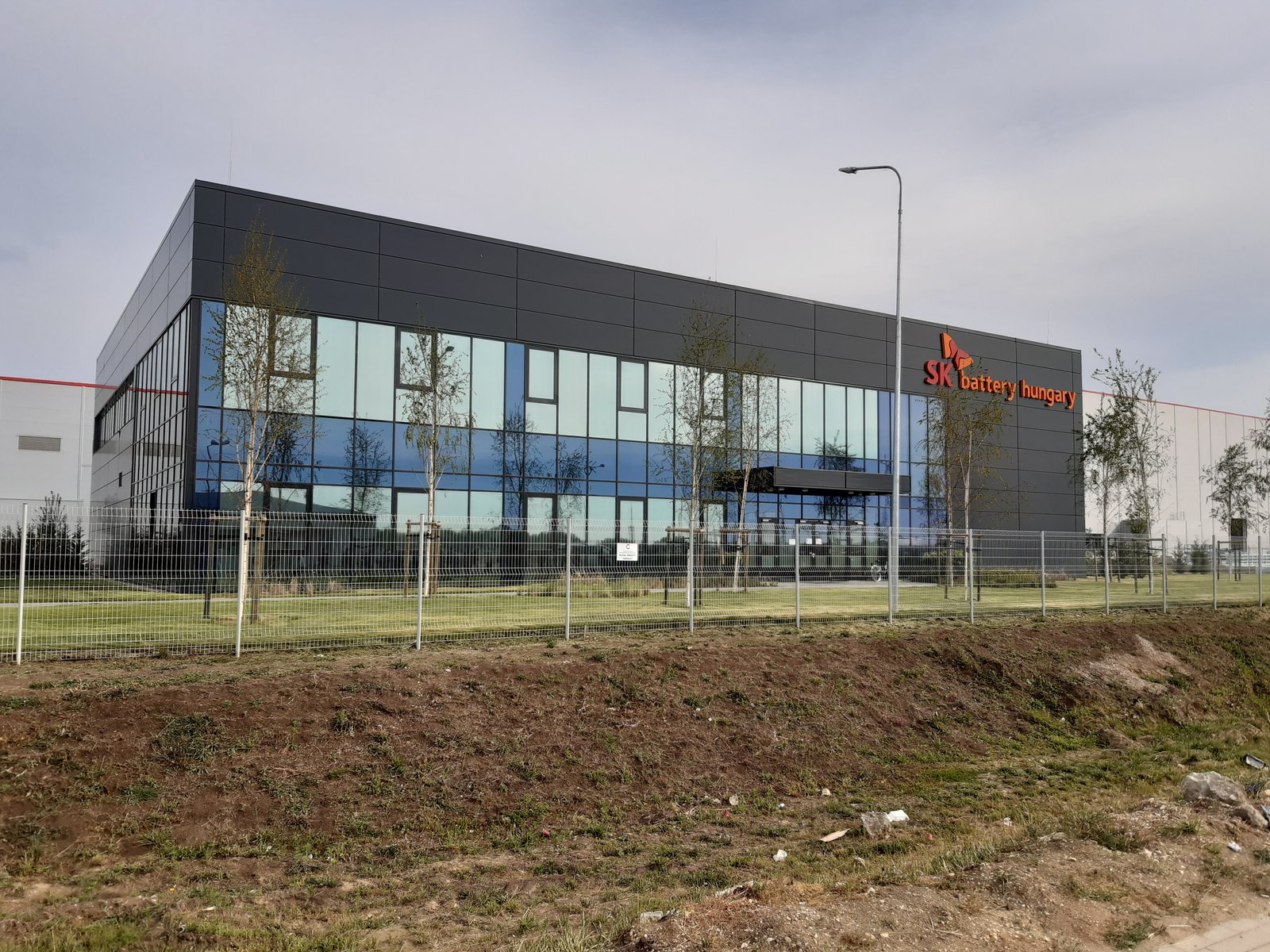
Chey Tae-won, the chairman of SK Group, agreed to sell 972,493 shares of the conglomerate’s holding company, SK Inc, to an investment fund managed by the family office of Dell Technologies founder Michael Dell, in a transaction that will raise 544 billion won, or about $406 million, according to a regulatory filing released on Wednesday.
The filing with South Korea’s Financial Supervisory Service put the price at 559,387 won a share, an 11.6% premium to SK Inc’s closing level of 501,000 won on Oct. 13. The buyer is DFO Public Investments LP, a fund managed by DFO Management LLC, which oversees the Dell family’s assets. The shares amount to 1.34% of SK Inc, and the trade is scheduled to settle on Nov. 2 through an after-hours block sale.
The buyer’s identity is the part drawing attention in Seoul. It is the first time money has moved into the Korean market under the DFO name. The family office invests permanent capital over long horizons: it acquired the North American container maker Ring Container Technologies in 2017 and still operates it, and it has held positions in PVH, the parent of Calvin Klein, and Dine Brands for more than 15 years each, according to securities filings. Its predecessor, MSD Capital, provided financing when Michael Dell took his computer company private in 2013, and Dell and DFO hold roughly 40% of Dell Technologies today.
For Chey, the sale is one leg of a bill. On the same terms, he will raise another 400 billion won by entering a price return swap with Korea Investment & Securities covering 681,431 SK Inc shares, or 0.94% of the company, at a reference price of 587,000 won. Under that structure the broker takes the voting rights and dividends for three years and settles the difference with Chey afterward, which leaves him with exposure to the share price rather than a clean exit. Together the two transactions produce 944 billion won, a figure chosen to match the property division the Seoul High Court ordered him to pay his former wife, Roh Soh-yeong, in July.
Chey has appealed that ruling to the Supreme Court, and the timeline of the case has been long. The Supreme Court finalized the divorce and his 2 billion won alimony payment in October 2025 while sending the asset division back to the high court for review. Roh is a director of Art Center Nabi in Seoul.
For the company, the chairman’s private transaction carries a public question. SK Inc sits atop a group whose most valuable asset is SK hynix, the memory chip maker that supplies high-bandwidth memory and server memory to Nvidia. Nvidia turns that memory into the accelerators that Dell Technologies packages into AI servers sold to data-center operators. The chain runs from Chey’s conglomerate through the most valuable company in the semiconductor industry to the buyer of his shares.
That chain is why the market read the filing as more than a payment. SK hynix participated as a key partner at a Dell Technologies forum in Seoul in August, and Chey and Michael Dell are both regulars at the World Economic Forum in Davos. Analysts said a family office taking a premium-priced stake in a Korean holding company could signal a strategic relationship rather than a financial trade, though nothing in the filing commits the two sides to anything beyond a share purchase. An SK official said, “Nothing is known about the chairman’s private transaction.”
Executives at Korean conglomerates seldom sell down stakes in the holding company that anchors their control. Chey’s holding had already been the subject of the divorce litigation partly because of how much of his wealth is tied up in SK Inc shares, whose value moves with the memory cycle rather than with his own decisions. Selling at a premium to a foreign family office converts paper into cash without forcing a discounted block sale into the market, and it hands a friendly, long-duration holder a position that could otherwise have gone to an activist or a short-term fund.
What the sale does not do is settle the bill. The Seoul High Court’s order of 944 billion won is under appeal, and if the Supreme Court raises the amount, Chey will need another round of asset sales or borrowing against stakes he would rather keep. SK Inc shares have risen with the AI memory trade, which cuts both ways for him: a higher price means fewer shares have to be sold, and a higher price means his ex-wife’s claim is worth more.
The settlement date is Nov. 2, and the appeal has no fixed timetable. Dell’s fund has made no statement about its intentions, and SK has said the transaction is the chairman’s personal matter. Both companies will report earnings within weeks, in a quarter when the price of memory is the single largest variable in their businesses. The chairman has paid the first installment. Whether it is the last one depends on a court that has already changed its mind once.



