
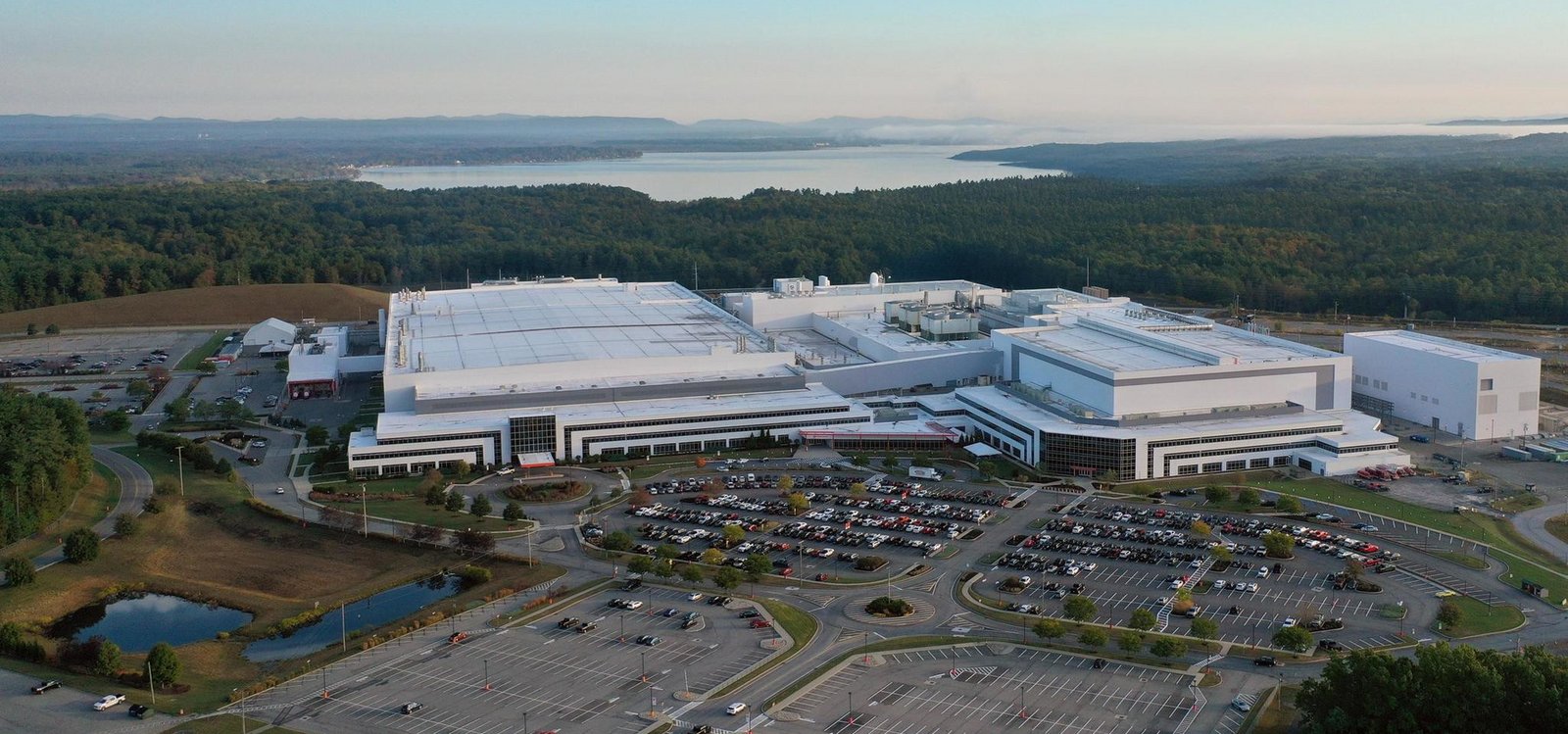
MALTA, N.Y. — This town north of Albany has been making semiconductors for more than a decade. On Wednesday it became the site of an arrangement that has rarely been tried: a foreign government puts up the money, an American company builds and runs the plants, and Washington takes a slice of the owner.
GlobalFoundries said it has been selected as technology provider and operator for two new fabs at its Malta campus, funded with up to $21 billion from Japan under the trade and investment agreement reached between Tokyo and the Trump administration.
An initial investment of about $10 billion accelerates construction of a new 300-millimeter fab, expected to come online in 2029. A second sum of roughly the same size would fund a twin plant. Each is expected to add about 900,000 wafers of annual capacity once fully operational.
The company said the two plants would bring about 27,000 construction and ecosystem jobs and more than 1,000 high-skilled manufacturing jobs to New York’s Capital Region. Groundbreaking on the first fab is expected later this year.
“It is a bold new initiative for semiconductor manufacturing,” said Tim Breen, GlobalFoundries’ chief executive, in a statement. “Fabs of this scale require more than capital. They require differentiated technology, operational excellence and a proven ability to execute.”
In a separate agreement, the U.S. Department of Commerce is to receive equity in GlobalFoundries of about four percent, lifting the government’s total holding to roughly seven percent. Commerce Secretary Howard Lutnick called the deal a transformational American industrial asset.
GlobalFoundries also amended its existing CHIPS and Science Act award with the department, reallocating $955 million to accelerate investment in silicon photonics, silicon-germanium and advanced packaging at its sites in Malta and Burlington, Vermont. Apple, Renesas, General Motors and Cirrus Logic were named as among the first customers for that work.
The structure is unusual in its parts rather than as a whole. The CHIPS Act sent grants to foundries and asked for commitments on jobs and capacity. This time the money arrives from an allied government, the U.S. government takes a shareholder’s position, and the company contributes technology and labor rather than equity.
Washington has taken stakes in several chip makers in recent years, a shift from subsidy to ownership that has drawn objections from some investors and applause from politicians who argue the public should share in the upside. The four percent in GlobalFoundries takes the government’s combined holding to a level that gives it a voice in decisions without control.
The company is not new to public money. GlobalFoundries received an award of up to $1.5 billion in direct funding under the CHIPS and Science Act in 2024 for its New York expansion and its Vermont facility, and it began the Malta site’s expansion on the strength of that commitment. The amended award announced Wednesday redirects part of that package toward photonics and packaging rather than adding to it.
For GlobalFoundries, the appeal is straightforward. The company specializes in the mature and specialty nodes that run cars, factories and communications equipment, a market with slower growth and thinner margins than the leading-edge logic made by Taiwan Semiconductor Manufacturing Co. and Samsung. Building capacity for those chips has been hard to justify on returns alone.
Japan’s interest runs in two directions. Tokyo wants a foothold in U.S. manufacturing for the chips its automakers and industrial companies buy, and it wants a hedge against the concentration of supply in Taiwan. Japan has been funding its own foundry venture, Rapidus, aimed at advanced logic, and the GlobalFoundries commitment addresses a different layer of the market.
The competitive question is what happens to pricing. Mature-node capacity has been the softest part of the semiconductor market, where Chinese foundries such as SMIC and Hua Hong have added aggressively and where price competition has been persistent. Two more fabs making nearly two million wafers a year between them enter a market that has not always absorbed new supply smoothly.
Analysts who follow the sector say the politics of the deal may matter more than the tonnage. A plant that is jointly owned by two governments is harder to close than a commercial one, and harder to cancel when demand dips. That cuts both ways for the customer deciding whether to sign a long-term supply agreement.
In Washington and Tokyo the announcement will be read as evidence that the trade agreement produces tangible factories rather than communiques, a claim both governments want to make before voters and allies.
The open questions are about execution. Fabs of this scale need thousands of skilled workers at a moment when every chip project in the country is hiring from the same small pool, and New York’s incentive programs are competing with packages offered in Ohio, Arizona and Texas.
Then there is the money itself. Japan is providing capital with an expectation of output, the U.S. government holds a stake with an expectation of return, and GlobalFoundries carries the operating risk on assets whose value depends on demand for chips that do not generate headlines.
Two fabs are now scheduled for a site that already runs around the clock. Whether the customers arrive on the timetable the partners have published will be decided long after the groundbreaking photographs are taken.



