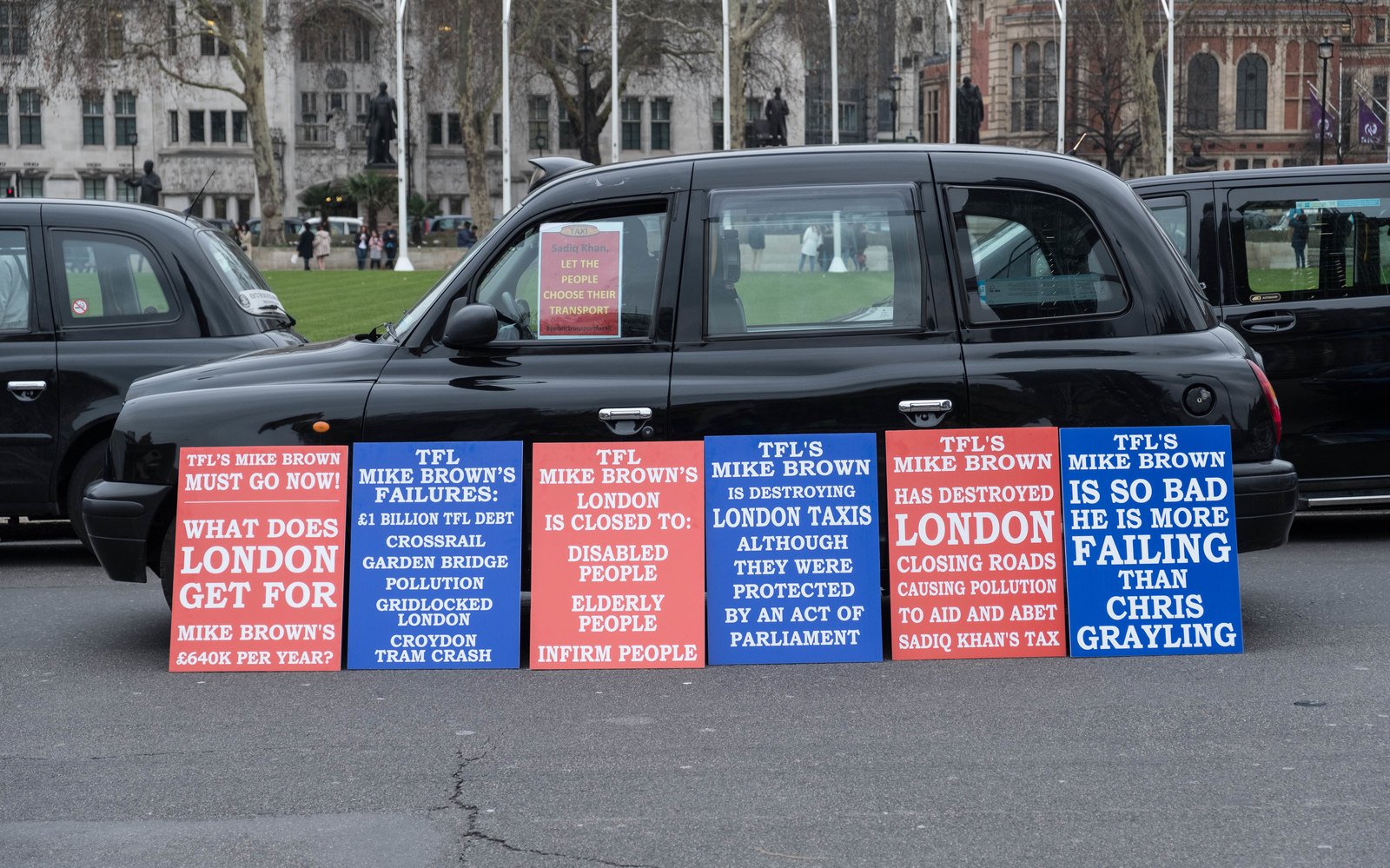
About fifteen people gathered outside the London office of Wayve on October 17, holding signs and asking for a stop to road testing of driverless taxis. The group cited safety, congestion and the jobs of the drivers who currently sit where the software would be.
Fifteen is not a large crowd. It is, however, the first organized opposition to a technology that London’s regulators have spent two years preparing to admit, and the arguments the group made are the ones that will be repeated in every city where the vehicles arrive.
The union representing British drivers said automated taxis could cost jobs among taxi and private hire drivers, a workforce that numbers in the tens of thousands in London alone. That framing turns a debate about road safety into a debate about labor, which is the version that tends to produce legislation.
Wayve, founded in Cambridge in 2017, has built its reputation on a different approach from most of its competitors. Rather than programming rules for every situation, the company trains a model on driving data and lets it learn behavior, an approach that its engineers have argued generalizes better to streets the system has never seen. SoftBank led a round of more than a billion dollars in 2024, with Nvidia and Microsoft participating, and the company has been testing on London streets with safety drivers for several years.
The regulatory ground shifted in 2024, when Parliament passed legislation creating a licensing framework for automated vehicles. The framework separates the vehicle from the operator, requires authorization before a vehicle can drive without a person monitoring it, and puts the responsibility for incidents on the licensed operator rather than on the person in the seat. That structure was designed to make a commercial service possible, and it also gives regulators a lever that did not exist before: an operator can lose its license.
For the protesters, the framework answers the wrong question. It asks whether the vehicles are safe enough to be allowed, not whether the city wants them, and it does not address what happens to the people whose income depends on driving. The consultation process that accompanied the legislation was about rules, not about whether the service should exist.
The congestion argument is the one that will be hardest to settle. A driverless taxi that circulates empty while waiting for a fare adds vehicle miles, and a fleet that is cheap enough to use for short trips may pull passengers off buses and trains. The counterargument is that a shared fleet replaces private cars that spend most of the day parked, and that a vehicle which can be repositioned by software can be routed away from the most crowded streets. Both effects are plausible, and neither has been measured at scale in a city with London’s road network.
Safety claims are similarly difficult to compare. Companies report disengagement data, the number of times a human had to intervene, but the definitions differ between operators and the miles driven in each category are not always disclosed. A vehicle that drives slowly and rarely disengages looks better on the metric than one that drives at the speed of traffic. Regulators in the United States have started to require more standardized reporting for exactly this reason.
The employment question has a precedent that the unions know well. London’s black cab drivers spent years arguing that private hire apps were taking their work, and the legal fights that followed changed the market without stopping it. The difference this time is that the displacement would not be a shift in how drivers find passengers but the removal of the driver, and there is no adjacent role in the vehicle for a person to move into.
The companies argue that the transition will be gradual and that remote supervision creates different jobs. That is true of the first phase, when every vehicle has someone watching a screen. It is less true of the phase the business model depends on, when one supervisor oversees a fleet and the labor content of a trip falls toward the cost of cleaning and charging the car.
For Wayve, the protest is a manageable problem as long as it stays small, and a serious one if it becomes a template. The company’s expansion depends on cities granting permission, and permission depends on local politics as much as on technical readiness. A few dozen people outside an office do not change a licensing decision. A council member who hears from drivers before an election might.
The timing matters too. London’s transport authority has been cautious about automated vehicles, and the first services are likely to run on fixed routes at low speeds with a safety driver present, which gives the public time to see the vehicles before any of the harder questions are answered. That gradual approach was designed to build acceptance. It also gives opponents a series of future decisions to contest, each with a specific date attached.
What the protest did not produce was a technical objection that the companies have to answer. The signs were about jobs and about the kind of city people want, which are questions that engineers cannot settle with a test report. The vehicles will keep driving, and the argument will move to the hearings where the licenses are actually granted.