The orders came to $12.05 billion in the three months through September, 40 percent more than a year earlier and the largest quarterly intake in the company’s history. The revenue those orders will eventually produce came to $9.70 billion, up 14 percent. Between those two growth rates sits the central fact of this equipment cycle: demand is arriving roughly three times faster than the capacity to fill it.
ABB, the Swiss engineering group, reported the figures on October 20 and attributed most of the increase to electrical equipment for data centers and power utilities. Orders in the data center segment more than doubled. The electrification business, which makes switchgear, distribution boards and the equipment that connects a building to a substation, booked 70 percent more than it did a year earlier.
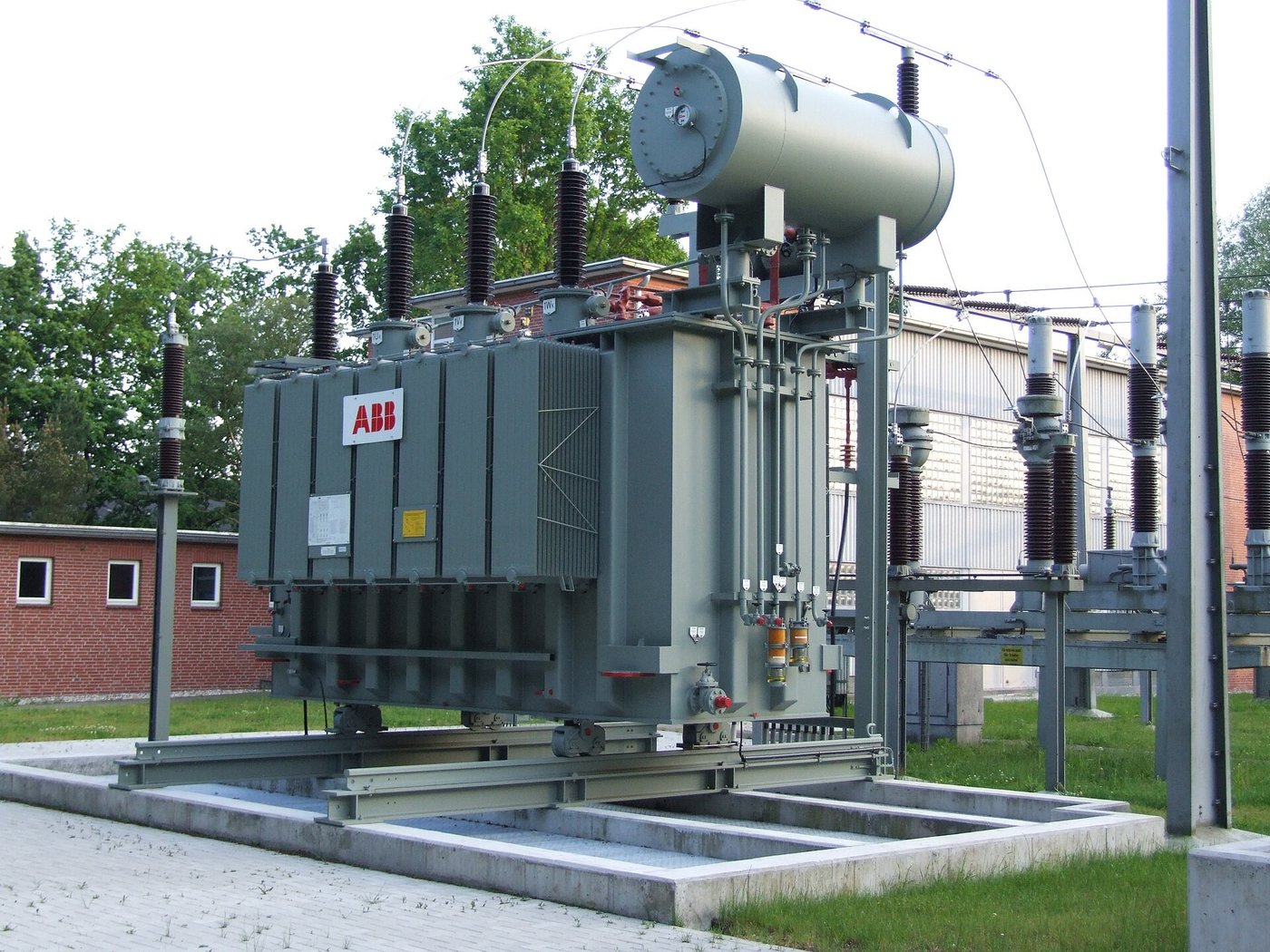
That division is where the arithmetic of artificial intelligence becomes physical. A model trained in Texas or Ireland needs transformers, busways, cooling loops and backup power before it needs anything a software company sells. The companies that make those parts are booked earlier in the cycle than the companies that rent out the chips, which is why their order books have become a leading indicator for spending that has not yet been billed.
The profit picture improved alongside the sales. Operational earnings before interest, taxes and amortization reached $2.03 billion, a margin of 20.8 percent, and return on capital employed rose to 29.9 percent. Chief Executive Morten Wierod described the quarter as one of record intake with stronger operational performance, and pointed to the company’s push into direct current technology as the reason the order growth might hold.
Direct current is the technical bet underneath that claim. Data center halls have historically distributed alternating current and converted it repeatedly, losing energy at each step. Newer designs distribute direct current from the substation to the rack, which cuts conversion losses and, in ABB’s telling, allows denser racks. The company launched a portfolio of five building blocks in the quarter, including a solid-state transformer it says will be commercially available in the second half of 2027.
That timing matters for how the next two years are read. A product that ships in late 2027 cannot contribute to 2026 revenue, but it can be designed into halls that are being drawn now. Suppliers that win the specification work get the orders when construction starts, which is one explanation for why intake is running ahead of sales by such a margin.
The company also spent part of the day buying distribution. It agreed to pay 79 billion yen, about $495 million, for 51 percent of a joint venture with Mitsubishi Electric’s low-voltage power distribution business, with an option to take full ownership later. The contributed business generated roughly 102 billion yen, or about $640 million, of revenue in its last fiscal year at a low double-digit margin, and ABB said it expects the venture to reach at least a 20 percent operating margin within five years.
Japan is the reason for that deal rather than the price. The country is building data centers and has almost no domestic low-voltage distribution industry of scale, and a local partner with utility relationships is a faster route into those projects than exporting switchgear. The same logic applies across the region, where grid spending is rising for reasons that have nothing to do with AI, including electrification of heating and transport.
None of this removes the awkward part of a record order book. Orders are a promise to deliver, and delivery requires factories, engineers and commissioning crews that cannot be conjured in a quarter. When intake grows at 40 percent and revenue at 14 percent, the backlog grows, and a backlog is only valuable if it converts at the price it was signed at.
The comparison with the borrowing side of this buildout is instructive. Companies that rent computing capacity borrow against contracts and are judged on cash flow that arrives years later. Equipment makers book revenue as they ship, which makes them less exposed to refinancing risk and more exposed to the mundane problem of industrial capacity. Both are ways of being early to a boom, and both depend on the same customer showing up.
There is a version of the next two years in which ABB’s order growth looks prescient and a version in which it looks like inventory in someone else’s warehouse. The difference will be visible in lead times. If switchgear and transformers can be delivered in months rather than years, the constraint has moved and the backlog is real demand being served. If lead times stay long while orders keep climbing, the industry is booking projects it cannot equip.
Wierod’s guidance on the call was that the market environment remains vibrant, a word that describes demand without describing delivery. The more useful number for the next four quarters is not the 40 percent. It is how much of the $12.05 billion turns into revenue in 2027, and at what margin, given that the fastest-growing part of the order book is the part the company has the least experience building at scale.
For investors, the quarter settles one question and opens another. It confirms that the electrical layer of the AI buildout is being funded, since someone is signing for the equipment. It leaves open whether the industrial base can supply it on schedule, which is the constraint that no order announcement can relieve.