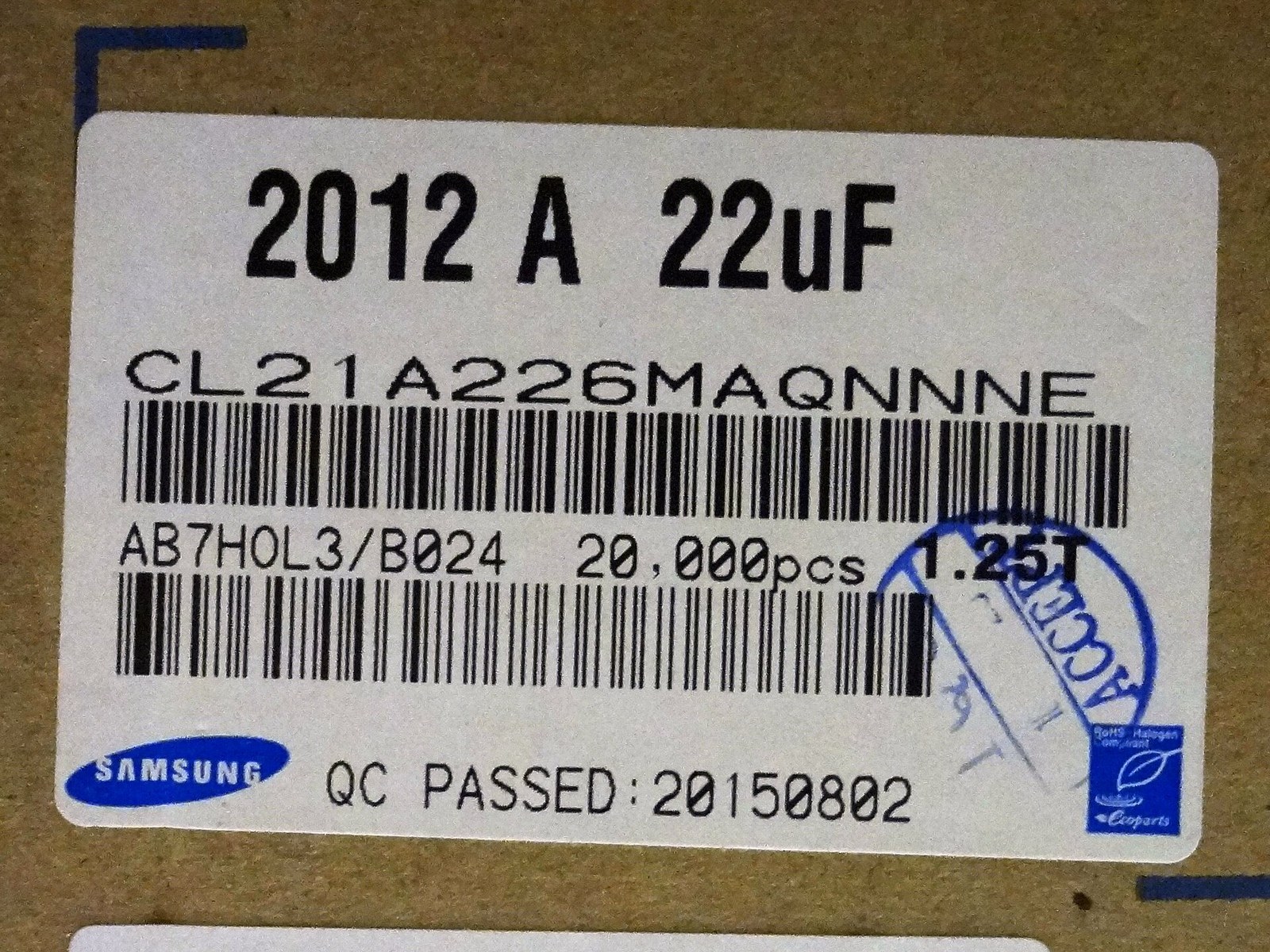
The quarterly reports that set the tone for the AI trade come from companies that design accelerators. A Korean component maker is showing what the trade looks like one layer down, where the margins sit in parts that carry no brand and appear in no product launch.
Samsung Electro-Mechanics said Oct. 28 that third-quarter revenue rose 30.3% from a year earlier to 3.7633 trillion won and operating profit rose 165.5% to 691 billion won, a margin of about 18.4%. Net profit rose 115.7% to 485 billion won. Revenue and operating profit were the highest for any quarter in the company’s history. Net profit still came in below the 509.9 billion won that analysts had expected.
Three product lines drove the quarter. Multilayer ceramic capacitors, the thumbnail-sized components that filter and stabilize power on circuit boards, sold into AI data centers. Flip-chip ball grid array substrates, the packages that carry a processor die and route its signals to the board, sold for server processors and AI accelerators. Camera modules sold for a next-generation electric vehicle platform built for global markets. The package solutions division, which houses the substrate work, posted revenue of 939 billion won, up 58%.
The substrate business is the more interesting of the two chip-related lines. An FC-BGA package has to match the bump pattern of the die it carries, deliver power across a growing surface and keep signal loss low enough for high-speed memory links. As accelerators get larger and carry more stacked memory, the substrate grows in area, gains layers and needs finer wiring, all of which pushes yields down and raises the capital required per unit of output. It is the kind of part that gets designed in years before it ships in volume, and designed out only with difficulty.
Capacitors follow a simpler logic. A server board carries hundreds of them, and every circuit that switches fast needs local reserves of charge to keep voltage steady. More power per rack and more switching per board mean more of them, in smaller packages, with tighter tolerances. Volume moves with the number of servers built, which is why the line tracks the buildout so closely.
The company’s position is unusual for a Korean parts maker. For most of its history it supplied components largely to Samsung’s own device business, an arrangement that guaranteed volume and capped pricing. Selling substrates and capacitors to the companies building AI infrastructure puts it in a different negotiation, with customers who are short of supply and willing to pay for certainty of delivery. The shift has taken a decade; the last four quarters have done more for the mix than the previous four years.
The company is already committing capacity to the demand. It has built dedicated production lines for AI chip packaging substrates in Sejong and Busan and plans to expand again in the fourth quarter. That spending is the reason the net profit line is worth a second look: new lines carry depreciation and startup costs before they carry revenue, and the gap between record operating profit and a net figure below expectations points to costs that are running ahead of the output they will eventually produce.
There is a structural argument for the business that has little to do with any single customer. Packaging substrate capacity takes years to add, requires long qualification cycles with each chip designer, and cannot be switched quickly from one product to another. When accelerator demand rises faster than that capacity, pricing improves for everyone who already has lines running, and buyers sign longer commitments to secure supply. The same has been true of the memory that goes into the packages.
The risk is that the parts are tied to specific designs. A substrate built for one accelerator generation has limited use for the next, and a customer that loses share takes its orders with it. Camera modules for vehicle platforms carry similar exposure, with the added feature that automotive programs run for the life of a model and then stop. Record quarters in this business have historically been followed by inventory corrections when a platform transition lands badly.
For now the numbers describe a supplier being paid for scarcity. Revenue grew 30% and operating profit grew 165%, which means the incremental won of sales carried a much higher margin than the average, the signature of tight capacity and better pricing rather than simply more volume.
What the quarter does not settle is how much of that improvement is structural. If substrate and capacitor capacity remains short through next year, the margin holds and the Sejong and Busan lines earn their cost of capital quickly. If the accelerator buildout pauses long enough for supply to catch up, the same mechanics work in reverse, and a company that reported its best quarter ever will report a much thinner one without doing anything wrong.
The parts makers rarely get credit for the cycle they are in. They also rarely get blamed for the one that follows. Samsung Electro-Mechanics is now large enough in AI components that both will apply.