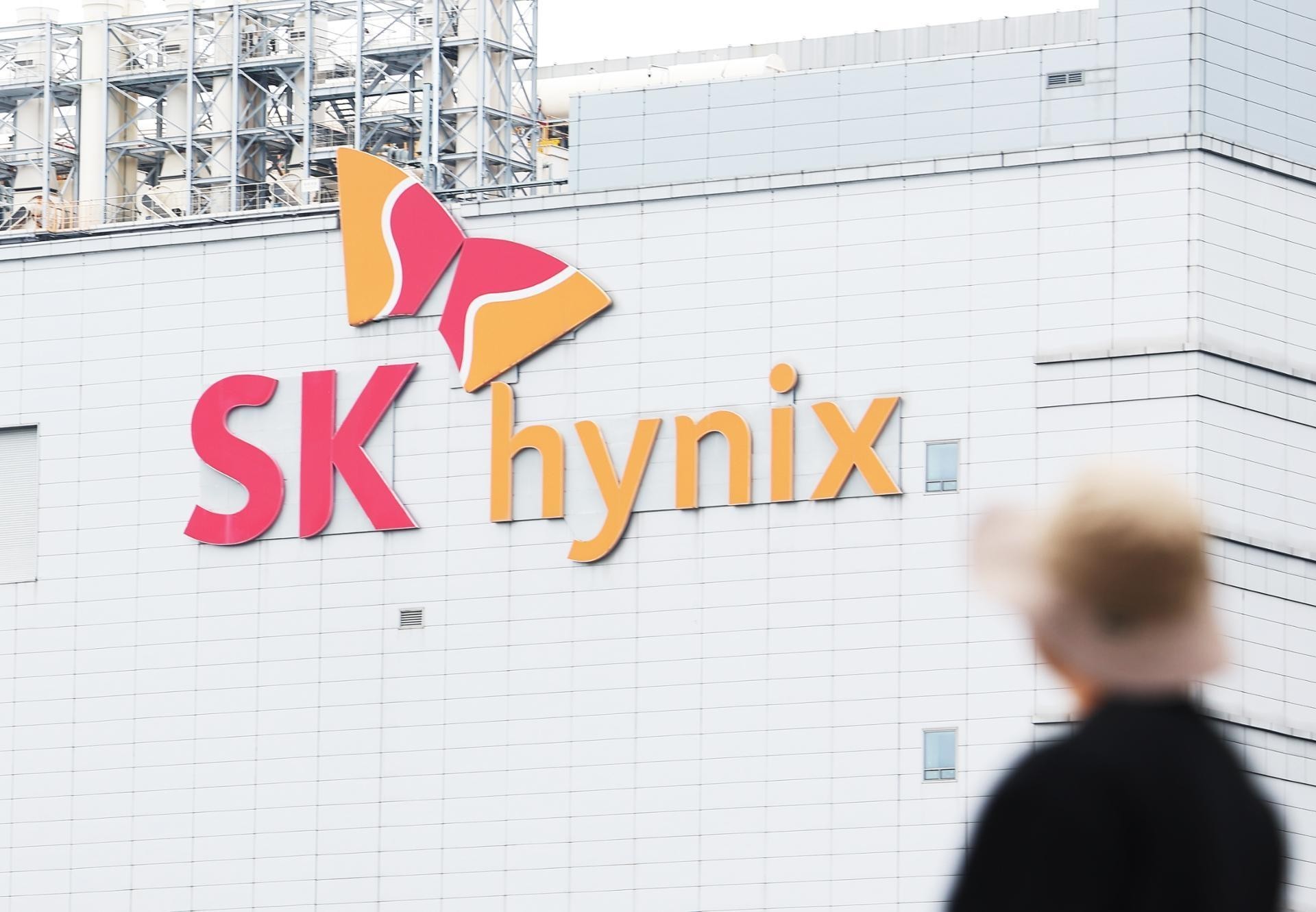
The figure sat on the first slide of the presentation in Seoul on Wednesday: 104.62 trillion won of quarterly revenue, the first time SK Hynix has taken in more than 100 trillion won in three months.
The memory maker’s third-quarter results, published Oct. 28, put revenue at about $78.8 billion, up 327.9% from a year earlier. Operating profit rose to 83.33 trillion won, more than six times the year-earlier figure. Net profit set a record as well, and the company said revenue and operating profit have each reached all-time highs for six consecutive quarters.
The margin drew the most attention. SK Hynix said its operating margin passed 80% for the first time, a level the memory industry has not held through a full cycle in any previous upturn. Behind the number sit the price of high-bandwidth memory that AI accelerators cannot run without, and a supply chain that has not caught up with orders.
“Our DRAM and HBM capacity is effectively sold out through 2029,” an executive said on the earnings call, according to a transcript of the remarks. Customer demand for HBM exceeds what SK Hynix can deliver by more than a factor of two, he said, and shortage conditions could run into 2030.
Sold out is a phrase used loosely in capital-intensive industries, and it usually describes a framework agreement rather than a purchase order. Here it describes capacity allocated to a small group of accelerator designers and cloud operators under multiyear contracts, several of which carry prepayment terms. An allocation system protects a supplier from a sudden collapse in orders and also caps what it can earn when a new buyer arrives with cash.
HBM4 entered mass production in the third quarter, and management told analysts that shipments and revenue from HBM4 will exceed those of HBM3E in the fourth quarter. Each generation carries a higher price per bit and a longer qualification cycle with the chip designers who place it next to their accelerators, which is why the handoff is watched as closely as the headline revenue.
Alongside the results, the company set out a shareholder return plan of about 100 trillion won for 2026, roughly $75 billion. It includes at least 30 trillion won in cash dividends and 60 trillion won for buybacks and cancellation of shares. For a manufacturer that spent the past decade funding fabrication lines from operating cash and debt, returning a sum close to a year of revenue says something about how long management expects current pricing to hold. The buyback also gives management a tool to support the share price while capital spending rises, a calculation Korean manufacturers have made in previous cycles.
Investors read it that way. The stock closed up 10.89% and beat the broader market in Seoul.
Memory has been the most cyclical business in semiconductors for four decades, and the pattern has repeated: shortage, price increase, capacity addition, glut, write-downs. What differs in this cycle is where the output goes. HBM is not a commodity sold by the gigabyte to whoever calls; it is stacked, tested and qualified for specific accelerators, and the number of customers able to absorb it is small.
Semiconductors are South Korea’s largest export category, and the swing in the trade balance this year has tracked the price of memory more closely than any policy decision in Seoul. A quarter of this size changes the arithmetic for the whole economy: corporate tax receipts, the won, and the cost of capital for every other Korean manufacturer competing for the same engineers.
Concentration cuts both ways. A handful of accelerator designers and cloud operators account for most of the demand, and their spending plans now set SK Hynix’s revenue. When one of them pauses an order, the effect lands on the memory maker before it surfaces anywhere else in the supply chain.
Rivals are responding. Capacity announcements across the industry have clustered around HBM, and equipment lead times have stretched as tools are ordered for packaging lines that did not exist three years ago. Most of those projects are scheduled to arrive in 2027 and 2028, which is roughly when the current sold-out book runs out of cover.
The arithmetic of the quarter also invites caution. A margin above 80% is not a level that survives contact with a market where buyers have alternatives, and memory prices have historically fallen faster than they rose. The guidance assumes customers honor multiyear volume commitments, and such commitments have been renegotiated before, usually at the moment the buyer has the upper hand.
What the company has going for it is timing. HBM4 volumes begin before competitors finish qualification, and the return program reduces the chance that cash piles up on the balance sheet and gets spent on capacity that arrives after the shortage ends.
For now the quarter stands as the strongest set of numbers the memory industry has produced. Whether it is a peak or a plateau turns on a question no one in Seoul can answer alone: how much the largest buyers of AI computing intend to spend in 2028.