CoreWeave’s 9.75% notes were sold earlier this year at a coupon that was meant to compensate investors for an unusual risk. On Monday the same bonds were quoted at a yield above 15%, which is the number a borrower sees when the market has stopped arguing about price and started arguing about whether it wants the exposure at all.
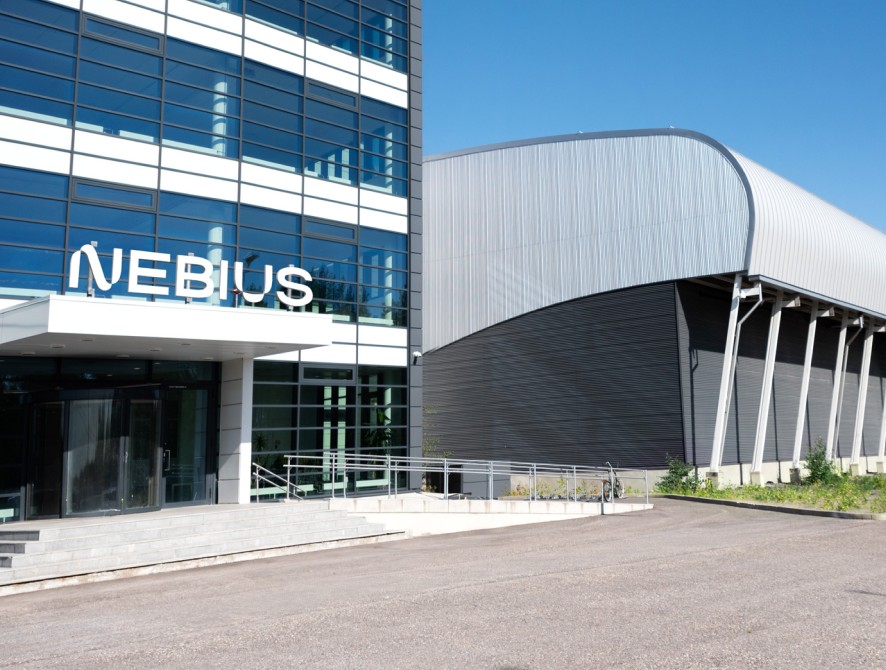
The wider problem is not one issuer. CoreWeave, Nebius and Nscale, the three largest independent AI compute providers, have effectively been shut out of the bond market in recent weeks, according to a Wall Street Journal report published Saturday that cited people familiar with the financing discussions. Lenders and investors have become choosier and are attaching stricter terms to the debt that funds AI infrastructure.
The Journal framed the shift as a change in what constrains the build-out. For two years the binding limits were chips and electricity. Capital was assumed to be available to anyone with a signed customer contract and a plausible depreciation schedule. That assumption is now being tested, and the test is happening in credit markets rather than in equity, where AI names still raise money at valuations that assume the build-out continues.
There is no shortage of borrowers. ST Telemedia Global Data Centres, the Singapore operator owned by KKR and Singtel, is in talks with banks for a S$3.1 billion syndicated loan, about $2.4 billion, Bloomberg reported on Monday, paying roughly 165 basis points over the benchmark. That is a bank deal, secured and priced off a portfolio of operating data centers, which is a different instrument from the unsecured paper the neoclouds have been selling. Even so, it adds supply to a market that is already absorbing a record volume of AI-related issuance.
The equity market has been marking the same deterioration. CoreWeave’s market value has fallen to about $31 billion from a peak near $90 billion, and Nebius is down roughly a third over the past month. IREN has fallen further. The three stocks have moved together all year because they share the same exposure: long-dated contracts with a handful of customers, capital spending that runs years ahead of revenue, and debt that must be refinanced before the assets are fully depreciated.
The business model explains why lenders pulled back when they did. A neocloud buys GPUs, finances them with debt, and leases the resulting capacity on contracts that typically run three to six years. The GPUs depreciate over roughly the same period, which leaves little room for error if a customer renegotiates, delays a delivery or shifts to a cheaper generation of chips. When a single tenant accounts for a large share of revenue, the lender is underwriting that tenant’s credit as much as the borrower’s.
Elon Musk added to the pressure on Monday. He wrote that debt markets have closed to companies that depend on data-center revenue for their business and that few of the neoclouds will survive, a post that knocked shares in CoreWeave, Nebius and IREN lower in early trading before they recovered. Mr. Musk’s own company is a large buyer of compute and a competitor for the same capital, which does not make the observation wrong.
Analysts said the freeze is less a verdict on AI demand than on structure. Demand for GPU capacity remains strong, and the backlog at the largest providers is measured in tens of billions of dollars. What has changed is the willingness of fixed-income investors to fund assets whose useful life is shorter than the loan against them, at spreads that were set when the assets were scarce.
Private credit has been the obvious substitute, and it is being used. Direct lenders, infrastructure funds and insurers have replaced parts of the syndicated market for data-center projects, usually at higher coupons and with tighter covenants. The shift moves risk off bank balance sheets and into funds with longer lock-ups, which works until those funds need to raise capital of their own.
The cost of that substitution is the number to watch. A neocloud paying 15% on its debt has to earn a return that covers interest, depreciation and the price of the next generation of hardware, all from contracts signed at prices set two years ago. That arithmetic gets harder every quarter the freeze lasts, and it explains why the shares have fallen faster than the bonds.
The larger AI complex has its own version of the problem. Hyperscalers fund capital spending from operating cash flow and investment-grade issuance, and they can pause a project without defaulting. The companies that rent them capacity cannot. If credit stays closed through the first quarter, the most likely outcome is consolidation: the smaller providers selling capacity, contracts or themselves to larger ones, and the weakest exiting.
Nscale, the smallest of the three, has been the most dependent on project finance and the least able to self-fund. Its situation is the one to watch for a signal about whether this is a pricing problem or an access problem. If a company with signed contracts and delivered racks cannot borrow at any spread, the constraint has moved from cost to availability, and that is a different conversation.
For now the market’s answer is in the yield. A bond sold at 9.75% in the spring, when the issuer was growing and the sector was scarce, trades above 15% in the autumn, when the same issuer has more debt, more competition and a customer list that lenders can count on one hand.