The first item in the new memory contract is not the price. It is the deposit.
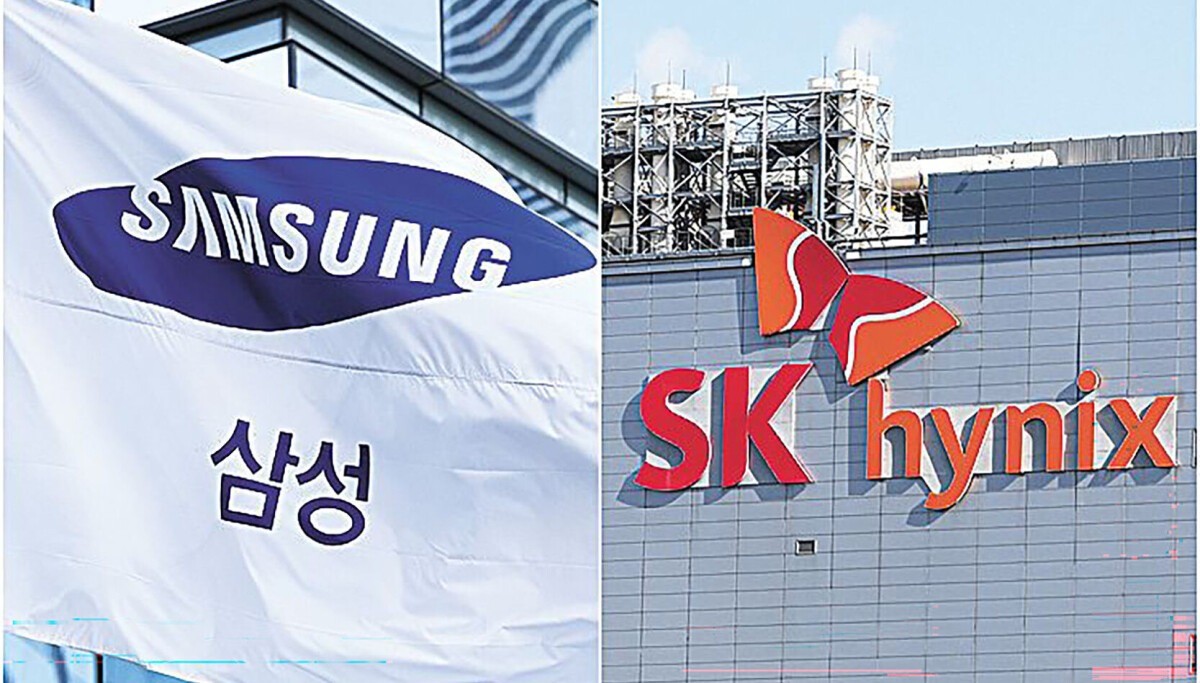
Under the long-term agreements Samsung Electronics and SK hynix are now signing with their largest customers, the volume, the mechanism for setting price and the deposit are all fixed before a wafer is scheduled, according to industry sources. That structure, more than the length of the deals, explains why the two companies’ order books now stretch to the end of the decade.
Samsung said on its third-quarter call that it had completed long-term agreements with 10 major customers and was negotiating with another 10, and that it is closing in on a target of placing 60% to 70% of total capacity under such contracts by 2030. SK hynix has 14 agreements, up from 10 in the second quarter, and is discussing extensions beyond the usual five-year term with some of them.
The effect on visibility is immediate. Existing contracts already cover more than half of SK hynix’s planned capacity for 2027 and 2028, and with the volumes still under negotiation the company says its DRAM and HBM output is effectively sold out through 2029. Samsung says its HBM production for 2027 is sold out, and that including agreements in negotiation its DRAM and HBM output is effectively accounted for through 2029 as well.
The numbers behind that come from an extraordinary quarter. The two companies reported combined operating profit of 190.77 trillion won, about $142 billion, for the three months to September: 107.44 trillion won at Samsung and 83.33 trillion won at SK hynix. SK hynix’s revenue passed 100 trillion won for the first time at 104.62 trillion, and its operating margin reached 80%, a record for a company that was losing money three years ago. DRAM average selling prices rose by a high-20s percentage from the previous quarter.
Shareholders have not been rewarded in proportion. At Friday’s close Samsung traded 39.9% below its 52-week high and SK hynix 52.5% below its own, a gap that reflects a single question: if capacity is sold out through 2029, what happens in 2030, when the fabs now under construction start producing?
The companies have an answer, and it is about the shape of the contract rather than the size of the market. A multi-year agreement with a deposit converts a spot business into something closer to a subscription, and subscription revenue is valued differently from cyclical revenue. Samsung’s own framing on the call was that the expansion of long-term agreements “will greatly help establish a stable, contract-based business model.” That sentence is aimed at the multiple, not the quarter.
The mechanism deserves scrutiny, because memory has produced this optimism before. In 2018, DRAM contracts were being signed at record prices, and the following year contract prices fell by more than half and memory profits collapsed. In 2022, prices again halved within three quarters. The difference this time, the companies argue, is that bit supply no longer responds quickly to capital spending: advanced HBM consumes far more wafer area per bit than conventional DRAM, packaging capacity is constrained, and cleanroom space cannot be added in a year.
Samsung made that point directly. “Overall capital spending is expected to increase significantly in 2027 on the back of strong earnings in 2026, but various factors are likely to prevent that investment from translating into higher bit output in 2028,” the company said on the call, adding that supply and demand would likely remain tight in 2028. “Unlike in the past, higher investment no longer directly translates to higher output, which could keep memory prices rising for longer than expected,” said Park Jun-young, an analyst at Hanwha Investment & Securities.
Market researchers put new DRAM capacity arriving in volume around 2028, which is the year the contracts now being signed begin to look expensive for the buyer. That is the asymmetry a deposit fixes. If prices fall in 2029, the customer has already committed to volume at a mechanism that was set when prices were rising, and the supplier has cash in hand. If prices rise, the customer has secured supply that competitors cannot buy at any price.
Both sides know which risk they are taking. Customers signing multi-year deals are not buying at today’s price; they are buying the right to receive product at a formula that will be renegotiated in annual reviews. Samsung said it extends agreements through yearly negotiation and that talks to extend some were in the final stages, with requested volumes far exceeding what it expected.
The demand is no longer only from AI. Samsung said inquiries are spreading from cloud providers to mobile, automotive and networking customers, which is what happens when every product category that needs DRAM discovers that the allocation queue starts with the largest buyers.
For the industry, the consequence is a transfer of working capital. Deposits and prepayments from customers fund capacity that suppliers would otherwise finance with debt, at a moment when debt for semiconductor capital spending is expensive and lenders are discriminating. SK hynix plans to accelerate construction at its Yongin site and its M17 plant in Cheongju and to open cleanrooms in phases; Samsung intends to secure building shells first and install tools as demand requires.
That is a more disciplined pattern than the last two cycles, when capacity was added on expectations. It is also a pattern that leaves the customer carrying more of the downside, and the customer is now, increasingly, a hyperscaler with a ten-year capital plan and a board that wants to see returns.
What to watch is disclosure. Korean filings do not require the terms of these agreements, so investors will be reading them through supplier commentary, deposit balances and the gap between contracted volume and reported revenue. If deposits rise while prices hold, the contracts are real. If prepayments appear alongside discounts, the market has already turned.