The document does not name the company behind it. It describes two wafer fabs in North Texas, $45 billion of investment, 5,000 employees and volume production before the end of 2029. Very few firms in the world commit that kind of money to two plants at once, so the readers who trade in economic development paperwork began filling in the blank themselves.
Korean media reported on Nov. 2 that the site under consideration is Sherman, a city in Grayson County near the Oklahoma line, and that the project belongs to Taiwan Semiconductor Manufacturing Co. The report cited Texas economic development documents and unidentified industry sources. The documents do not identify the company, and it could not be confirmed that the filing is tied to TSMC’s site search.
TSMC has been shopping openly. On its most recent earnings call, Chairman C.C. Wei said the company had sent a due diligence team to evaluate sites in Texas, explaining that its largest American customers want more of their chips made on American soil. That turned a long-running rumor into a workstream with a budget, and it put every industrial park between Dallas and Austin on notice.
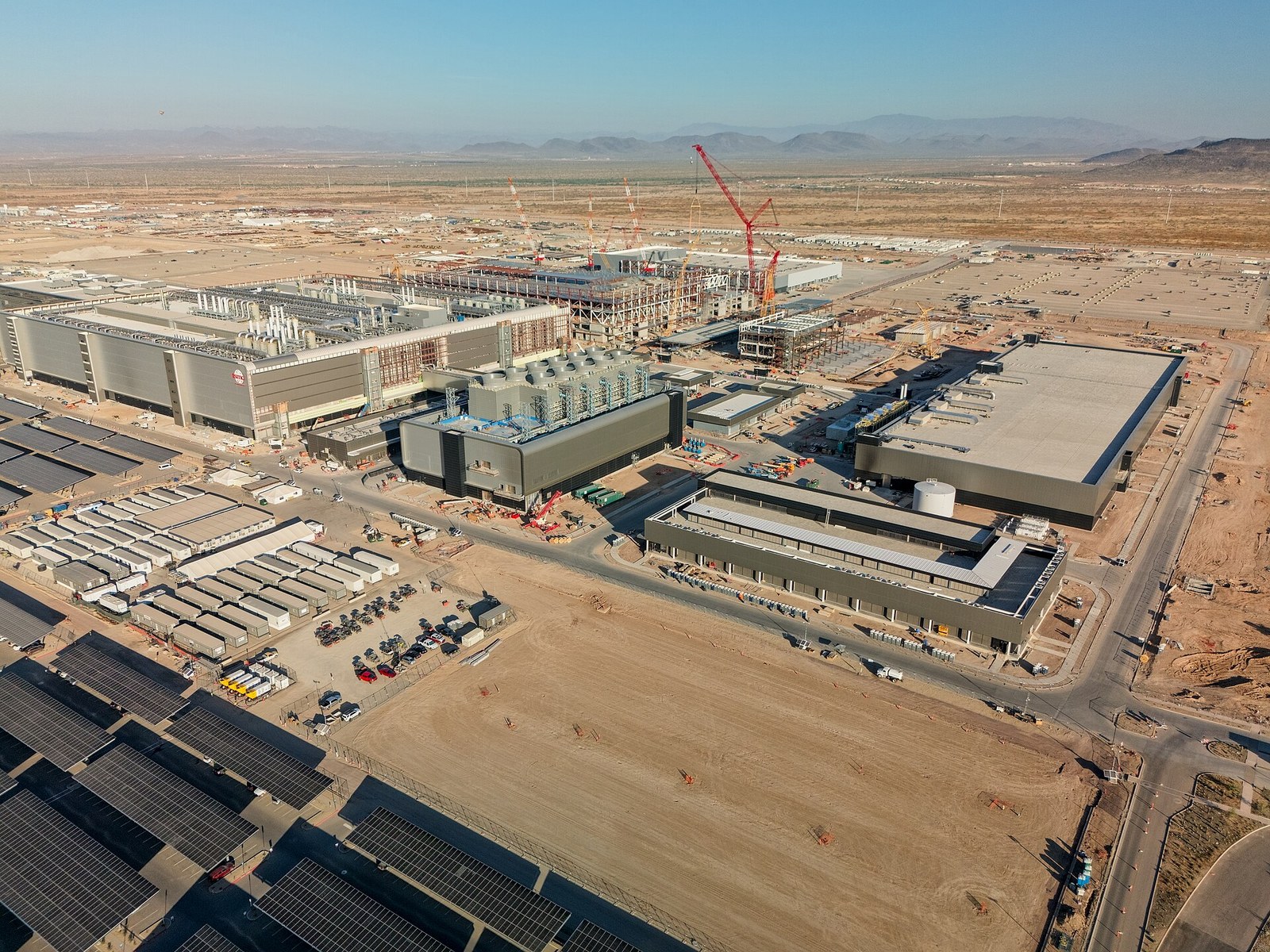
The North Texas city is not empty ground. GlobalWafers, the Taiwanese supplier of the silicon wafers that every fab starts from, has been building a plant there, and Texas Instruments has been assembling a cluster of its own 12-inch fabs in the same county. The site sits roughly 300 kilometers from Samsung’s fab in Taylor, which is ramping advanced logic of its own. For a chipmaker, that means chemical handlers, tool technicians, wafer supply and a county government that has already run this kind of negotiation once.
What the area offers is land, a deregulated grid and a state government that has made semiconductor investment a political priority. What it lacks, like every site in that part of Texas, is water and a deep bench of people who have built a leading-edge fab before.
TSMC’s Arizona complex is the flagship of its American buildout, and the company has said it will eventually run its most advanced processes there. The project has also been a lesson in how long these things take. Construction schedules slipped, the company flew in technicians from Taiwan, and the cost of a wafer in Arizona has run above the cost in Taiwan. Executives have described the gap as one they intend to narrow rather than one they can wish away.
A second American site would spread the risk that comes with concentrating everything in one desert valley. Water rights, grid interconnection and local politics are the three constraints that decide where fabs get built in the United States, and they are decided county by county. A company that has to keep adding capacity does not want its entire American output exposed to one state’s drought or one utility’s queue.
The filing’s anonymity is normal. Incentive applications are written to keep the applicant unnamed until a school district and a commissioners court have voted, because a public company does not want to negotiate against itself in front of its shareholders. What the paperwork describes, two fabs and a 2029 production date, fits a leading-edge logic project. It would also fit a memory or specialty project, and Texas has been courting all of them.
The scale is what has drawn attention. Two fabs of that size imply a construction workforce in the thousands at peak, then a permanent payroll of 5,000, which in Grayson County would be one of the largest private employers. They also imply a supply chain that has to be persuaded to follow, since a fab cannot run on parts flown in from Hsinchu.
Samsung is the complication. Its Taylor plant is close enough that the two projects would draw from the same pool of electricians, pipefitters and process engineers, and Samsung has had its own struggles staffing that site. Two fabs hiring at once in the same labor market would raise costs for both.
TSMC’s customers have been pushing in this direction for two years. Apple and Nvidia both design chips that are fabbed in Taiwan and sold to American cloud providers, and both have told suppliers they want a second source of supply that does not cross the Taiwan Strait. The company has responded by expanding Arizona and by telling investors that American capacity will keep growing as customers sign longer commitments.
Washington has added its own pressure. Export controls, tariff threats and the CHIPS program have all pushed fabrication toward the United States, and the terms of that support favor companies that build more than one plant. A second site is easier to justify to a board when the alternative is losing access to a market.
None of this makes a decision. Wei’s team has not said when it will choose, and site selection at this scale usually runs a year or more, from water studies to grid studies to an incentive package that a board can defend. A due diligence visit is a long way from a groundbreaking.
But the paperwork now describes a project that would be the largest industrial investment in the county’s history, and the reporting has narrowed the field to a single name. In semiconductor site selection, that is usually how a rumor starts to become a schedule.