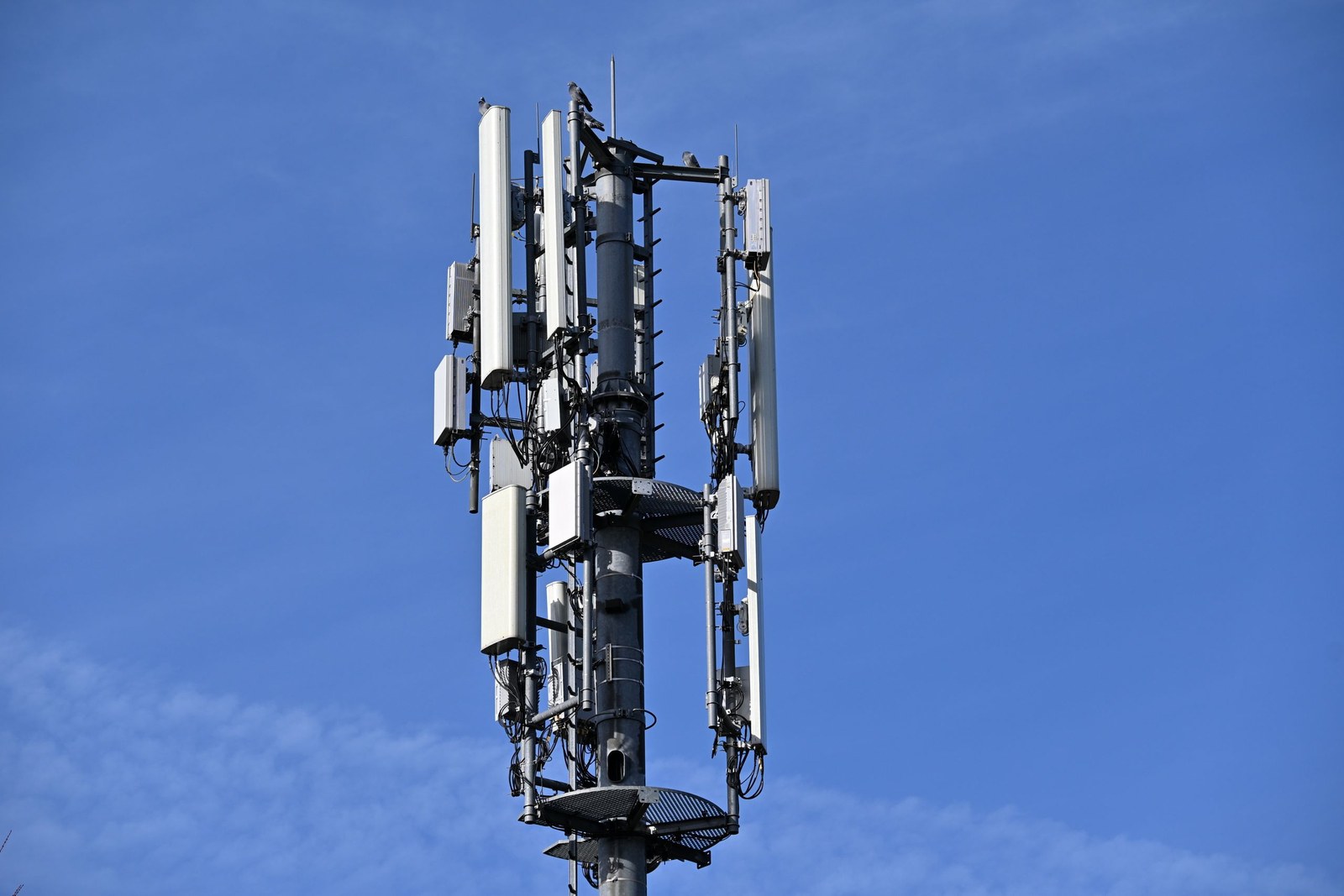
Qualcomm said on November 4 that SpaceX had chosen its Dragonwing cellular infrastructure platform to supply the radio equipment for Starlink Mobile’s planned national 5G network in the United States. The agreement covers the QRU100 radio unit and the QDU100 distributed unit, both built around the 64T64R antenna configuration, which lets a single cell site serve many subscribers at once by steering beams at them instead of broadcasting in every direction.
The size of the order is what separates it from the modem supply deals Qualcomm usually announces. SpaceX plans to install tens of thousands of base stations over a multi-year partnership, with nationwide deployment in the United States scheduled to begin in 2027. Qualcomm called it the largest 5G project it has won. Neither company disclosed what the contract is worth.
For SpaceX the arrangement answers a question that has shadowed Starlink since it began selling service. Satellites reach places where fiber was never laid, but a signal from low orbit struggles inside buildings, under heavy tree cover, and in neighborhoods where thousands of people share a single beam. A ground network covers those gaps, and it does so with equipment that handset makers already know how to connect to.
The satellite business is no longer a side project inside SpaceX. Starlink produced 36% of the company’s revenue and 85% of its operating profit in the third quarter, a split that makes the consumer and enterprise broadband service the financial center of gravity while launches remain the engineering one. Direct-to-cell service, the product that lets an ordinary phone talk to a satellite without a dish, still covers a limited footprint.
That constraint explains the sequence of moves around this deal. SpaceX bought nationwide spectrum in the 800MHz band last month, a slice of airwaves that travels well through walls and over distance. This week it was reported to be in talks to acquire Boost Mobile, the prepaid wireless brand owned by EchoStar, a move that would bring retail distribution and existing subscribers rather than requiring SpaceX to win them one at a time.
Spectrum and customers do not make a network on their own. A national build of the kind described requires tens of thousands of sites, each one needing a tower or rooftop, a lease, fiber or microwave backhaul, power and cooling, plus the radios that turn a licensed band into usable capacity. That is the portion of the business Qualcomm is selling into, and it is the portion where the capital goes.
The economics differ sharply from the launch business. A rocket is a large, discrete expense tied to a specific mission and a specific customer. A terrestrial network is a long-lived asset spread across thousands of locations, most of them leased from third parties, and its returns depend on how many subscribers share each site. Density is everything: the same base station that serves a suburb profitably can be a poor investment on a rural highway and an overloaded one in a city center.
For Qualcomm the contract is a vote of confidence in a part of its business that does not attract the attention of its phone modem sales. Selling infrastructure means competing for carrier budgets against established network equipment vendors, a market where the buyer is a small number of large operators who negotiate hard and demand multi-year support. Winning a new entrant with a national build is a way into that market without having to displace an incumbent at an existing carrier.
There is also a standards question underneath the hardware. A network built for 2027 will be judged against whatever handsets and applications exist then, and the radio specifications that matter most may shift as satellite and terrestrial networks learn to hand traffic to each other. Equipment that can be upgraded in software protects the operator from that uncertainty. Equipment that cannot becomes stranded capital.
The partnership also puts Qualcomm closer to the part of the industry where growth is currently concentrated. Smartphone shipments have flattened in most mature markets, and the chip makers that supply them have spent several years looking for volumes that are not tied to the replacement cycle. Radio access gear sold into a new network is one such volume, though it arrives as a series of project orders rather than a steady stream.
SpaceX has never been a company that outsources the parts of a system it considers strategic. It builds its own engines, its own satellites and much of its own ground hardware. Handing the radio access layer to a supplier suggests a judgment about where its engineering advantage actually lies, and about how quickly it wants a national footprint.
The open question is how much of the rest SpaceX intends to buy. Spectrum is owned, base stations are being sourced, and a prepaid carrier is reportedly in play. What remains is the operating business of a wireless company: billing, customer service, retail, and the unglamorous work of keeping a network running through storms and software upgrades. Whether SpaceX wants to own that, or rent it, will decide what kind of company Starlink Mobile turns out to be.