The person who buys power for Google’s data centers has given the clearest number yet on what it would cost to move them off the planet. Amanda Peterson Corio, who runs global data center energy for the company, said on Nov. 8 that putting data centers in space could cost as much as 100 times what the same capacity costs on the ground. She said it while describing a project Google is still testing, not a plan it has funded at scale.
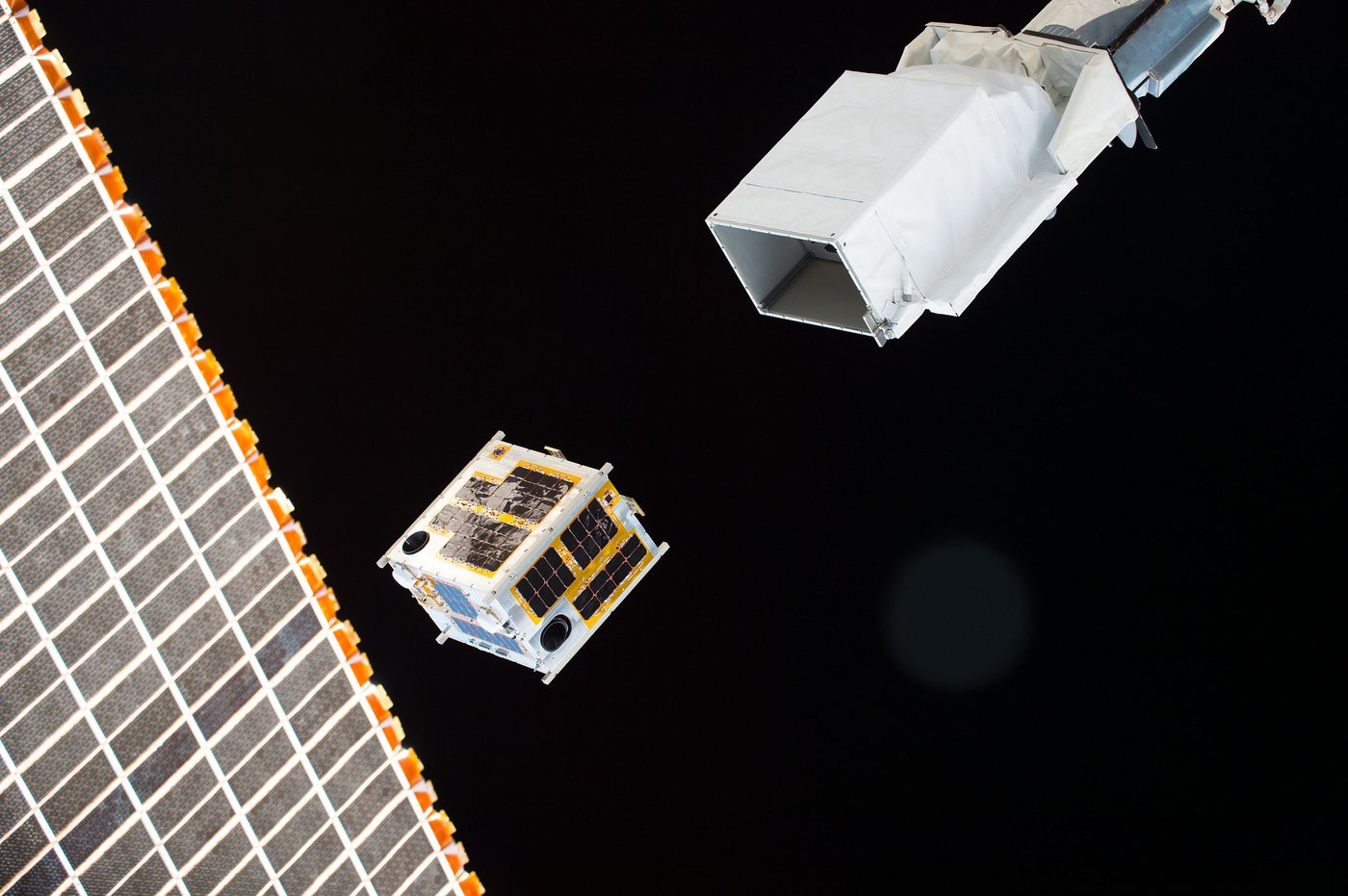
The test is called Project Suncatcher. Its hardware is a satellite carrying four of Google’s TPUs, powered by roughly one kilowatt of solar generation, in which a single chip can run for about 20 minutes per pass. Google has said previously that its Gemma 4 model produced an answer from a TPU in orbit.
For investors, the useful part of the disclosure is not the orbit. It is that a senior executive at the company with the most ambitious compute buildout in the world volunteered a cost multiple that makes the concept look uninvestable on today’s economics. Companies usually talk about moonshots in the language of progress. This was a number that argues against the investment case, offered by the side that would have to pay for it.
The reason it matters is that power has become the binding constraint on artificial intelligence capacity, and every constraint eventually attracts a proposal to route around it. Land, grid interconnection, water and local permitting are the four limits that operators now quote when they explain why a campus takes years. Orbit has none of them, which is why the idea keeps returning despite a price tag that starts at 100 times the alternative.
The arithmetic inside the demonstration explains the multiple better than the headline does. One kilowatt of solar for four accelerators works out to about 250 watts per chip, before any allowance for the radios, the attitude control or the thermal system. Terrestrial facilities buy electricity by the megawatt and run their accelerators continuously. A chip that operates for 20 minutes at a time, once per pass, is a test article rather than a production unit, and the gap between the two is measured in orders of magnitude.
Heat is the other physical problem, and it is worse in vacuum than on the ground. A terrestrial data center rejects heat by evaporating water or moving air. A satellite can reject heat only by radiating it into space, which means large surfaces, which means mass, which means launch cost on top of the launch cost already implied by the payload.
Each of those lines has to fall before the multiple closes. Launch prices per kilogram, radiation-hardened silicon, the mass of the thermal system, and the fact that a failed component in orbit cannot be replaced by a technician with a spare part. Analysts who model infrastructure projects call this the cost stack, and a 100-fold gap is not closed by one item in it improving.
There is a comparison that illuminates the bet. On the ground, the expensive part of a new campus is often the connection to the grid, a queue that can run for years and that no amount of capital shortens. In orbit, the queue disappears and the cost moves into mass and downlink. A project that is 100 times more expensive because it has escaped a permitting delay is a bet that the delay costs more than the premium, and for most workloads today it plainly does not.
The bear case writes itself. A cost multiple of 100 is not a rounding error to be engineered away in a generation of hardware, and the cost curves in launch have flattened as the industry matured rather than continuing to fall at the rate of the early years. The first satellite is a test article by the company’s own description, and test articles do not scale.
The bull case is narrower than the slogan. It rests on workloads where the answer has to be computed where the data is collected, and where sending raw data to the ground is the expensive step: Earth observation, maritime surveillance, defense sensing. In those niches the comparison is not against a terrestrial campus at all, it is against a downlink budget, and the multiple looks different.
What to watch is specific. First, whether Google gives Suncatcher a launch date rather than a description. Second, whether the company publishes a cost per unit of compute for the orbital case, which would let an outsider track the multiple instead of taking it on trust. Third, whether the next satellite carries meaningfully more power per payload, because that is the only way the 20-minute pass becomes a duty cycle rather than a demonstration.
The hypothesis to hold the company to is simple. If the 100-fold figure has not fallen by an order of magnitude by the time a second satellite flies, Suncatcher should be valued as research, not as infrastructure. If it has, the constraint that defines this decade of AI spending has a second answer.
The number to remember is not the altitude. It is the ratio, and who is willing to say it out loud.