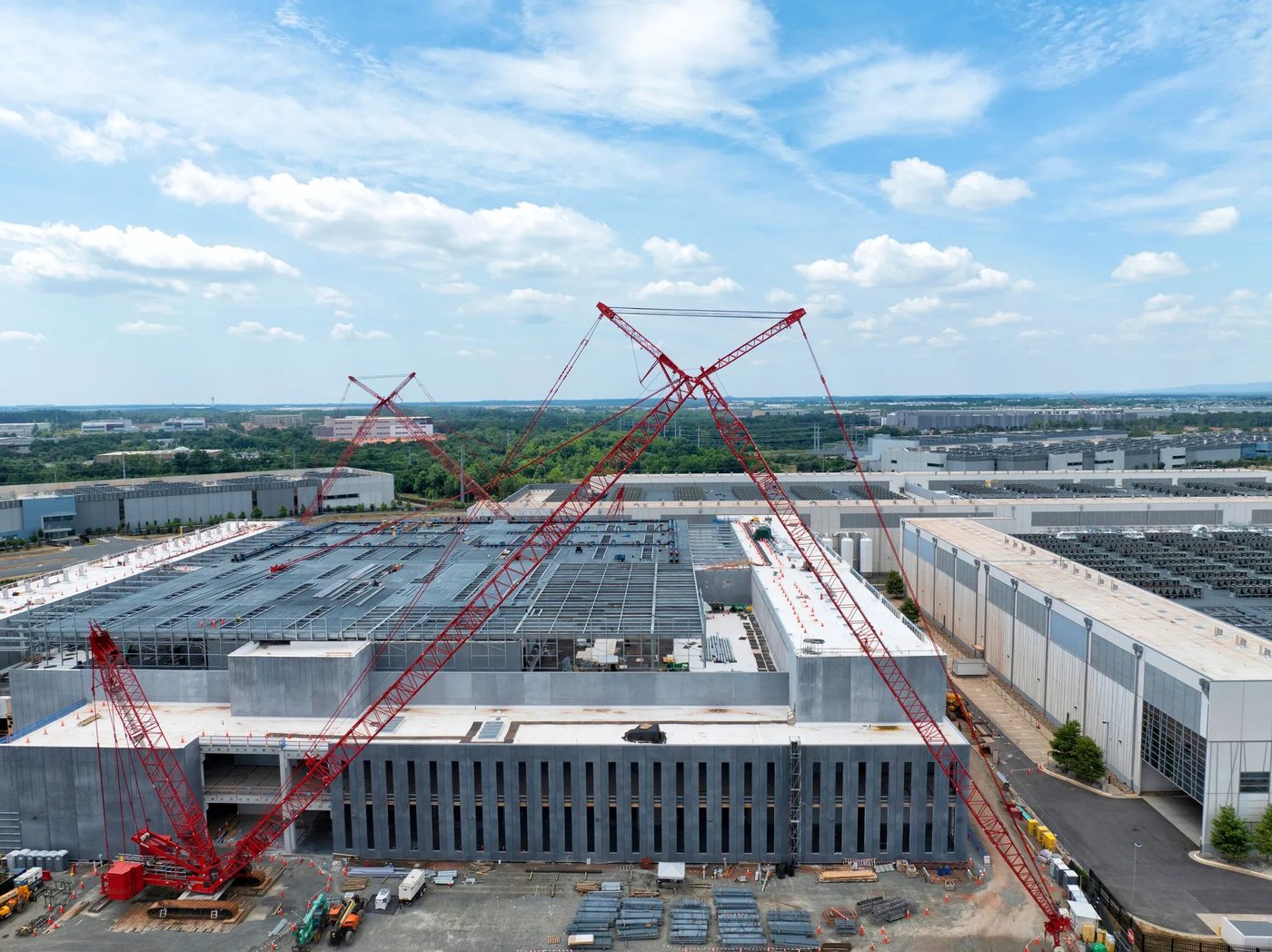
The clearest signal arrived as a list. In September, Malaysia put 49 data center projects on hold, and Thailand delayed approval for 117 more. Neither government called it a rejection of the industry. Both pointed at the same two limits: electricity and water.
Those two numbers sit against a larger one. Southeast Asia accounts for about half of the data center capacity under construction across Asia-Pacific, according to figures published by The Guardian on Nov. 8, and Malaysia and Thailand lead the region. The same two countries spent years selling what the industry said it wanted: cheap land, available power and a permit process measured in months.
The Queue Outside the Substation
A data hall is a building full of equipment that turns electricity into heat, and the electricity has to arrive before the building is worth anything. A large campus draws power on the scale of a small city, and the connection is not something a developer orders the way it orders servers. It needs a substation, a transmission upgrade and a place in a queue administered by a utility that has other customers, including households that vote.
Water follows power. Many halls cool by evaporation, which consumes water rather than circulating it, and a campus can draw a volume that competes with farms and municipal supply in the same district. The constraint shows up twice: once as a permit condition and once as a story in the local paper.
Land Was the Easy Part
The pitch that worked was speed. Land was cheap, approvals came quickly, and a developer could break ground while competitors in other markets were still in hearings. That offer was real, and it explained why the region’s share of the construction pipeline rose as fast as it did.
What the offer did not include was the cost of the grid. A connection large enough for a campus usually requires new transmission, and somebody pays for it, either the developer through a network charge or the ratepayer through a tariff. When enough projects arrive at once, the queue lengthens, the upgrade bill grows, and the political calculation for the minister who signed the approvals changes.
A pause is not a cancellation, and the distinction matters for what comes next. A paused project keeps its land, its drawings and its power application; it waits for the constraint to move. Thailand’s delayed approvals sit in a similar position, held rather than refused. Both governments have left themselves room to let projects through selectively, which is what a regulator does when it wants the investment without the bill.
What a Queue Does to a Forecast
For an operator, a delay moves revenue without moving the schedule of costs. Land is bought, equipment is ordered, staff are hired, and the return on all of it slips by the quarters the queue consumes. A campus meant to serve demand in one year serves it later, which is a problem when the customer contracts that justify the building start on a date.
The projects also carry a second clock. Chip generations turn over quickly, and a hall designed around one generation of accelerator looks different if it opens after the next one ships. Delay costs more than time; it forces a redesign of the building’s power density and cooling.
For the region, the consequence is rerouting rather than retreat. Compute demand has not fallen, and an operator with a signed customer and a stalled permit has an obvious alternative: build where the power is available. A pause in one market does not shrink the regional pipeline so much as redistribute it, and the redistribution favors whichever neighbor can promise a connection date.
That promise is now the product. Countries competing for the same investment have started selling grid capacity and water rights rather than land and tax holidays, because those are the terms the developers ask about first. A market that cannot answer the power question loses the project before the price of the land comes up.
For the towns that host the halls, the arithmetic looks different again. A campus brings construction jobs, then a small permanent staff and a large bill for the substation. It brings water demand in a district that may already ration it in a dry season. The 49 paused projects in Malaysia are, at bottom, a test of whether those trade-offs can be explained to the people who bear them.
The Next List
What to watch is the shape of the restart. If the paused projects return with on-site generation, closed-loop cooling or a later connection date written into the lease, the constraint has been priced and the market has adapted. If they return unchanged, the queue will lengthen again and the next list will be longer than 49.
The more interesting signal is procedural. A government that pauses nearly fifty projects and then approves them one at a time has discovered a tool it will use again. The industry spent three years treating cheap land and fast permits as the region’s advantage. The September lists suggest the advantage now depends on a substation, and on whether the water is still there in April.