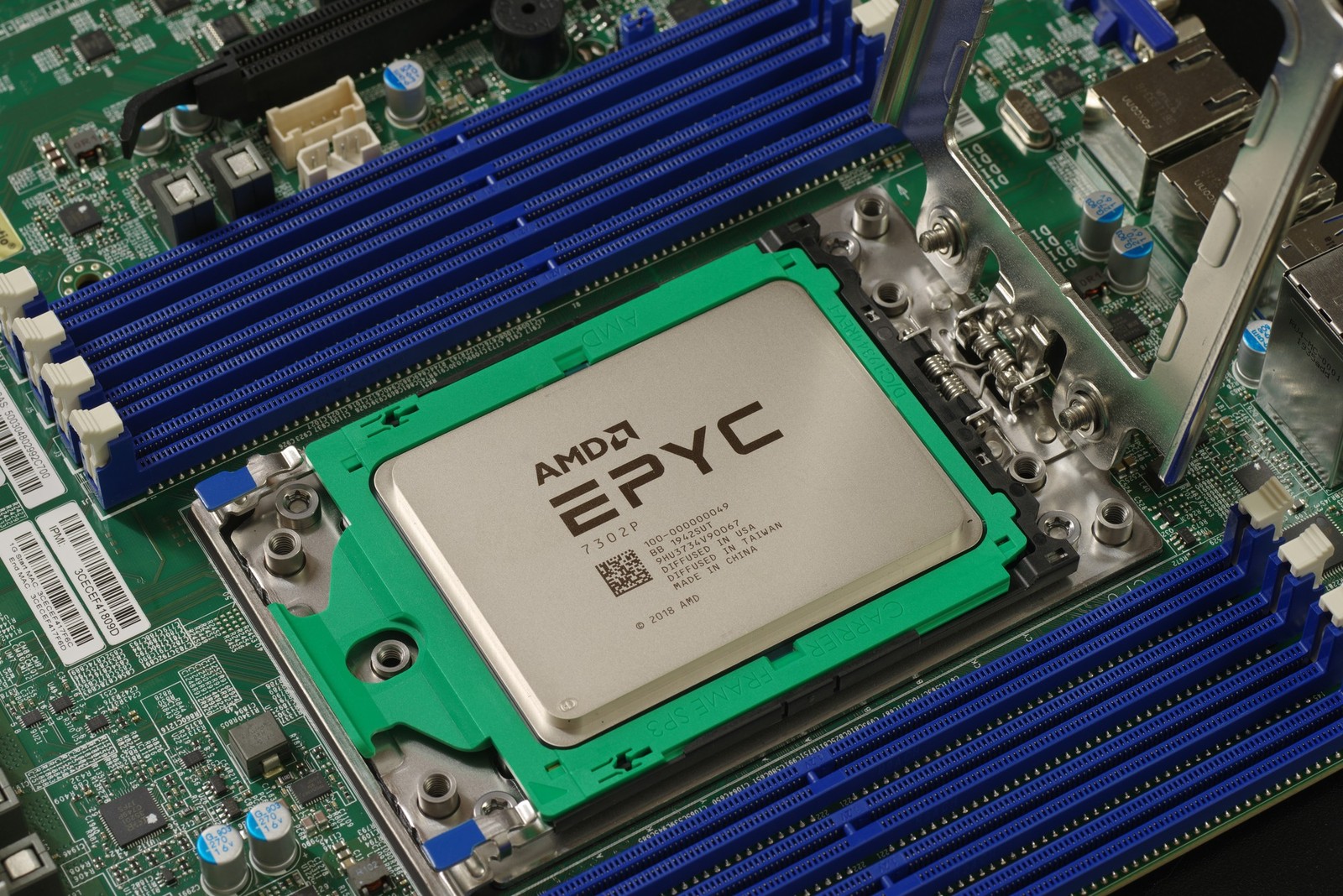
AMD put its entire server processor line on a new architecture on November 10, shipping sixth-generation EPYC chips on the SP7 platform with the EPYC 9996 at the top of the stack. Microsoft Azure and Oracle Cloud already have instances running. Dell, Lenovo and other system builders are shipping machines built around the parts.
The company said the new platform delivers a clear improvement in performance at the same power draw. It did not publish benchmark figures in the announcement, which is normal for a launch and also the reason independent testing will matter more than the slide deck.
A server platform transition is a slow, expensive event that customers plan years ahead. A new socket means new motherboards, new memory configurations, new validation for every operating system and hypervisor in the fleet, and a new set of firmware bugs to find. Hyperscalers do that work first because they control their own software stacks and because they buy in volumes that justify the engineering. Enterprises follow two to three years later, when the platform has been through a few revisions and the depreciation schedule on the old fleet has run out.
That is why the cloud instances matter more than the retail systems. Azure and Oracle Cloud going live on day one tells corporate buyers that the platform has been through the validation that matters, at a scale that shakes out the failures. It also means a customer who wants to test the chips can rent them by the hour instead of buying a rack.
The second announcement was less conspicuous and, for one industry, more consequential. AMD released software that it says can cut a server’s DRAM usage by as much as 75%. The claim is about memory, not compute, and memory has become the binding constraint on how much artificial intelligence the industry can run.
The reason is structural. Accelerators need high-bandwidth memory stacked next to the die, and the supply of that memory is contracted years in advance. Ordinary server DRAM is a different product, but it competes for the same fabrication capacity and the same engineering attention at the three companies that make it. When data-center customers take allocation, they take it from someone, and the someone is usually a buyer with less bargaining power — an automotive supplier, an industrial equipment maker, a maker of networking gear.
A software layer that reduces how much memory a workload needs attacks the constraint from the other side. If the same job can run in a quarter of the DRAM, the same server serves four times the workload, or the same workload runs on a cheaper machine. That is a compelling pitch to any customer who has been told that memory is allocated through next year.
It is also a warning to the memory makers. Demand forecasts in that industry are built on assumptions about bytes per server, and those assumptions have been revised upward for three years. A credible claim that software can compress the requirement by a wide margin does not eliminate demand — cheaper memory per unit of work tends to expand the number of workloads — but it does put a ceiling on the growth rate that analysts have been modeling.
AMD has an interest in making the claim loudly. Its chips compete on cores, memory channels and performance per watt, and a software layer that makes its platform need less memory improves its position in exactly the procurement meetings where memory cost decides the outcome. Whether the 75% figure holds outside the workloads AMD tested will be established by customers, not by the announcement.
The competitive frame is straightforward. AMD spent a decade turning a marginal share of the server market into a substantial one, generation by generation, and each transition has widened the gap in cores per socket and in power efficiency. Intel is expected to answer with its own platform refresh, and the argument between the two will be settled on the same ground as always: what a rack costs to buy, what it costs to power, and what it costs to keep running.
The part of the launch that will be quoted least is probably the most revealing. AMD did not present the new chips as a leap in raw speed. It presented them as a platform: a socket, a memory architecture, a software stack, a set of cloud instances, a supply chain of system builders. That is how server vendors compete now, because that is what buyers purchase. Nobody buys a processor. They buy a validated configuration with a support contract and a depreciation schedule.
For the customers who will run these machines for the next five years, the practical question is unromantic. Does the platform reduce the number of servers needed for a given workload, and does it do so reliably enough that the operations team will accept it? The memory software answers the first half of that question on paper. The second half takes a year of production traffic to answer, and no launch event has ever settled it.