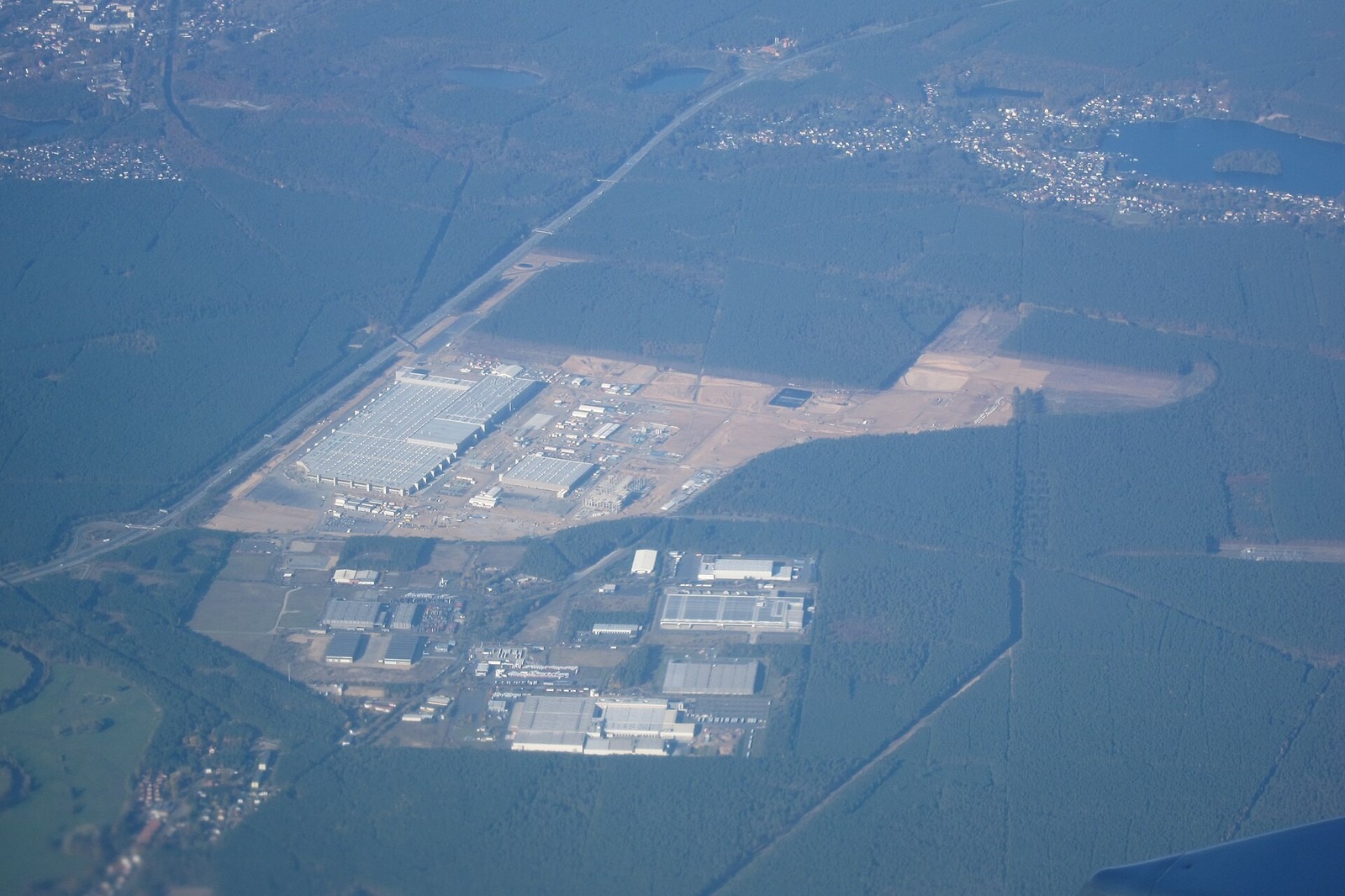
Tesla’s plant outside Berlin sits on a cleared stretch of pine forest in Grünheide, a site it fought for three years to permit and opened in 2022. On Nov 16 the company said it would spend about 3 billion euros, or roughly $3.3 billion, more on the property, and dedicate part of it to building a car with no steering wheel.
The money buys a Cybercab line with a planned capacity of up to one million vehicles a year. Reuters described the commitment as one of the few large new investments in German auto manufacturing in recent years, which is accurate and slightly understated.
The rest of the German industry is contracting. Plants are being retooled for lower volumes, supplier networks are shedding jobs, and the country’s largest automaker has spent the past year negotiating with its works council over capacity rather than adding any. Against that backdrop, a single 3 billion euro spending plan reads as a bet on a different cost structure, not on a different market.
Tesla’s build-out at Grünheide will be phased, according to company documents cited by Electrek, which means the capacity arrives in stages rather than in one commissioning. A phased line is also how an automaker hedges: each stage can be slowed if orders do not follow, at the cost of idle tooling rather than idle buildings.
The timing of the announcement is tied to a decision made in Texas. Tesla plans to stop building the Cybertruck next year, freeing space and tooling at its Austin plant for other work. Moving Cybercab volume to Germany keeps the model close to the customers it is designed for, in cities where the regulatory path for driverless operation is being written now, and it keeps the US factory focused on the models that still sell in volume.
Customs is the quieter reason. A car built in Germany and sold in the European Union avoids the duty and the shipping that a US-built unit carries, and a robotaxi business runs on unit economics that cannot absorb a 10% import charge on the vehicle. Building where the fleet operates is the standard answer, and Tesla has used it before.
Europe’s regulatory framework is the harder constraint. Selling a car without a steering wheel in volume requires a type-approval route that does not yet exist in a form any manufacturer has used at scale. The EU’s rules for automated driving systems cover defined automation levels and specific operating conditions, and a purpose-built robotaxi with no manual controls sits outside the categories the current text was drafted for.
Germany has amended its road-traffic law to permit driverless operation in defined areas under a permit, which creates a domestic path but not a continental one.
In the United States, the constraint is different and unresolved. Tesla has taken the position that its vehicle meets existing federal safety standards through self-certification, and regulators have opened an inquiry into whether that position holds for a vehicle with no steering wheel or pedals. That inquiry remains open. A line that can build a million cars a year is worth very little until somebody is allowed to sell them.
The production math is worth putting next to the sales math. One million units annually would exceed the plant’s original design target by a wide margin and would make Cybercab, by volume, one of the largest single-model programs in Europe. Robotaxi fleets are bought by operators in units of hundreds, not hundreds of thousands, and the operators do not yet exist in most of the cities where the service is planned.
So the number to read is not the capacity. It is the phased commissioning schedule, which tells you how fast Tesla expects to need it. A line built in stages can sit at stage one for years.
The capital question follows. Three billion euros against a company whose automotive gross margin has compressed as prices came down, and whose capital allocation now competes with energy storage, AI computing and the robotaxi fleet itself. Tesla has funded expansions from operating cash flow in the past. This one lands in a year when the vehicle business is not generating much of it.
For Brandenburg, the calculation is more local. The plant survived a permitting fight over water, a sustained protest encampment in the woods nearby, and a supply-chain shock that stopped production for weeks. A further 3 billion euros is the kind of commitment a state government can point to when it argues that the industrial base is holding.
For Tesla, the bet is that the regulatory permission arrives before the depreciation does. A Cybercab line that runs at a fraction of capacity for two years is an expensive way to hold an option, but it is a cheaper way than losing the European market to whichever operator gets a permit first.
The steel goes up faster than the rulebook. That has been true of every automated vehicle program in Europe, and there is no evidence yet that this one is different.