
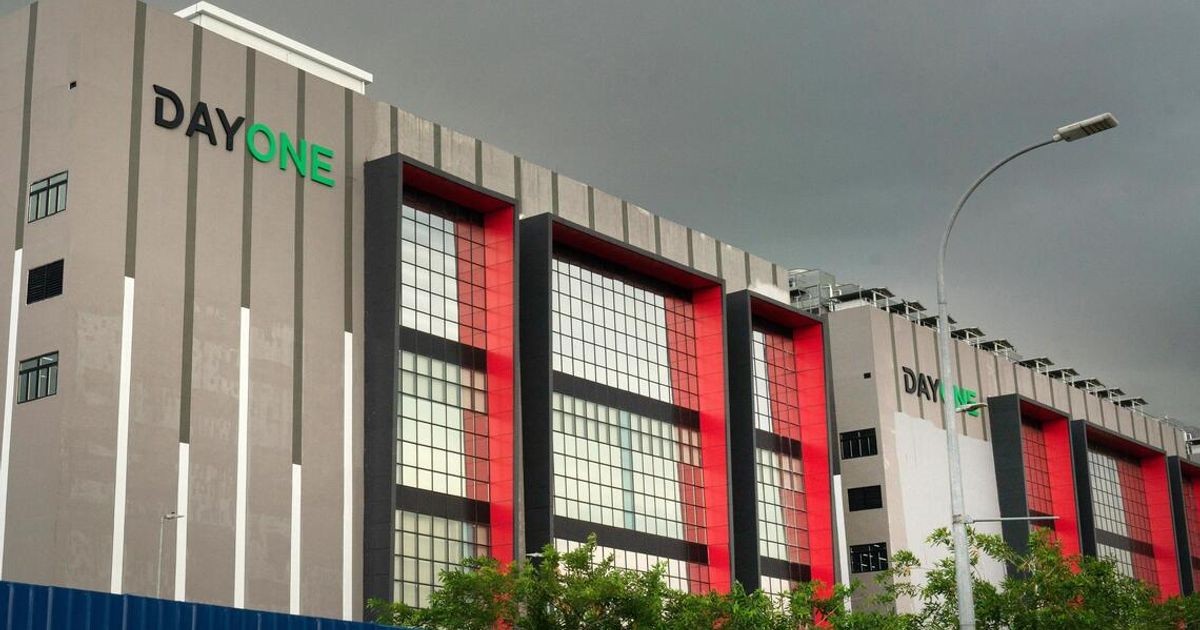
DayOne has postponed its US IPO until at least 2027, according to people familiar with the matter, shelving a listing it filed for in October as investors question whether the valuations of the data centers carrying the artificial intelligence boom can hold.
The Singapore-based company builds and operates the buildings that house AI servers. Demand for that space has never been higher. The price investors will pay for it has become considerably harder to set.
DayOne had assembled a syndicate that would be unusual for a debut of its size: Morgan Stanley, JPMorgan Chase, Bank of America, Citigroup and BNP Paribas, the people said. Discussions with those banks are continuing, and no final decision has been reached. The company could return in 2027 if conditions and sentiment improve.
The October filing was meant to test appetite for a pure landlord of AI capacity. A prospectus prepared for a listing would have priced the company against peers trading on future capacity rather than current cash flow, and that is the comparison investors have stopped accepting at face value. The test came back negative, at least for now.
Investors have spent the year arguing the same question from different angles: whether all the money going into chips, power and concrete will produce revenue that justifies it. Data-center operators sit where those three costs meet, and they depend on tenants whose forecasts run years beyond their own balance sheets. Equity markets have grown less forgiving, and so have the private markets that supplied much of this sector’s capital.
Most of the buildout is financed with debt, leases and joint ventures rather than retained earnings. When the equity window shuts, the cost of the remaining capital rises, and the projects that need the most money are the ones furthest from producing revenue. That arithmetic does not require a recession to become uncomfortable.
The comparison bankers reach for is fiber in the late 1990s: essential infrastructure, built faster than customers arrived, financed by investors who were right about the direction and wrong about the timing. The difference this time is that the customers are among the largest companies in the world, and most of them pay their bills.
Analysts said the pause reflected price rather than the quality of the asset. A landlord with signed leases and a working campus is not a speculative story. The difficulty is agreeing on what those leases are worth if tenants eventually slow their orders, and whether the next wave of contracts will be signed at the rents that justified the first.
Southeast Asia has been one of the faster-growing regions for capacity outside the US, helped by land, power and proximity to the region’s cables. Operators there compete for the same hyperscale tenants, and those tenants have become skilled at playing landlords against one another on price and delivery dates. A tenant that can wait two years for a campus is a tenant that negotiates accordingly.
Scale helps in that contest and hurts in a listing. The larger a campus gets, the longer the gap between spending and rent, and the harder the gap is to explain to an investor who measures returns in quarters. Landlords answer that the spending is largely contracted, and that a campus built for one tenant carries less risk than a speculative tower.
Power is the other constraint. Grid connections in the region can take years to secure, and a project that wins a queue position today may not draw a paying customer until well after the next two budget cycles. Lenders have started asking for those interconnection dates in writing, along with the names of the tenants behind them.
The reception for AI-linked issues has become hard to predict. Some debutantes have priced below their last private round. Others have postponed after marketing to investors. The window, as bankers describe it, is selective and narrows quickly. Chipmakers and the largest cloud companies still raise money without much fuss. The further a business sits from the chip, the more questions it collects.
For DayOne, the delay buys time and costs momentum. A company that has hired underwriters, drafted a prospectus and met investors has already shown its rivals how its numbers look. Returning in 2027 means showing them again, to a market that will have another year of AI earnings to judge them against. The filing has not been withdrawn, which keeps the option open and keeps the document current.
The risk is not that demand disappears. It is that tenants keep signing contracts while the equity market stays shut, leaving the sector to fund itself with more expensive debt and fewer public comparables. Both outcomes are compatible with a healthy AI business and a bad year for its landlords.
DayOne’s filing is still on the shelf. The window is not.



