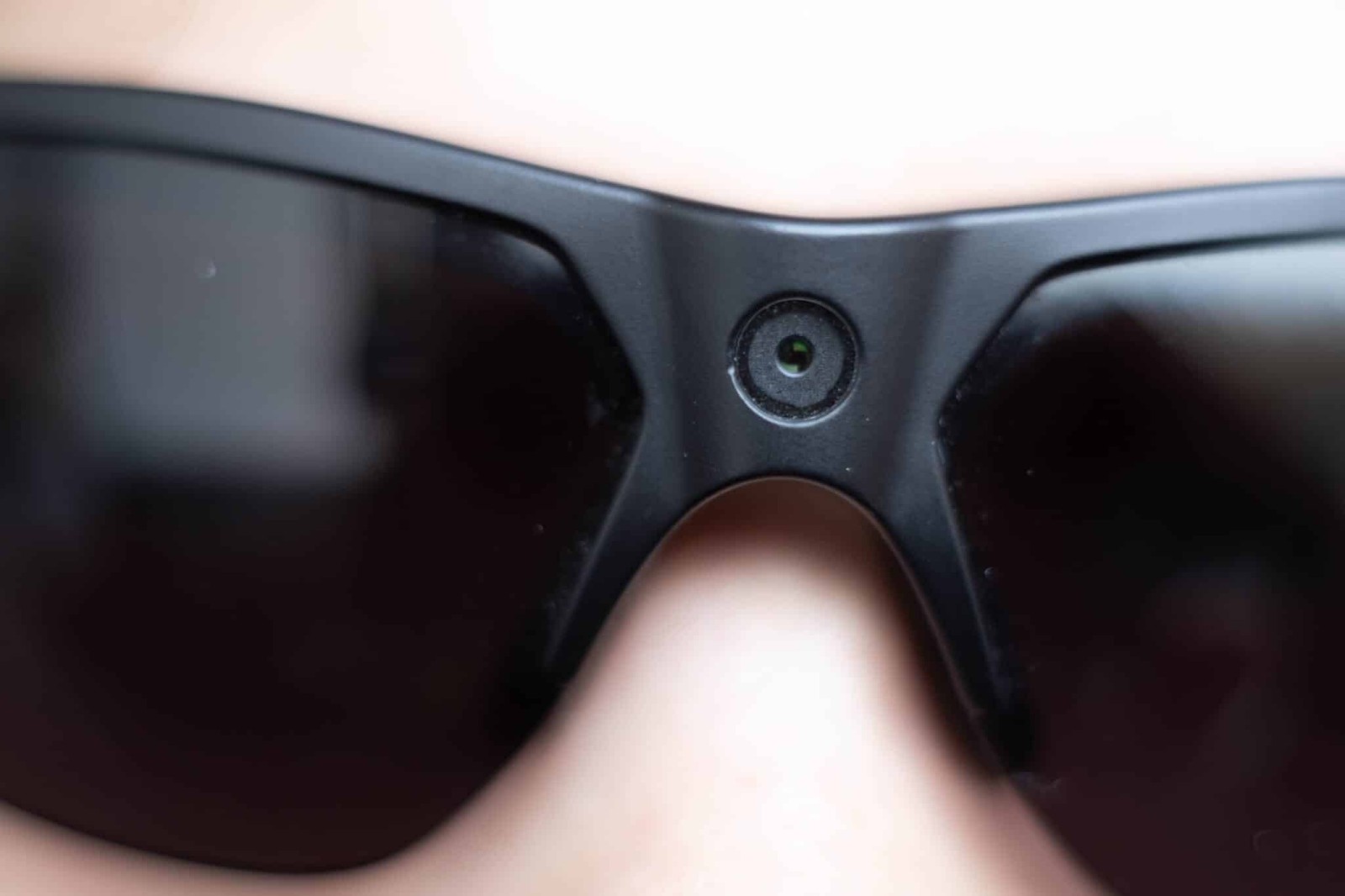
The Dutch Data Protection Authority chose an unusual instrument on Nov. 23. Rather than acting against a particular product, it advised consumers not to buy AI glasses fitted with cameras, and gave two reasons for the warning.
The first is the people standing nearby. Glasses with cameras record whoever is in the wearer’s field of view, and those people did not agree to be filmed, cannot see the lens from the front, and often have no way of knowing whether they are in frame. The second reason concerns the wearer. A device that films the street around you can also put you in conflict with the people you film, and the regulator judged that risk worth stating plainly.
The category it named is the smart glasses that became popular over the past two years, the ones that look like ordinary frames and record on a tap or a voice command. The complaint is not about the hardware’s capability but about the absence of a signal. A phone held up to take a picture announces itself. A pair of glasses pointed at a table does not.
A consumer advisory is a cheap instrument, and that is both its strength and its limit. It requires no court, no finding of fact against a named company, and no product recall. It shifts the decision to the buyer, who can weigh the warning against the features on the box. It also cannot be appealed in any meaningful way, because there is nothing to appeal. No fine has been issued and no product has been withdrawn from Dutch shelves.
The signal problem is a design problem, and the design tradeoffs are not easy. An indicator light bright enough for bystanders to notice changes how the glasses look and how they are used in a restaurant or on a train, which is exactly where the vendor wants them worn. An indicator only the wearer can see satisfies a disclosure rule without informing anyone the rule was meant to protect. Regulators have been circling that gap for two years without settling it.
The statement lands as European scrutiny of wearable AI tightens. In Britain on Nov. 24, the Information Commissioner’s Office said privacy must be embedded from the design stage as Meta brought its Muse personal agent to the country, and Meta agreed to voluntary monitoring and reporting. The Competition and Markets Authority said Meta had revised its terms after consultation to make them fairer, and that it would keep watching how the agent operates in practice. Neither regulator opened enforcement action on launch day.
Set beside the enterprise side of the same week, the contrast is sharp. Companies buying AI models have been pushing for less retention and more control, and they are getting it. Anthropic opened a beta of Enterprise Frontier Safeguards that lets corporate customers keep prompts and responses in their own AWS or Google Cloud environments with the customer holding the keys, the 30-day retention requirement unchanged, and periodic 15-minute scans that trigger an alert to the customer rather than a look at the data by the vendor. Those terms exist because the buyer had money, a legal team and a contract.
A person walking past someone in camera glasses has none of that. The bystander is not a customer, has signed nothing, and will never learn that a recording exists. That asymmetry is what the Dutch advisory is really about: not the device’s accuracy or its price, but the absence of any transaction between the person being filmed and the person doing the filming.
For the companies selling the category, the practical effect is a marketing problem before it is a legal one. A national regulator telling shoppers not to buy is a line that will appear in retail copy, in reviews and in the questions customers ask at the counter. The plausible response is more visible recording indicators, clearer pairing flows that explain what gets uploaded, and more processing done on the device rather than in a cloud account. None of that answers the bystander’s question, which is whether they can tell they are being filmed by a stranger.
Retailers face a smaller version of the same decision. A chain that stocks the glasses is now selling a product a regulator has advised against, and a chain that drops them is giving up a category with growth. Most will keep selling and add a line to the product page, which is how consumer electronics have absorbed regulatory warnings for years.
What remains open is whether other European authorities follow with advisories of their own, whether this one hardens into guidance that vendors must design against, whether any data protection authority moves from advice to enforcement, and whether the category can produce a signal that satisfies a regulator and a shopper at the same time. The Dutch regulator has said what it thinks consumers should do. It has not said what it will do next, and the glasses are still on sale.