
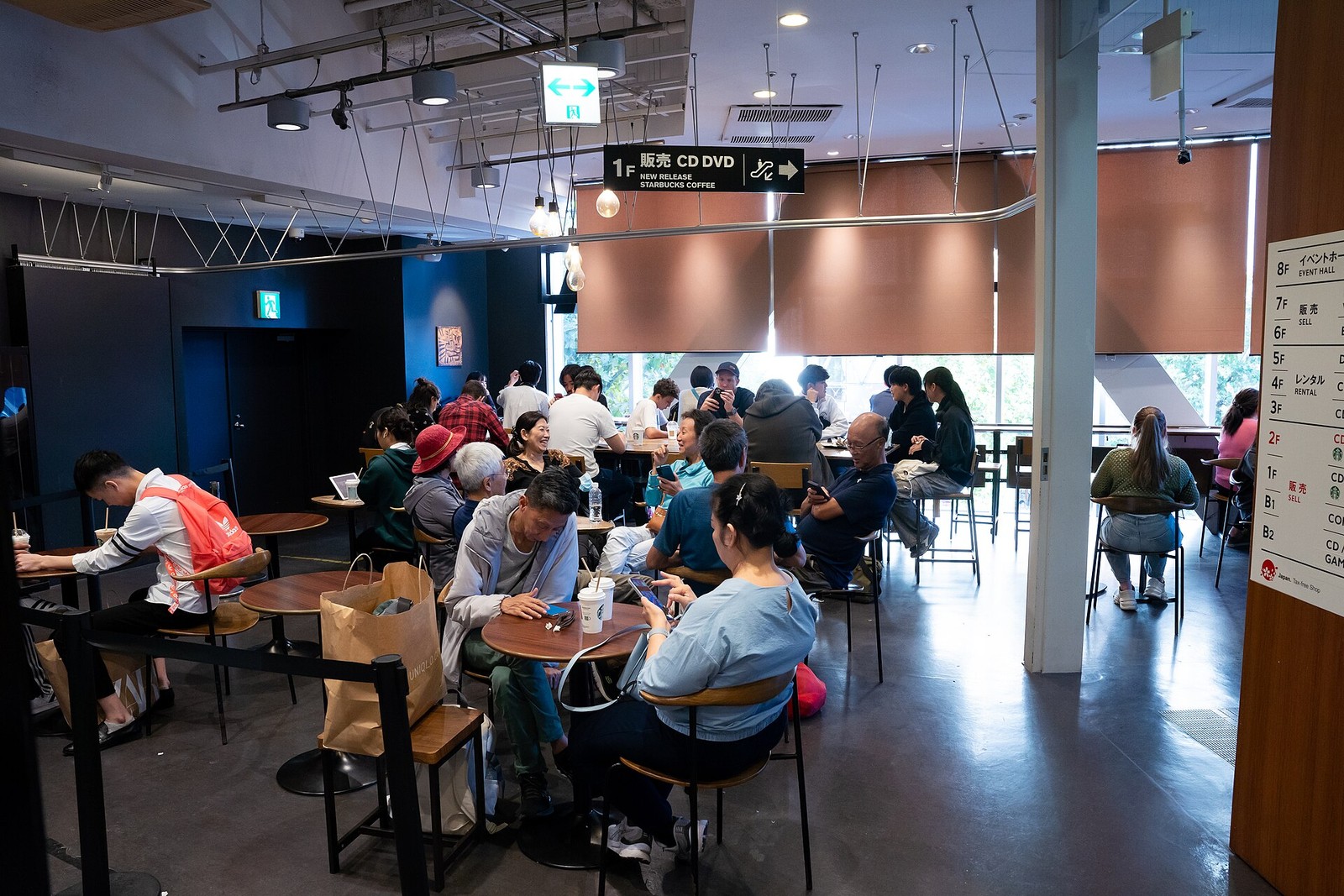
Starbucks has concluded that owning its Japanese coffee shops may cost more than it returns.
The company has hired Citigroup and Morgan Stanley among the advisers preparing a possible sale of the Japanese business, which could be worth several billion dollars, according to people familiar with the matter. It has begun approaching strategic and financial investors. A formal process could open as early as this year.
Japan is not a fringe asset. The chain runs about 2,000 stores there, one of its largest networks anywhere, and Japan, Canada and the UK together account for roughly 72 per cent of fiscal 2026 net revenue outside the US and China. A sale would dispose of something the company still needs.
The template exists. Earlier this year Starbucks sold about 60 per cent of its mainland China retail operation to Boyu Capital and converted the business into a licensed one. The brand, the recipes and the standards stay with Seattle. The leases, the payroll and the capital spending go to the partner.
The arithmetic of a licence differs from the arithmetic of a lease. A company-operated store carries rent, wages and depreciation on the parent’s books, so its profit rises and falls with local labour costs. A licensed store carries a royalty instead, typically a percentage of sales with a floor, and the partner absorbs the refurbishment, the property negotiation and the hiring.
For a mature market that trade is attractive. Japanese growth now comes from taking share in dense cities rather than from opening where no coffee shop stands. Same-store sales move slowly, refurbishments never end, and the return on each new unit is thinner than it was a decade ago.
There is a symmetry here that the company will have to explain. Starbucks entered Japan in 1996 through a joint venture with Sazaby League, a local retailer, and in 2014 bought out its partner to take full ownership of an estate that then traded publicly. The direction of travel has been towards control for a decade. A sale now would reverse it, and a reversal of that size needs a better argument than a lower cost of capital.
Currency does part of the work. A weak yen converts yen profits into fewer dollars for a seller, while a domestic buyer funding in yen feels no such discount. That asymmetry tilts a transaction towards a local partner taking a minority stake, rather than towards a clean exit to a global strategic buyer. The China deal pointed the same way.
Licensing is not new to Starbucks, which has run licensed stores in airports, hotels and shopping centres for years. What is new is applying the model to a country the company has operated directly, at scale, for three decades. That is a change in who answers for a badly made drink.
The structure carries a cost the sale documents will not capture. A licensee optimises the royalty base, which means sales, which does not always mean standards. Starbucks has argued for years that its premium price rests on consistency. The more of the world it licenses, the more that claim depends on contracts it does not sign and staff it does not train.
The China transaction already tests that logic. Selling a majority to a local sponsor buys speed, local knowledge and a partner with relationships the parent cannot build from Seattle, and it surrenders control of the daily experience. Repeating the move in Japan would turn an exception into a method: keep the trademark, hand over the store.
Buyers will price the royalty against the cost of running 2,000 stores in a market with tight labour, expensive property and a shrinking pool of young workers. A licence over a mature estate behaves like a bond rather than a growth asset. It yields reliably and it does not compound.
That is the appeal for the seller. Proceeds can be redeployed or returned without a store closure or a wage negotiation, and the earnings that remain look cleaner to the people who model them. The cost arrives later, in a slower metabolism and a thinner organisation.
Regulators have little to say about the choice. Japan has welcomed foreign consumer brands and has spent a decade pushing its own companies to deploy idle cash, which gives domestic buyers both the capital and the political cover to buy. Nothing in the transaction requires a competition review of any consequence.
The question the process is really asking is therefore commercial, not legal. If the two largest markets outside the US become royalty streams, what remains of a global operating company? What remains is a brand company: a smaller balance sheet, a higher margin, and much less to say about how the coffee is made.
Starbucks is not leaving Japan. It is leaving the business of running Japan, and the two will look identical until the first quarter in which the royalty arrives and the rent does not.



