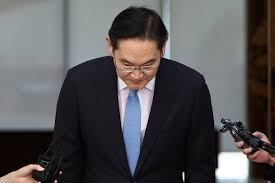
SEOUL — Lee Jae-yong stood at a lectern on May 16 and apologized for what he called Samsung Electronics’ “internal problems,” a rare act of public contrition from a chairman who usually lets quarterly earnings speak for the company.
His remarks landed days before the biggest labor test in the company’s history. Samsung’s largest union plans to begin an 18-day strike on May 21, and more than 40,000 employees have registered to join, according to figures cited by Yonhap News Agency. If the walkout proceeds, it would be the most extensive industrial action ever at the world’s largest maker of memory chips.
“We should move in the same direction,” Lee said in his apology, urging the union and management to close ranks. The plea did not appear to move union leaders, who said talks remained stalled over wages and bonuses.
Negotiations began in December and broke down in March. With mediation, the two sides returned to the table for marathon sessions from May 11 to May 13 but failed to reach an agreement, according to people familiar with the talks. Union officials said the company’s latest offer fell short of demands tied to inflation and profit sharing.
The economic stakes are outsized. A strike could cost up to 40 trillion won, or about 182 billion yuan, according to a Yonhap estimate, and would ripple through a semiconductor industry that sits at the center of South Korea’s economy. The government has signaled it could invoke emergency arbitration powers to force a settlement, a step that would effectively pause the walkout.
Samsung has little room for error. The company is a leading supplier of high-bandwidth memory used in AI data centers, and demand for those chips has pushed its semiconductor division to strong profitability after a bruising downturn in 2023, when the division posted its worst results in more than a decade. Analysts said a prolonged strike would threaten wafer output just as customers are scrambling to secure supply.
Labor tension at Samsung has been building for years. In July 2022, workers staged the first strike in the company’s history over wages, a three-day action that was mostly symbolic. The current confrontation is larger and better organized. Union membership has grown since 2022, and organizers say they are prepared for a long fight.
“This is no longer a symbolic protest,” a union representative said. “Our members voted for this.”
Samsung officials have declined to comment on the union’s numbers but have acknowledged the risk. In a statement after Lee’s apology, the company said it would “do its utmost” to reach a settlement before May 21.
A strike would not shut down semiconductor lines overnight. Chip fabs run automated around the clock, and managers could fill gaps with nonunion staff. But analysts cautioned that maintenance shifts, clean-room staffing, and equipment servicing depend on skilled technicians, many of whom are union members. Even a partial disruption, they said, could delay wafer shipments and hand market share to rivals such as SK Hynix and Micron Technology.
Customers are watching closely. Cloud providers and chip designers that buy Samsung’s memory have begun asking about contingency plans, according to people familiar with the discussions. Some have said they would shift orders to competitors if the strike extends beyond two weeks.
The political calculus is delicate. South Korea’s government has mostly stayed out of the dispute, mindful of criticism that it meddles in labor matters. But the potential damage to the country’s flagship export industry has pushed officials to explore emergency arbitration, which would allow the labor ministry to impose a cooling-off period and refer the dispute to mediation.
Lee’s apology was notable for what it did not say. He did not mention the strike, the union, or the wage dispute by name. He described “internal problems” in general terms, a phrase some analysts read as an acknowledgment of management failures, including a leadership vacuum and unresolved questions about succession.
The succession question hangs over everything. Lee has led Samsung since his father’s death in 2020, but his legal troubles — including a conviction that was later overturned — have kept his authority under scrutiny. Labor leaders say the company’s hard line in negotiations reflects a leadership that has lost touch with the factory floor.
Samsung’s own history offers a warning. In the late 1980s, the company crushed a strike at its plants in Suwon with police intervention, and relations with labor stayed adversarial for decades. The current union, formed in 2019, has been more assertive than its predecessors, and its leaders have promised members that this time they will not back down without a deal.
The outcome of the May 21 deadline remains unclear. Union leaders say they will proceed unless management returns with a new offer. Management says it wants talks to continue. Both sides say the door remains open. In the meantime, workers are registering for strike duty, and the company is preparing for a walkout that could last the better part of three weeks.
For the South Korean public, the images are striking: tens of thousands of workers at the country’s most storied company, preparing to down tools at a moment when its chips are in demand around the world. Lee’s apology bought time, but it did not settle the fight. The next move belongs to the union, and to the government officials watching from the sidelines.