
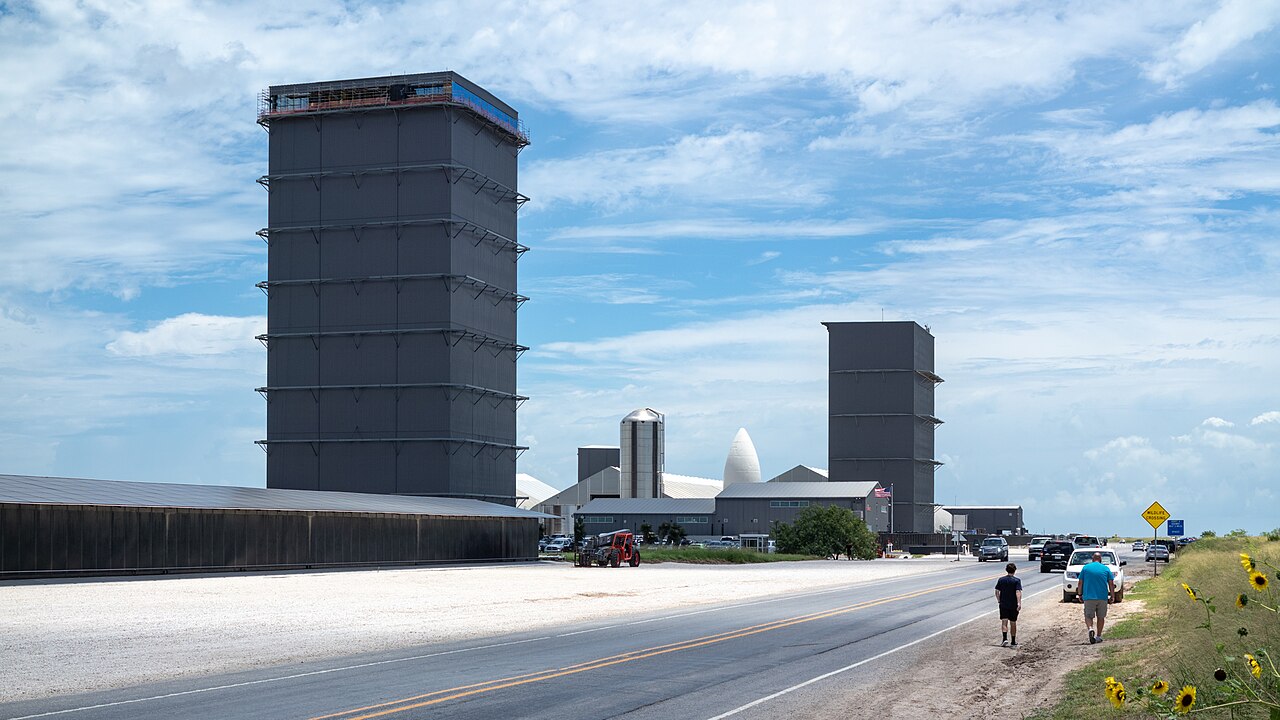
The ticker tape says it plainly: SpaceX, a company whose shares began trading days ago, now sits among the six most valuable companies in the United States. With a market value of about $2.1 trillion, it has joined the club at the top of the market, and the alphabet soup that Wall Street uses to talk about that club no longer fits. Reuters, surveying the new order, floated a new shorthand: MANGOS.
The acronym stands for Microsoft, Amazon, Nvidia, Google, OpenAI and SpaceX. It is a partial joke, as such acronyms usually are, but it carries a serious point. The old lists no longer describe the market that exists. FAANG, coined in 2013 by the television personality Jim Cramer, covered Facebook, Apple, Amazon, Netflix and Google. The Magnificent Seven, popularized a decade later by a Bank of America strategist, added Microsoft, Nvidia and Tesla to a list built around Alphabet, Amazon, Apple, Meta and Microsoft. Both had their day. Neither survives contact with the current top six.
The new set is remarkable for what it drops and what it adds. Apple, the most valuable company in the world for much of the past decade, is absent. So are Meta and Tesla, both pillars of the old lists. In their place stand OpenAI, an artificial-intelligence lab that was a nonprofit research outfit a decade ago, and SpaceX, a rocket company that was nearly bankrupt in 2008 and listed its shares only this month. Two companies that until recently were strictly private now crowd out the consumer giants that defined the last bull market.
The reshuffling reflects a real shift in where value is being created. OpenAI’s own path shows how quickly the order can change: founded in 2015 as a nonprofit research lab, it became a household name after releasing ChatGPT in late 2022, and its valuation has multiplied almost every year since, making it the fastest company ever to approach a trillion-dollar price. SpaceX took two decades to get there; OpenAI did it in a handful of years. The two arrivals, one slow and one sudden, bracket the same underlying story. The markets’ center of gravity has moved from devices and social networks to compute and launch capacity. Nvidia’s rise made that visible first; the appearance of OpenAI and SpaceX in the top tier makes it unmistakable. Each of the three new entrants sells something scarce: Nvidia sells chips that cannot be built fast enough, OpenAI sells intelligence that businesses now treat as infrastructure, and SpaceX sells the only high-capacity way to put satellites and cargo in orbit.
The naming matters to investors in a practical way, because these lists are not just decoration. Index funds, exchange-traded products and pension portfolios are built around the biggest names, and the stocks at the top of the market attract a disproportionate share of inflows. When the composition of the top tier changes, the flows follow. A fund that tracks the S&P 500 today is, in effect, a bet on a handful of companies, and the handful has changed. The largest stocks now account for a strikingly large share of the index’s value, analysts said, and every change to that top tier forces a wave of buying and selling across thousands of funds that hold the index in pieces.
That concentration is precisely what worries the acronym’s critics. The arrival of two newly listed companies at the top adds volatility to a structure that was already fragile. SpaceX, with a float of roughly 4% of its shares, is a stock in which prices can move on the difference between index demand and available supply. OpenAI, if and when it lists, would bring its own version of that problem. The new alphabet, in this telling, is a description of risk as much as a description of power.
There is also a question of how long the list holds. Acronyms are revised when reality changes, and reality has been changing quickly. Reuters’ own coverage noted that some analysts have floated “Dirty Dozen” for an expanded group, and that the MANGOS suggestion was offered partly in jest. But the underlying observation is not a joke: the market’s most valuable companies are no longer the ones that dominated the past decade, and the names that replaced them came from outside the public markets altogether.
For investors, the practical takeaway is simpler than the acronym debate suggests. The top of the market is now defined by semiconductors, artificial intelligence and space, and those three sectors are joined at the hip: AI models need chips, and the data centers that run them need connectivity that satellite networks increasingly provide. The companies that sit at the intersections have become the market. Whether that is a stable foundation or a stacked one is the question underneath every new name Wall Street invents. For now, the answer is written on the tape, and it spells MANGOS.



