
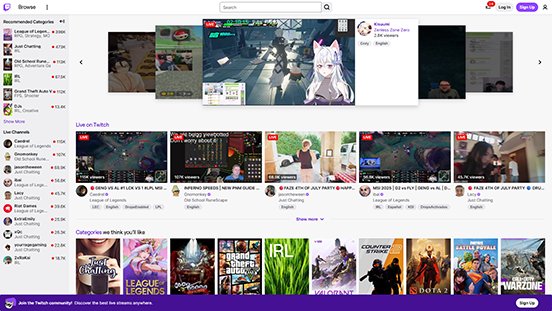
SAN FRANCISCO — A group of American online streamers filed a class-action lawsuit against Twitch and its parent company Amazon on Aug. 21, accusing the companies of using livestream content to train generative-AI models without permission. The suit, which drew fresh media attention over the weekend, argues that the voices, likenesses and creative work of thousands of streamers have been fed into AI systems, and that the platform that hosted their content has no right to profit from it a second time.
The complaint centers on a practice that has become central to the AI economy: the use of existing creative content as training data. Twitch, the dominant platform for live video, hosts millions of hours of original content each year — gameplay, talk shows, music, art, cooking — much of it produced by individuals who built careers on the platform’s promise that their work would belong to them. The suit alleges that Amazon and Twitch have used that content to train AI models, including systems for content recommendation, moderation and generation, without disclosure or compensation.
Twitch has not commented on the suit, and Amazon did not respond to requests for comment. The companies have previously said they respect creators’ rights and that AI tools are designed to assist rather than replace creators, but the lawsuit’s allegations, if proven, would put those assurances in a different light. The case is one of a wave of similar actions across the creative industries — authors, musicians, visual artists and now streamers — testing whether existing copyright law covers the use of protected work as training material.
The streamers’ case has a distinctive feature that the earlier suits lacked: the live element. Much of Twitch’s content is broadcast in real time, raising questions about whether the performers’ rights extend to their unedited, unscripted output, and whether a platform’s terms of service, which typically grant it broad rights to use user content, cover training AI on that content. The lawsuit argues that the terms of service were never intended to authorize the use of streamers’ work to build the systems that could eventually replace them.
The economics of the dispute are not hypothetical for the plaintiffs. Twitch streamers earn money from subscriptions, donations and advertising, and many have built audiences that depend on their distinctive personalities, voices and styles. AI systems that can replicate a streamer’s voice or generate content in their style threaten that income, and the suit argues that the platform’s own AI ambitions create a direct conflict with its creators’ interests. Amazon’s broader AI business, including its models and its cloud services, gives the company an incentive to expand the supply of training data, the suit says.
Legal scholars are divided on the likely outcome. Some argue that platforms’ terms of service are broad enough to cover training uses, and that creators who agreed to those terms have limited grounds to object. Others say that the scope of the grants has never been tested for AI training, and that courts, when they rule, may find that the implied consent of a terms-of-service click does not extend to building a replacement for the person who clicked.
The case will take years to resolve, and its outcome will shape the economics of the creator economy and the data practices of every platform. Twitch and Amazon have the resources to litigate for as long as it takes; the streamers have the argument that their work, their likenesses and their livelihoods are being used without their consent. Between those positions sits a question the law has not yet answered: whether the content that built the internet now belongs to the people who made it, or to the machines that learned from it.
The suit also reflects a growing anxiety inside the creator economy about the direction of its platforms. Streaming and short-video platforms have spent years building AI features that summarize content, recommend what to watch next and, increasingly, generate new material in styles that resemble human creators. For the people who supply the content, the promise of the platform era was exposure and income; the fear of the AI era is that the same platforms will use their content to build systems that no longer need them. The streamers’ lawsuit is an attempt to establish, in court, that the terms of service they accepted do not amount to a license for that future.
Amazon’s position makes the case particularly consequential. Unlike a pure streaming platform, Amazon owns the full stack: Twitch for content, AWS for computing, and its own models for AI. That combination gives the company both the data and the infrastructure to train large systems on the content its creators produce, and it means the lawsuit’s allegations — if they survive the motion to dismiss — could expose internal practices across Amazon’s AI operations. Discovery in a case like this would be extensive, and the documents produced could influence every platform that has considered training models on user content.
The outcome will also be shaped by the politics of copyright and AI. Legislatures in the United States, Europe and Japan are debating rules for training data, and courts in several countries have issued early rulings that split on whether training is a fair use or an infringement. The streamers’ case will arrive in that unsettled environment, and its result will be one more data point for the lawmakers writing the rules. Whatever the courts decide, the questions the suit raises will not disappear: whether the people who create the content that trains AI are compensated, credited or consulted — or whether the platforms that hosted them for years get to keep what the machines learned.



