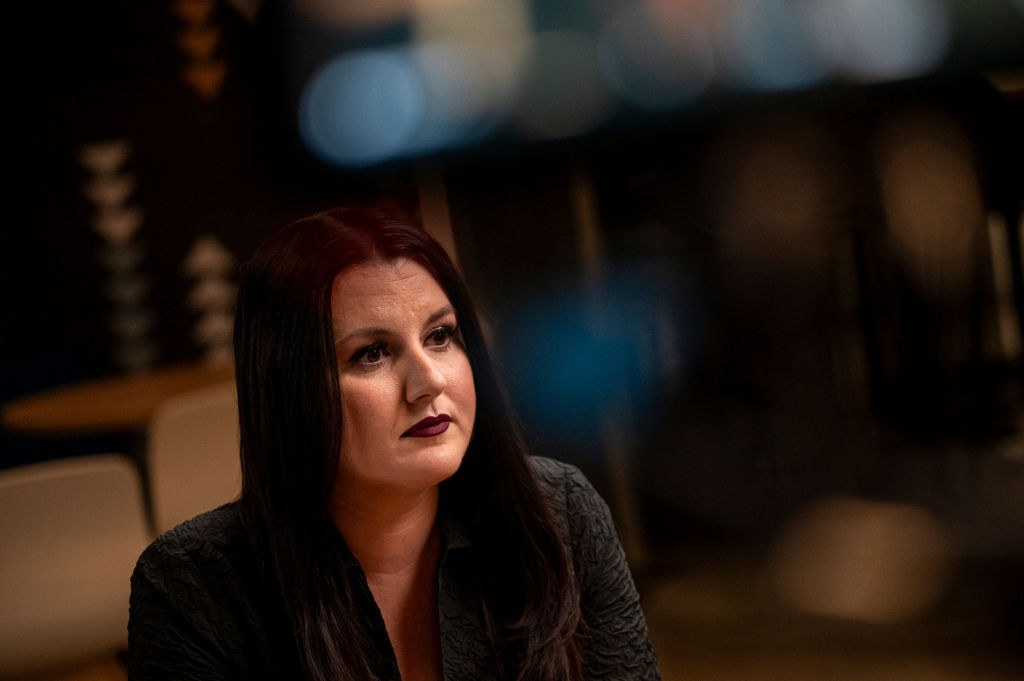
Fidji Simo spent three years running the business side of OpenAI as chief executive of its AGI deployment arm, the second-in-command behind Sam Altman. Before that she led Instacart through its public debut. On September 11, she took a seat on the board of Nscale, a London company that builds and runs AI data centers, as it prepares for its own run at a U.S. listing.
The appointment, effective immediately, puts Simo alongside a board Nscale has been assembling from Silicon Valley’s executive ranks. Sheryl Sandberg, the former Meta chief operating officer, Susan Decker, the former Yahoo chief executive, and Nick Clegg, the former Meta policy chief, all joined earlier this year. Together they arrived after Nscale closed a $2 billion Series C led by Aker ASA and 8090 Industries, with participation from Nvidia, at a valuation of $14.6 billion.
The timing is deliberate. Nscale is raising up to $3.5 billion more before an initial public offering that could itself raise as much as $3 billion, according to Bloomberg. Goldman Sachs and JPMorgan are leading the underwriting, and the target valuation is close to $25 billion. A board stacked with names that institutional investors recognize is part of the preparation for that listing.
Simo brings something the board did not previously have in abundance: operating experience inside a company that sells AI to the enterprise at scale. At OpenAI she oversaw the effort to turn a research lab into a business, a role that touched pricing, partnerships and enterprise sales. At Instacart she steered a company through the kind of scrutiny that comes with a public debut.
Nscale’s business sits a layer below the model builders. The company designs and operates data centers built for the dense computing that AI workloads demand, and it leases the capacity to the firms that train and run models. Demand for that capacity has turned data center operators into some of the fastest-growing companies in the technology sector, and Nscale is one of the largest in Europe.
The company’s pitch to investors is that the AI buildout will run out of power and space before it runs out of chips. Whoever can build data centers quickly, and connect them to electricity, controls a bottleneck that every model builder must eventually pass through. Nscale has spent the past two years racing to assemble land, power contracts and hardware to sit on that bottleneck.
The $25 billion target reflects how far the market has repriced that bottleneck. Data center operators that were obscure two years ago now trade at multiples that once belonged to software companies, and the private rounds have followed. Nvidia’s decision to invest in the Series C is itself a signal, since the chipmaker rarely puts capital into companies that will not end up buying more of its chips.
The risks are the ones that attend any capital-intensive buildout. Data centers cost billions and take years to fill, and a slowdown in AI spending would leave operators with empty space and heavy debt. Nscale’s answer is to sign long-term contracts before it breaks ground, so that capacity is sold before it is built. The board it is assembling is meant, in part, to reassure the public market that those contracts will hold.
Nscale has grown from an obscure operator into one of Europe’s largest AI data center companies in less than three years, riding the same demand that has made capacity the scarcest resource in computing. Its backers reflect that ascent. Aker ASA is the Norwegian industrial conglomerate controlled by Kjell Inge Røkke, and 8090 Industries is a firm that invests in the infrastructure behind advanced technology. Nvidia’s presence in the round is a stamp of approval from the company whose chips every Nscale customer will eventually need.
The company has built its model around speed. AI data centers differ from the traditional kind because they must support tens of thousands of graphics processors running together, which changes everything from power delivery to cooling. Nscale has positioned itself as one of the few operators that can stand up such facilities quickly in a market where the wait for capacity now stretches years. That is the story it will take to public investors, and the board it has assembled is meant to make the story credible.
For Simo, the seat is a bet that the AI economy has room for more than the model builders. She has spent her career at companies that serve consumers and enterprises directly. Now she is joining the layer that makes the whole thing physically possible, at a moment when that layer is about to be valued in public for the first time.
Simo’s track record spans both consumer and enterprise technology, and her arrival follows a pattern of Nscale recruiting executives whose names carry weight in the public markets.