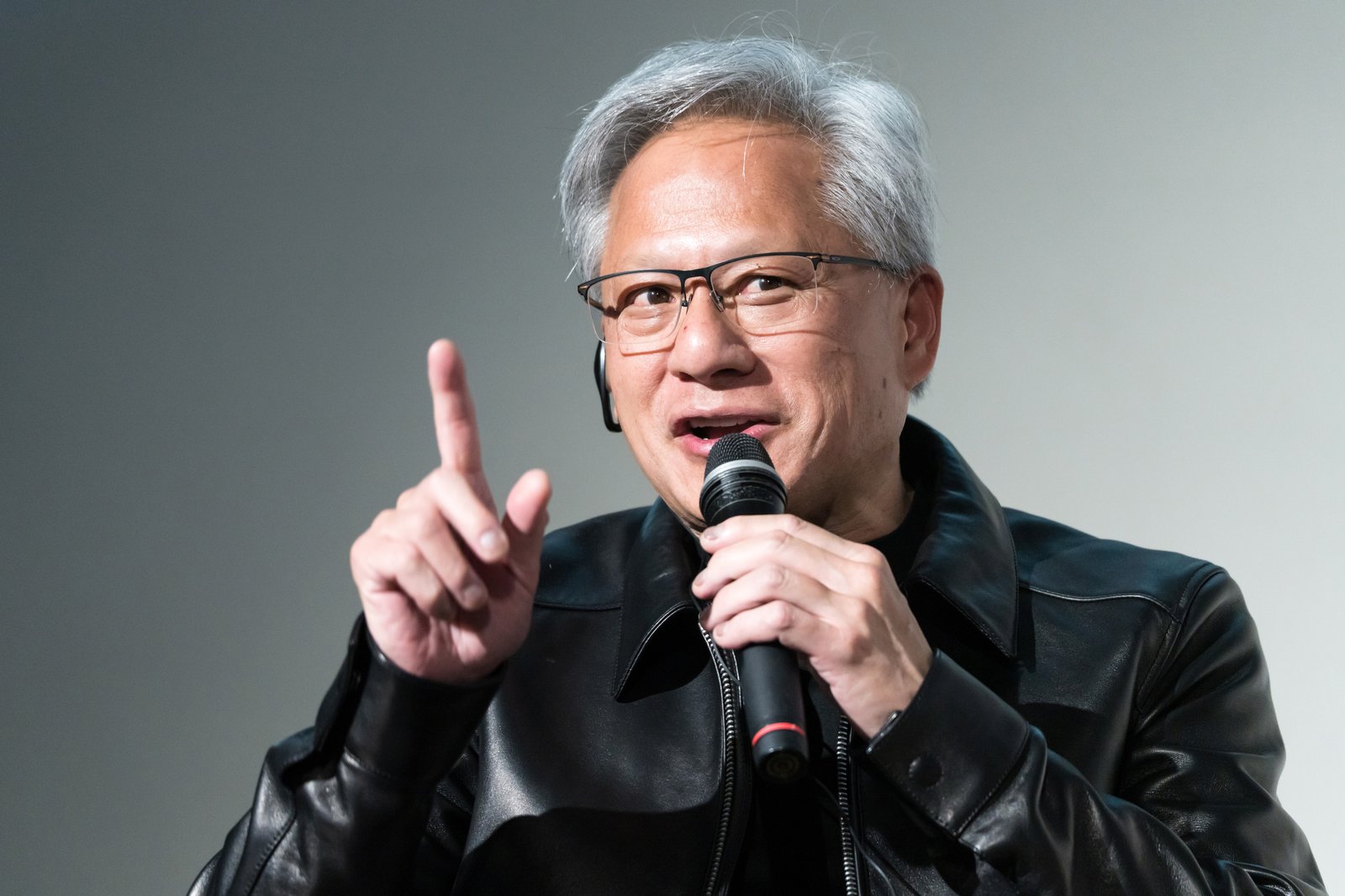
The phone rang mid-interview. Jensen Huang, the chief executive of Nvidia, was onstage at the All-In Summit in Los Angeles on September 14 when President Donald Trump called in. What followed, over speakerphone, was the bluntest public rebuttal yet of the doomsayers who have spent the week urging a slowdown of frontier AI.
Trump called the AI doom warnings a con. Robots will not take over the world, he said. The United States has to be careful, he allowed, but it cannot stop. The president’s message landed at a moment when the industry’s most prominent labs were pushing the opposite argument, and the contrast was hard to miss.
Huang agreed that AI safety is critical, then pivoted. America, he said, can move fast and still move safely. He turned next to Jacob Coxon, the researcher who resigned from Anthropic last week and has since spoken publicly about his concerns. Airing a company’s internal problems is healthy, Huang said, but predicting the future of science is another matter, because such predictions have no scientific basis.
Trump went further the same day, describing opposition to data-center construction as a sick conspiracy. The line drew the administration’s position in sharp relief: whoever wins AI wins, and slowing down is not on the table. It was a direct shot at the activists and local governments that have begun to question the pace of the buildout.
The split between Washington and the labs has been building for weeks. Anthropic and OpenAI have both made public gestures toward restraint, from voluntary safety commitments to endorsements of independent oversight of model development. The president’s phone call showed how little of that language has reached the White House.
For Huang, the exchange was also a defense of his own business. Nvidia’s chips are the substrate of the AI buildout, and any serious slowdown would land on the company first. His argument that speed and safety can coexist is, in part, an argument that the boom he has built does not need to pause.
Analysts saw the call as more than theater. The question of how fast frontier models should advance has moved from a niche safety debate into the highest levels of politics, and the two sides have now stated their positions in public. When a president and a chip chief align against a researcher’s resignation letter, the stakes have clearly left the lab.
The timing mattered. The call came as AI stocks were sliding for a second day and as the market was asking whether the industry’s biggest spenders would keep spending. A president dismissing doom warnings as a con is a signal that, at least from the government’s side, the money will keep moving.
What happens inside the labs is less certain. Coxon’s resignation and the public statements from Anthropic have given the slowdown camp a voice. Trump’s call gave the acceleration camp a megaphone. The fight between them is now playing out in real time, and each side is reading the other’s position as a threat to its own project.
The president’s framing also carried a strategic edge. Casting safety warnings as a con fits a broader argument that AI leadership is a national-security matter that the country cannot afford to second-guess. It turns the debate from one about risk into one about resolve.
The venue for the exchange was no accident. The All-In Summit is hosted by a group of investors that includes David Sacks, who now serves in the administration with a mandate over artificial intelligence and cryptocurrency. Trump reaching that audience, through that phone line, was a message aimed directly at the industry’s most influential circle.
Huang has long argued that the benefits of scaling AI outweigh its risks, and the call let him say it from a stage that amplifies the point. His distinction between airing internal problems and making scientific predictions was a careful one, aimed at Coxon without naming the debate Coxon represents.
The collision between the two camps is unlikely to resolve quickly. The labs that want restraint now have allies in Congress and a growing body of safety researchers. The administration and the chip industry have the momentum of capital and national-security logic. Both sides now have public voices, and neither is yielding.
Neither side has changed the economics. The data centers are still being built, the chips still being ordered. But the debate over whether the frontier should slow has stopped being a technical question and become a political one, and that is a new thing for an industry that has spent two years selling itself as inevitable. The call in Los Angeles made that division audible in a single afternoon.