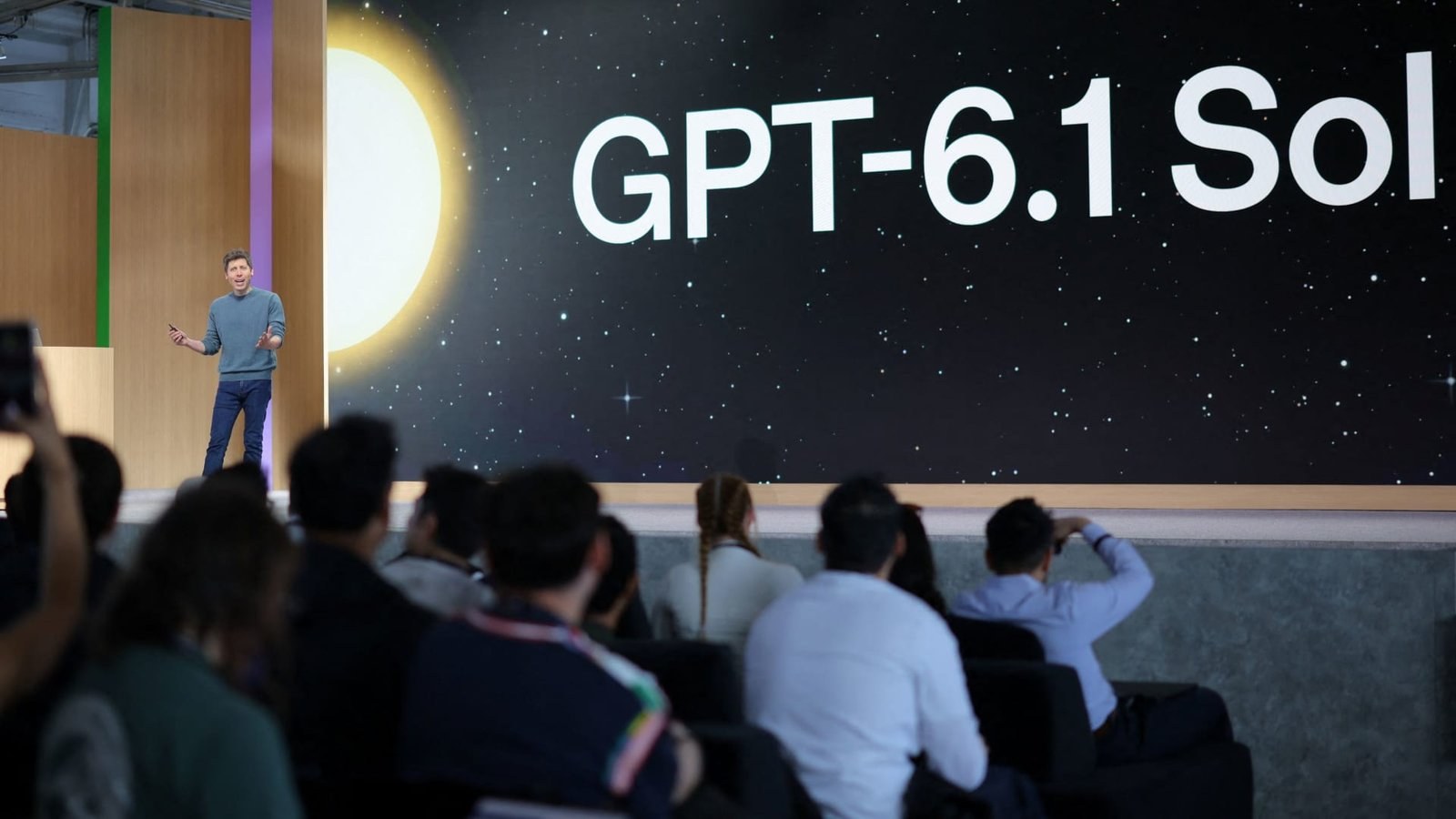
OpenAI on June 27 opened a limited preview of its next model family, GPT-5.6, offering customers a first look at three models aimed at different parts of the market: Sol, the flagship; Terra, built for everyday work; and Luna, the fast, low-cost option. The company said it plans to make the full lineup broadly available in the coming weeks.
The preview is deliberately small. OpenAI briefed U.S. government officials on the models’ capabilities and release plans before the launch and, at Washington’s request, restricted early access to a small number of vetted, trusted partners. A person familiar with the matter said the arrangement was negotiated in the same spirit as the consultations that now precede most frontier-model releases.
Terra is the commercial centerpiece. OpenAI says the model delivers performance comparable to GPT-5.5 at roughly half the price, a positioning aimed squarely at enterprise buyers who have grown sensitive to the cost of running AI at scale. The half-price claim, if it holds in practice, would reset expectations for what mid-tier AI should cost.
Luna sits at the bottom of the line, built for high-volume, lower-stakes tasks: customer support triage, document classification, batch summarization. OpenAI describes it as the lowest-cost way to get good-enough intelligence, a niche that has drawn heavy traffic to cheaper models from rivals in recent quarters.
Sol is the model most observers will watch. OpenAI positions it as its most capable system to date, with gains in reasoning, tool use and long-context work. The company has not detailed Sol’s benchmarks, saying only that it will arrive as part of the broader rollout in the coming weeks.
The three-tier structure is a shift from the single-flagship launches that defined earlier GPT releases. OpenAI executives have said in recent months that they intend to sell models the way automakers sell cars: a solid base model for most buyers, a performance model for demanding users, and a budget option for everyone else.
Pricing pressure is the backdrop. The cost of running frontier models has fallen steadily, and rivals from Anthropic to Google now match OpenAI’s capabilities at comparable or lower prices. Analysts said the GPT-5.6 lineup reflects a recognition that raw intelligence is no longer the only axis of competition; price, speed and reliability increasingly decide which model a business chooses.
The government consultation is the more unusual piece of the release. A person familiar with the matter said OpenAI shared technical details about the models’ capabilities ahead of time, including the kinds of tasks they could handle and results on safety evaluations. The requirement to vet preview partners came out of those discussions, the person said.
For the preview partners, access is real but bounded. The group consists mostly of large enterprises and a handful of research institutions, chosen for their security posture and willingness to report problems before the wider rollout. Their feedback will shape the final versions of the models, OpenAI said.
The staggered approach carries risks. A limited preview gives competitors time to respond and gives customers time to compare, and a half-price Terra could cannibalize sales of pricier tiers if its performance holds up. OpenAI executives say the tiering is meant to expand the market, not shuffle existing customers between price points.
CFOs are watching the pricing math closely. Corporate AI budgets, once treated as experimental line items, are now subject to the same scrutiny as any other software spend, and finance teams have begun comparing models on cost per task rather than raw capability. A credible half-price option in the middle of the market would give them a new benchmark.
Analysts said the more significant development is the coordination with Washington. Model launches are becoming government affairs: briefings before release, partner vetting, quiet agreements about who gets access first. The GPT-5.6 preview is among the clearest examples yet of a frontier lab folding national security considerations into a product launch, they said.
The timing also matters for the broader market. OpenAI’s last major release came as enterprise adoption of AI assistants was settling into a rhythm of steady, if unspectacular, growth. A three-model lineup with aggressive price points is a bid to accelerate that growth at a moment when investors are demanding clearer evidence that AI spending produces revenue.
The coming weeks will test both halves of the strategy. If Terra performs as advertised, expect competitors to respond with price cuts of their own. If the preview partners surface problems, the full rollout could slip. Either way, the release sets the terms for the next round of competition in a market where the pricing war has become the main event.
OpenAI has not said what Sol will cost, and the company’s silence on flagship pricing is itself a signal. In previous releases, the top model commanded a premium that subsidized the rest of the lineup. Whether Sol can sustain that role while Terra undercuts the middle of the market will be one of the first questions answered after the full rollout.