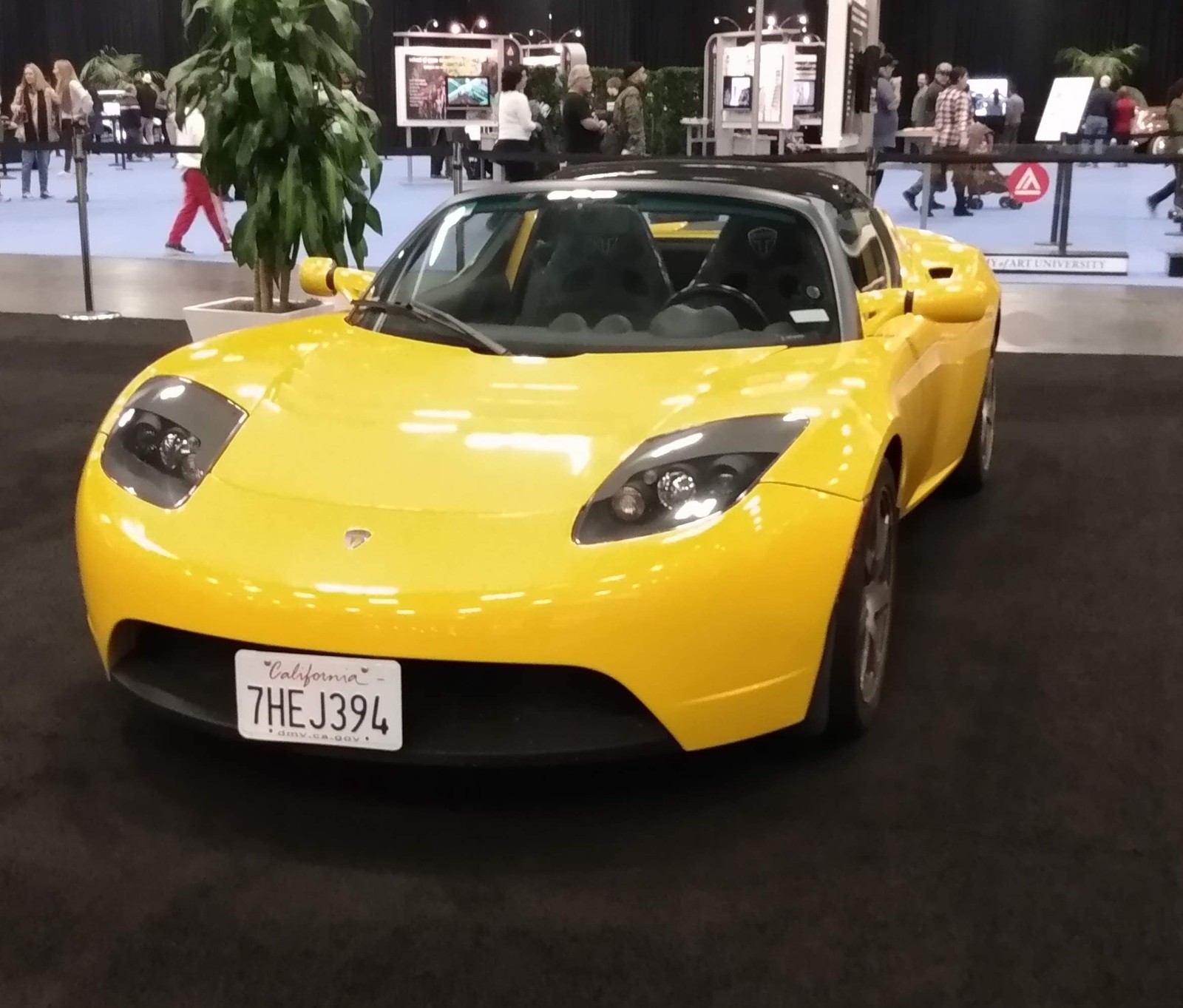
Tesla is asking for money again on a car it has been promising for nearly a decade. On September 20, the company reopened reservations for the Roadster, its long-delayed electric sports car, at a $50,000 deposit. The car’s public unveiling, the company said, is set for October 1.
The Roadster has been one of Tesla’s strangest sagas. First announced in 2017 as the fastest production car ever conceived, it was supposed to ship in 2020. It never did. Customers who put down deposits, $50,000 for the base model and far more for the limited Founders Series, have been waiting ever since, their money held while other models, from the Model 3 to the Cybertruck, consumed the company’s attention.
Now Tesla is reopening the order book. The decision to take fresh deposits ahead of an October 1 unveiling suggests the company finally intends to show a production-ready car, and that it wants a measure of demand in hand before it does. A $50,000 deposit is also a filter: it separates serious buyers from the merely curious and gives Tesla a pool of committed customers to market to.
Barron’s noted the timing. The unveiling lands at the start of October, a month when Tesla’s stock could move on factors beyond the car itself, and the publication flagged the Roadster as one reason the shares might chart a different course. The read on the Roadster, Barron’s argued, is not about the design. It is about the production numbers.
That is the question Tesla has been unable to answer for years. The company has rarely told a growth story through new models lately; the Cybertruck’s launch was slow and controversial, and the mainstream lineup has aged. A new vehicle that could be built at meaningful volume would give investors something they have lacked: a reason to model revenue growth that does not depend on robotaxis or software promises.
The Roadster is unlikely to be that vehicle. It is a halo car, a low-volume sports model whose purpose is partly to remind the market of what Tesla can do when it aims at the top of the performance range. The first Roadster, built on a Lotus chassis more than a decade ago, put Tesla on the map; the second is meant to burnish a brand that now competes with a wave of electric rivals.
The deposits tell a story of their own. If Tesla collects them at scale, it gets interest-free capital and a signal of demand. If it does not, the empty order book becomes its own data point. Either way, the company has chosen to ask for money now, before the car exists, which is the same promise it made in 2017 and has not yet kept.
The unveiling on October 1 will be scrutinized for signs of a real production timeline. Tesla has a history of showing cars years before they ship, and of moving launch dates. Investors have learned to discount the reveal and wait for the delivery. The question is whether this time the gap between the two will be measured in months or in years.
For a company whose valuation rests heavily on what it might do rather than what it currently sells, the Roadster is a test of credibility as much as a product launch. Tesla’s most valuable asset has always been its ability to make people believe in the next thing. The Roadster, promised for so long, is the clearest measure of whether that ability is intact.
When the Roadster was first shown in late 2017, Tesla claimed it would accelerate from zero to sixty miles an hour in under 1.9 seconds, reach a top speed above 250 miles an hour, and travel more than 600 miles on a charge. Those numbers were never independently verified, because the car never shipped. They still frame the conversation: the Roadster remains a promise about performance, and the longer it goes unfulfilled, the more weight the promise has to carry.
The deposits themselves have been a source of friction. Early customers who paid for the Founders Series, a limited run priced far above the base model, have waited through repeated delays with little more than assurances from the company. Reopening the base-model order book now, while those original reservations remain undelivered, adds a new layer of customers to a queue that already stretches back nearly a decade.
The $50,000 deposit raises the stakes. It is real money, more than the price of many entire cars, and customers who pay it will not wait quietly if October 1 comes and the car does not. Tesla is betting that the demand is still there, that the wait has built anticipation rather than burned it off, and that a sports car can still do what no spreadsheet can: make people want what the company is selling. After years of delay, the company has put a date in front of its most patient customers, and this time the calendar will tell the story.