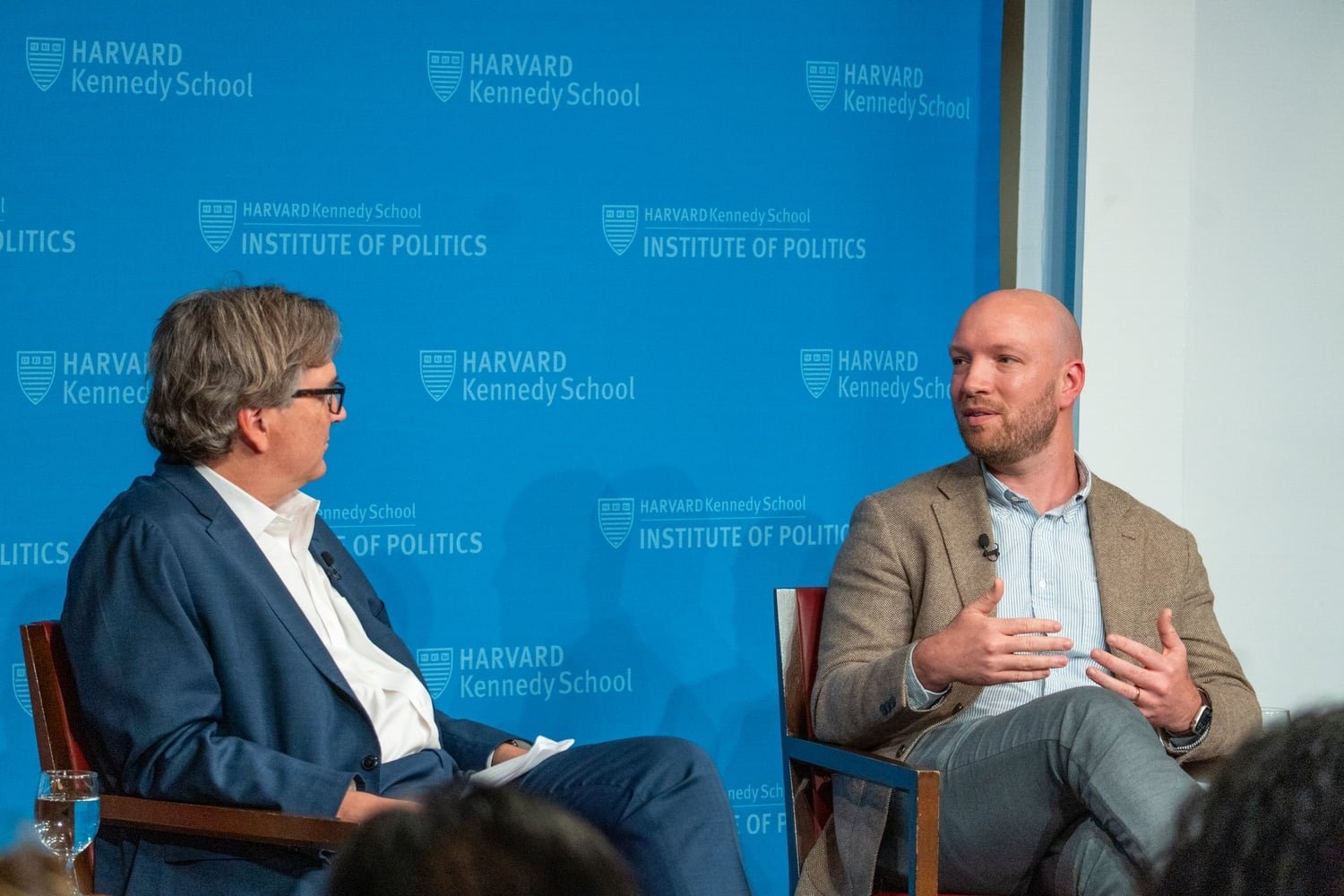
The pharmaceutical industry discards most of what it makes. By the time a drug candidate reaches the late stages of clinical testing and fails, its owner has usually spent hundreds of millions of dollars and years of work, and the molecule is written off and filed away. Anthony Mouchantaf and Dr. Alexander Mosa built a company on the idea that the discard pile is a resource, not a cemetery.
Biossil, the Toronto company the two founded in 2023, announced Monday that it has raised $153 million in a round led by OpenAI, valuing the startup at about $1 billion. The deal is OpenAI’s second time leading an investment in Biossil in roughly a year: a year ago, OpenAI co-led the company’s $43 million round alongside Founders Fund, the venture firm of Peter Thiel. The Globe and Mail first reported the new round.
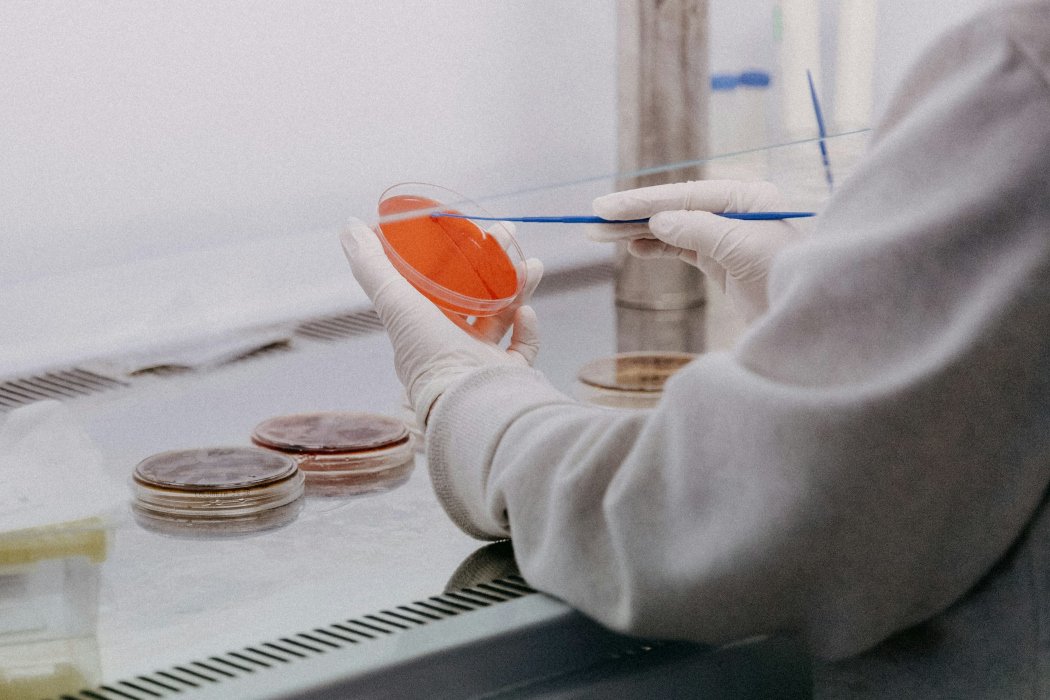
Biossil’s business is the inverse of most AI drug discovery. Companies in that field typically use machine learning to design new molecules from scratch. Biossil instead uses large language models from OpenAI to comb through the data of drug candidates that failed late-stage trials and to find reasons they might work after all, in different patients, at different doses, or measured against different outcomes. It then buys or licenses those molecules from their original owners and runs them back into clinical trials, skipping years of early-stage studies and hundreds of millions in costs.
The company has bought or licensed twelve molecules, and its portfolio is a tour of big pharma’s abandoned bets. One, a precision antibiotic it acquired from Summit Therapeutics for $500,000 up front, had faltered in a late-stage trial for C. difficile infections five years ago. Two others target sickle cell disease. One, called senicapoc, failed a late-stage trial for Johnson & Johnson because it did not beat a placebo at relieving pain; Biossil’s models found the data showed it was better at preventing the breakdown of red blood cells, a cause of anemia and other complications. A Pfizer antibody, rivipansel, failed in part because some patients received it too late; Biossil’s analysis suggested it worked far better when given within 24 hours of onset. Health Canada approved a late-stage trial of senicapoc in 2025, and the U.S. Food and Drug Administration has approved a confirmatory trial of the Pfizer drug.
The pitch to investors is that the previous owners of these molecules had already spent more than $1 billion developing them before walking away. If even a few can be revived, the cost and time advantage over starting from scratch is enormous. Biossil’s approach stood out to us immediately, Ian Hathaway, a partner at OpenAI’s Startup Fund, said, for its creativity and ambition, and for a credible path to delivering new therapies. The Startup Fund provided the majority of the new round.
The company’s path to Monday’s round ran through a series of progressively larger checks. A $3.7 million seed round in 2023, led by Staircase Ventures, gave way to a $22 million round led by Founders Fund in 2024, and then the $43 million round co-led by OpenAI and Founders Fund a year ago. Mouchantaf, a former head of venture strategy at Royal Bank of Canada, and Mosa, an internal-medicine physician, built the company in stealth and now count SickKids, Harvard and the Mayo Clinic among their research partners. Trials are running or planned across sickle cell disease, glioblastoma, idiopathic pulmonary fibrosis, breast cancer and Alzheimer’s.
OpenAI’s bet is also a signal about where the AI company is putting its money. It has been building a startup portfolio across industries that could become large customers of its models, and drug discovery is one of the fields where language models have found practical work, reading the scientific literature, trial data and securities filings that describe molecules in ways a model can reason about. Biossil is less a conventional biotech than a demonstration, at scale, of what an LLM can do when pointed at a hard scientific corpus.
The strategy is unproven in the only way the market counts. No company has yet taken a molecule that failed in someone else’s trial and carried it to approval using AI. Biossil’s most advanced candidates are only now entering the late-stage and confirmatory trials that will determine whether its reads of old data were correct. A company built on second chances is, for now, still asking for them.
The founders have not said which of their molecules they expect to reach market first, or when. They plan to use the new money to expand clinical development and buy more discarded candidates. The round gives them the capital to keep mining the discard pile; it does not yet prove anything was buried there worth finding. That proof, if it comes, will arrive in the form of a regulatory approval, and the company has set no date for one.