
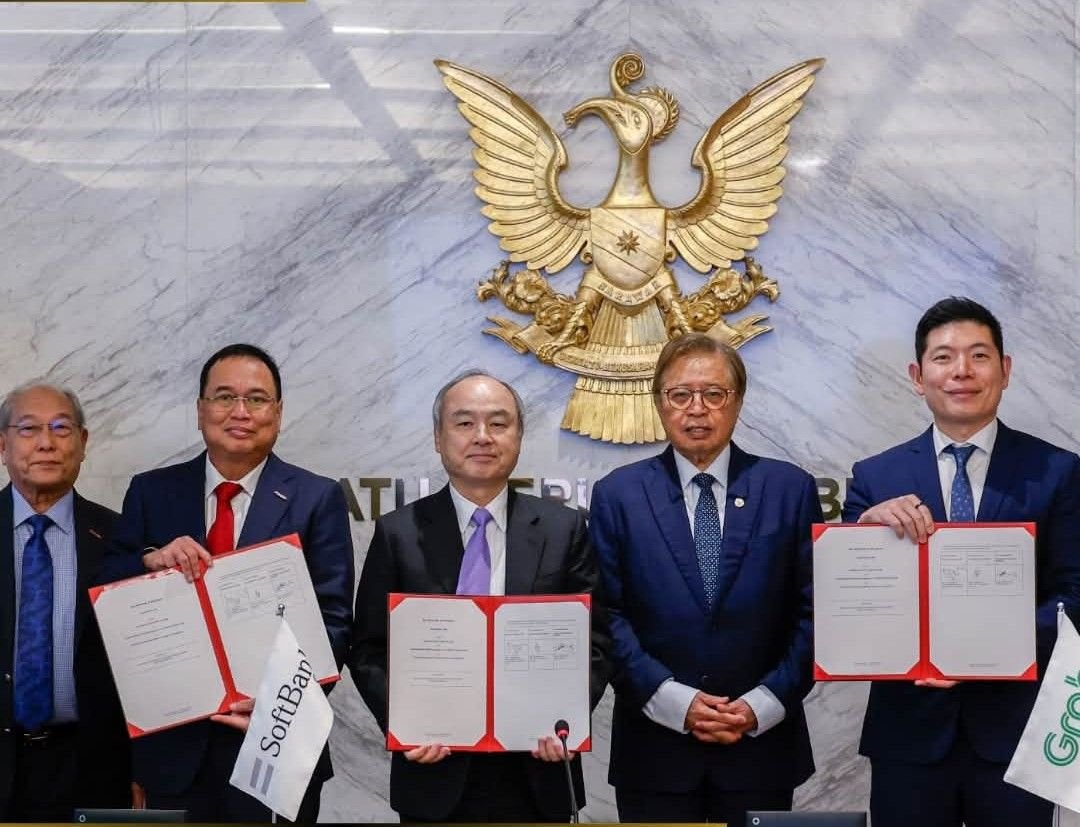
SoftBank, Grab and Petros, Malaysia’s state oil company, have signed an agreement to explore building artificial-intelligence infrastructure in Sarawak, the Malaysian state on the island of Borneo. The three parties disclosed little beyond the broad outline: computing power, data centers, and a plan to grow local talent and industry around them.
The deal, reported by Malaysian media on Oct. 8, is an agreement to explore rather than a commitment to build. No investment size was given, and no timeline was set. What the three companies have done is stake out a position on a piece of geography that has begun to attract attention as a home for AI’s physical machinery.
Sarawak’s appeal is not hard to understand. The state has cheap and abundant electricity, much of it from hydropower, and power is the single largest constraint on AI infrastructure anywhere in the world. Data centers are effectively energy projects, and places with surplus power are becoming the destinations for the industry’s capital.
For SoftBank, the deal extends a run of commitments to AI infrastructure across Asia and beyond. The company has become one of the most aggressive investors in the physical layer of the AI boom, and a stake in Sarawak fits a pattern of placing capital where power and land are cheap and regulators are welcoming.
For Grab, the tie-up is more unusual. The Singapore-based company is best known for ride-hailing and delivery, but it has been building out a payments and technology business across Southeast Asia, and it holds large amounts of data about how the region’s consumers move and spend. A role in AI infrastructure would pull it deeper into the technology layer that its own services increasingly depend on.
Petros brings the local anchor. The state-owned oil company is tied to Sarawak, and its involvement signals that the project has official backing in a state that has been courting data-center investment. Having a state firm inside the agreement gives it a path through the approvals and land questions that often decide whether such projects get built.
The structure of the deal is loose by design. Exploration agreements are the first step in a longer process that may or may not end in construction. The three parties will now study feasibility, and the answers to those studies will determine whether the agreement turns into spending.
The choice of Sarawak also says something about where the AI build-out is heading. The industry began concentrated in a few hyperscale hubs, but the sheer demand for power and space has pushed developers to look farther afield, to places that would not have been on the map for data centers a few years ago.
Analysts have noted that Southeast Asia is emerging as one of the next centers of AI infrastructure, driven by the same arithmetic that favors Sarawak: power, land, and governments eager for the investment. The competition among countries and states for those projects has grown intense, and the SoftBank-Grab-Petros agreement is one entry in that contest.
The local dimension matters as much as the technical one. The agreement includes a commitment to develop local talent and industry, the part of such deals that politicians care about most. For Sarawak, the promise is jobs and a technology base beyond its traditional resource industries. For the companies, the talent component is a condition of access as much as a gesture.
SoftBank’s involvement carries the most weight of the three. The Japanese conglomerate has committed tens of billions of dollars to AI infrastructure, from data centers to power projects, and its name attached to a feasibility study is enough to change how a region is perceived by other investors.
The agreement also fits a pattern of infrastructure chasing power. AI’s appetite for electricity has grown faster than the grid in most developed markets, which pushes developers toward places with surplus hydropower and geothermal capacity. Sarawak, with its dams and rivers, is exactly the kind of place that shows up on that list.
The companies offered no detail on how the work would be financed or divided, and none of the three has said how large the eventual project might be. What they have committed to is a process, and the process will determine the scale.
The deal is best read as a marker. It places three companies with complementary interests on the ground in a state that wants them there, and it creates the option to move quickly if the studies come back favorable. Options are cheap. Building is not.
Whether the agreement becomes concrete will depend on studies that have not yet begun in earnest. For now, the signing is a signal, and in the competition for AI’s next wave of capital, signals are what get a place noticed.



