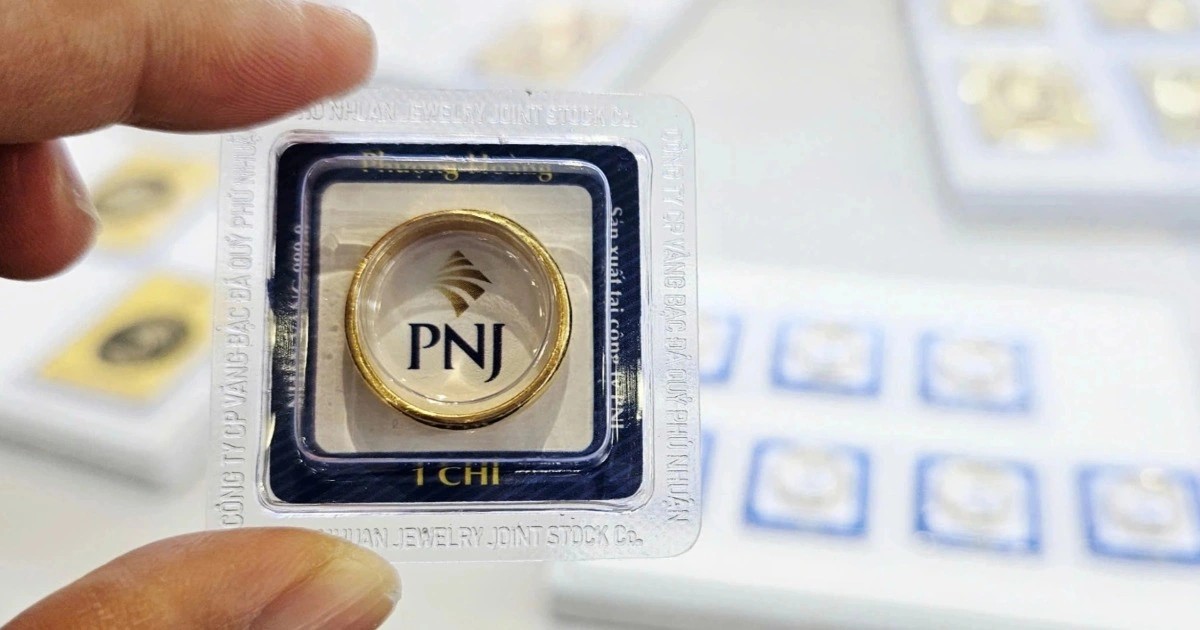
For years a diamond bought at a PNJ store came with a second promise alongside the receipt: the company would take the stone back at 90 to 95 percent of what the customer paid. In July, tens of thousands of customers decided to test that promise at the same time.
The trigger was a criminal case. Prosecutors moved against Dang Ngoc Thao, a former director of P-Lab, the group’s gem certification subsidiary, over the smuggling of 28,000 diamonds. P-Lab’s certificates are what allowed PNJ to sell stones with a stated grade and a stated price in a market where most buyers have no independent way to judge either.
What followed was a run, in the plain sense of the word. Between July 1 and July 20, PNJ booked revenue of 1,588 billion dong and repurchased 5,900 billion dong of jewellery from customers, nearly four times what it sold. The volume of buybacks ran five times the volume of sales. Since the beginning of July the company has taken back more than 7,000 billion dong of its own merchandise.
The guarantee is not a marketing flourish in Vietnam; it is the mechanism that makes the product saleable. Gold and gemstone jewellery is bought as savings, in a country where household wealth sits in metal rather than in funds. A buyer who knows the shop will take the piece back at a fixed percentage is buying something closer to a deposit than to a luxury good. PNJ built a national chain on that confidence.
The accounting arrived in the second quarter. PNJ reported an after-tax loss of 283 billion dong against a profit of 437 billion a year earlier, its largest quarterly loss since it began publishing accounts in 2008. Management expenses rose 5.2 times to 1,063 billion dong, of which more than 865 billion dong was a provision against buybacks, booked on assumptions about the recovery value of stones it had agreed to repurchase.
The company now plans a provision of 7.07 trillion dong and has told the market to expect a loss of roughly $242 million for 2026. The shares have fallen about 68 percent since early July.
The first half looked healthy, which is part of the difficulty. Net revenue for the six months came to more than 25,700 billion dong, up 49 percent, and after-tax profit was 1,184 billion dong, up 6 percent. A reader of the interim report alone would have seen a retailer growing through a gold rally. The damage is concentrated in the weeks after the case became public and in the year that follows.
PNJ’s response has been to change the terms of its own promise. From July 21, customers who want to sell back can take cash on a 120-day schedule paid in five installments, or exchange the piece for other PNJ merchandise priced at market rather than at the percentage on the invoice. The company has been using its existing diamond inventory to fill those exchanges, which conserves cash and moves stock that would otherwise sit.
On Wednesday the company went further, saying it intends to move away from the buyback guarantee altogether, according to Bloomberg. For a retailer whose brand was built on the guarantee, that is the substantive decision, not the provision.
The economics behind the retreat are unforgiving. A promise to repurchase at 90 to 95 percent of the sale price is a written put option on an asset whose wholesale price the retailer does not control. In a rising market the option is never exercised and the promise looks free. In a falling market, or a market where the certificates behind the stones are in doubt, every holder exercises at once, and the retailer is obligated to buy back inventory at prices set when confidence was higher.
That is a liquidity mismatch dressed as customer service. The customer holds an asset the shop has promised to make liquid; the shop holds stones it must now value without a functioning reference price. The provision is the accounting recognition of the gap.
Vietnam’s diamond trade has no exchange and no standardized grading authority that consumers trust independently. That is why a certification subsidiary mattered, and why its involvement in a smuggling case damaged the whole chain rather than one company. If the paperwork behind a stone is unreliable, the resale value of every stone sold in the same channel becomes arguable.
The wider jewellery industry has run versions of this model for decades, in China, India and the Gulf. Retailers offer exchange at a stated percentage to convert jewellery into something closer to a savings product, and the scheme works as long as redemptions are a small fraction of sales. The failure mode is identical everywhere: a shock that makes holders want cash at the same time.
What changes for PNJ now is the shape of the business. Without a price guarantee, the company is selling design, service and after-sales support rather than stored value, which is a lower-margin proposition and a different customer. The stores remain, the gold business continues, and the diamond inventory has to be marked to whatever the market will pay.
There is also the question of what replaces the guarantee. Pawnshops and banks lend against gold at loan-to-value ratios set by regulation, and a consumer who wants liquidity can use them at a cost. If jewellers withdraw from the business of standing behind resale value, the cost of holding jewellery in Vietnam rises for everyone who buys it.
For investors the near-term numbers are the provision, the cash position and the pace of redemptions in the fourth quarter. For the industry the question is narrower and harder: whether a retailer can promise to buy back what it sells without holding capital against the promise. PNJ is discovering the price of having made that promise in the years when nobody asked it to keep one.