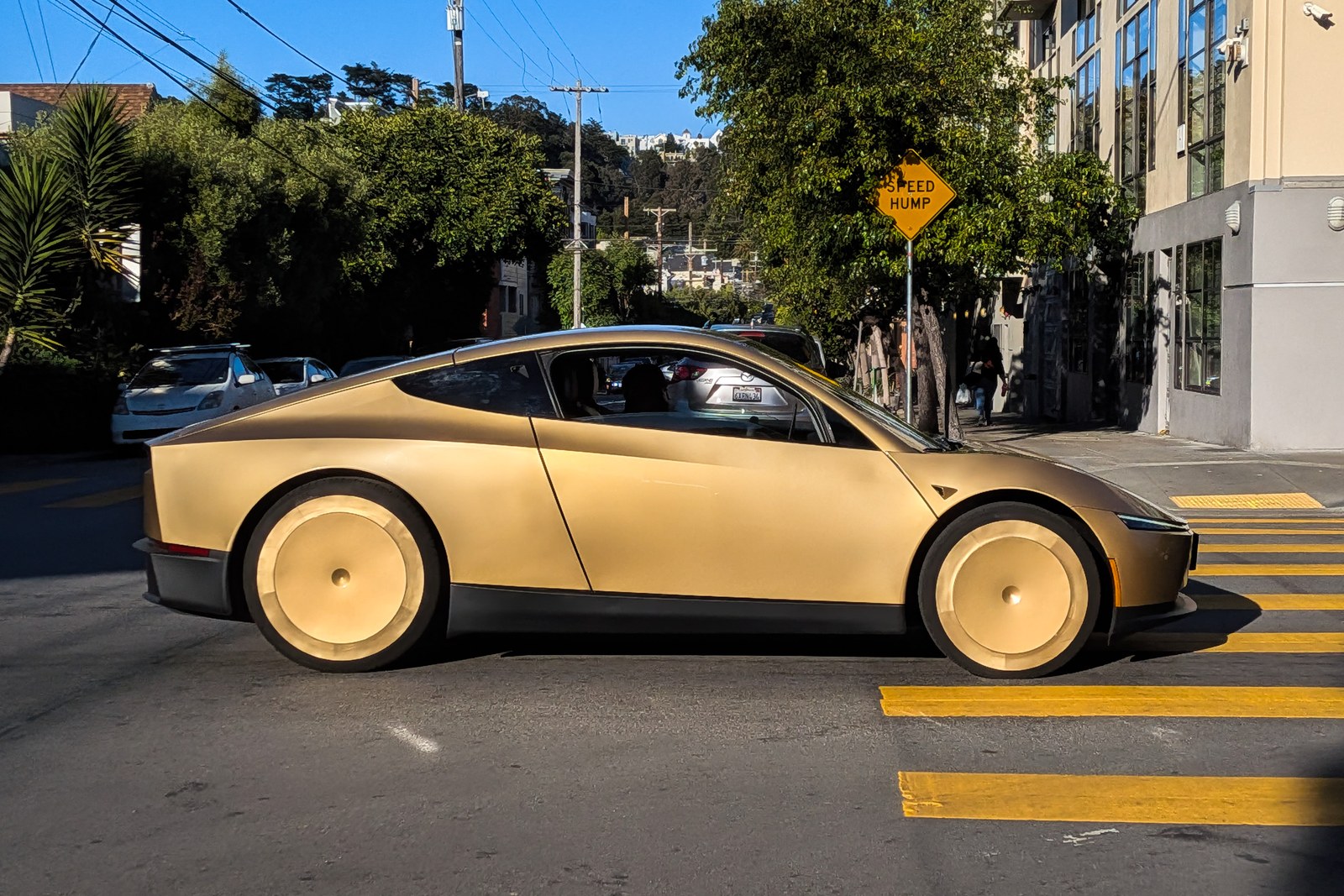
The obstacle was a large pothole filled with water. Tesla’s Cybercab was moving at about 5 miles an hour when it hit, and the vehicle was damaged. A safety monitor was in the car. There were no passengers.
Tesla reported the incident to federal safety regulators, and it is now the first crash logged for the purpose-built robotaxi. Austin reporters returned to it on October 21, and the questions that followed had little to do with the dent. A pothole is the kind of obstacle that a lidar unit or a downward-facing sensor maps without difficulty. Tesla’s robotaxis carry cameras and nothing else.
The company’s position is that cameras are sufficient because human drivers manage with two eyes. The counterargument is that human drivers slow down in rain, read the surface ahead, and know their own street. A water-filled pothole on wet asphalt presents almost no texture for a vision system to resolve, and a shallow depth of field at five miles an hour is not much warning. Other operators use lidar for exactly this: measuring the road surface rather than inferring it.
The numbers around the incident are more mundane than the argument. There were 24 robotaxi crashes reported across Texas in the four weeks ending September 15, nine of them in Austin, according to federal data compiled from operator filings. Tesla reported eight crashes statewide in the latest tranche, three of them in Austin, bringing its Austin total to 26 since June 2025. Waymo, which runs far more vehicles on Texas roads, reported eight statewide and five in Austin over the same period, for 140 since June 2025. Avride has logged 27 in Austin, Zoox four.
Fleet size explains part of the difference and complicates the comparison. When Tesla opened Cybercab service on September 3, Texas Department of Motor Vehicles records showed 45 Cybercabs authorized for commercial operation among 420 autonomous vehicles, the rest being converted Model Ys. By early October the Cybercab count had reached 169 while the Model Y fleet stayed near 420, for roughly 589 vehicles against Waymo’s several thousand.
The camera-only decision dates to 2015, when Elon Musk rejected engineers’ recommendations to add lidar after an Autopilot test car swerved over faded lane markings on Interstate 405. Tesla removed radar in 2021 and ultrasonic sensors in 2022, leaving the camera suite that the company calls Tesla Vision. “Lidar is a fool’s errand,” Musk said at the company’s 2019 autonomy event, arguing that anyone relying on it was doomed. The bet was never that cameras beat lidar on any single task. It was that a large enough fleet collecting video would train a system that generalizes, and that hardware cost would decide who could scale.
That bet is now being tested in public, at low speed, in a city with uneven pavement. The National Highway Traffic Safety Administration escalated its investigation of roughly 3.2 million Teslas to an engineering analysis, citing fatal crashes in which the driver-assistance system failed to detect pedestrians in low-visibility conditions. An engineering analysis is the step before a recall request. Tesla has disputed characterizations of the system’s performance and has said its vehicles are safer than human drivers on its own measured miles.
The regulatory question has shifted accordingly. Through the summer, the argument in Austin was about permits: how many vehicles, which streets, what hours, whether a steering wheel is required. A pothole moves the argument to perception and to the remote operators who watch the fleet. Tesla and Waymo have both declined to say how often their remote staff take control of a vehicle, which makes it impossible to know how much of the driving is actually done by the car.
Waymo publishes more. Its latest safety report claims 841 fewer injury-causing crashes across five metro areas through June 2026, or 82 percent fewer than the rate for comparable human driving, and its vehicles are registered in far greater numbers. The company’s crashes also cluster in low-speed contact with human drivers who hit it, a different profile from a vehicle striking a road defect.
For Tesla, the stakes are not the repair bill. Its car business has been under margin pressure for two years, and the robotaxi program carries much of the valuation argument that remains. A fleet that stops for a pothole is a fleet that cannot keep a schedule, and schedule reliability is what a ride-hailing business sells. The company’s answer has been that the system improves with every mile, and that the miles are accumulating faster than any competitor’s.
A five-mile-an-hour pothole strike is the cheapest failure available: a wheel, a sensor housing, no injuries, a report filed on time. It is also the kind that repeats. Potholes come back every winter, in every city where the company plans to operate, and they do not appear in the training data until a car has already hit one. Tesla has not commented on the specific incident. The next one will arrive on a street that nobody mapped, which is the only test that matters for a vehicle with no steering wheel.