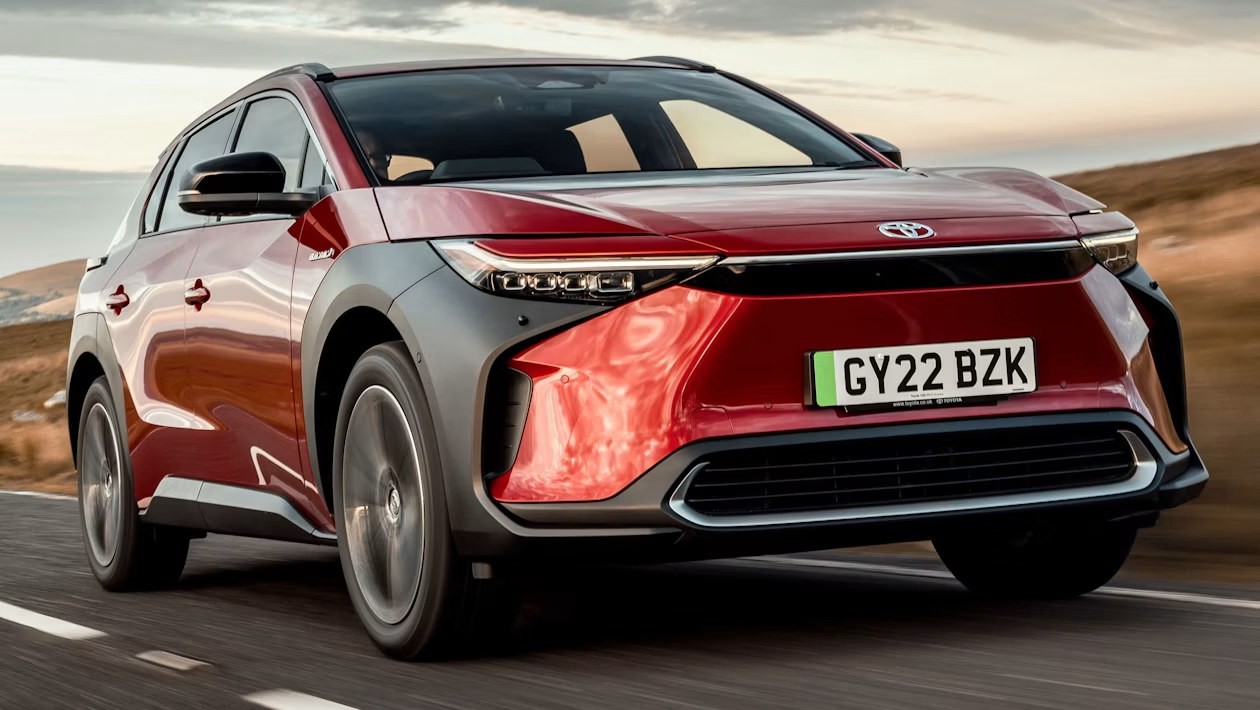
The announcement on Oct. 30 was short on spectacle. Beginning in 2027, Toyota and Waymo will put a fleet of autonomous taxis on Japanese roads, built on the bZ4X, Toyota’s electric crossover. Testing and validation come first, scale after that. The stated goal is the first fully autonomous ride-hailing service in Japan using locally manufactured vehicles.
The division of labor is the interesting part. Toyota builds the car. Waymo supplies the driver — the sensors, the software, the remote assistance, the maps.
Both companies have reasons to want the arrangement and reasons to keep it narrow. Toyota has spent a decade and considerable capital on automated driving without producing a commercial service, and its electric vehicle lineup remains thin relative to the Chinese and American competition. Waymo has the opposite problem: its technology works in the cities where it operates, and it needs vehicles, manufacturing capacity and regulatory permission in markets it does not know.
The two have been working together since April 2025, when they announced a technical partnership. The agreement disclosed on Oct. 30 goes further, putting vehicle supply and operating regions into the same document. That is the difference between a research collaboration and a commercial one.
Japan is a demanding first market outside the United States for reasons that are not primarily technical. The country’s streets are narrow, its traffic dense, its parking scarce, and its taxi industry regulated in ways that determine who may carry passengers for hire. Japanese regulators have permitted limited Level 4 operation in designated areas, a framework that gives a company room to run a service but not room to expand quickly.
The case for the service rests on demographics. Japan’s population is aging faster than any large economy’s, and rural areas have lost bus routes and taxi drivers for years. A vehicle that can operate without a driver addresses a labor shortage rather than a convenience. Waymo’s existing markets — Phoenix, San Francisco, Los Angeles, Austin — were chosen partly because they had the opposite profile: growing populations, heavy ride-hail demand, permissive state rules.
Toyota brings something Waymo has needed since it began scaling: a manufacturer willing to integrate the sensor suite at the factory rather than in a retrofit shop. The bZ4X is not a high-volume vehicle, but it is Toyota’s, built on Toyota lines, with Toyota’s warranty and dealer network behind it. For a service that must eventually compete on cost per mile, the difference between a purpose-built vehicle and a converted one is the difference between a viable unit economics story and a subsidy.
Waymo has struck similar arrangements with other automakers, and the pattern is now clear: it wants to be the driver, not the car. That is the opposite of the strategy Tesla is pursuing, in which one company builds the vehicle, writes the software and operates the network. The platform approach spreads capital risk and slows execution; the vertical approach concentrates both. Neither has been proven at scale in more than a handful of cities.
The choice of the U.K. as the next market is instructive. Britain and Japan share right-hand-drive architecture, which means the vehicle integration work done for Tokyo transfers with less reengineering than a left-hand-drive market would require. It also means the regulatory work — type approval, insurance liability, remote supervision rules — can proceed in parallel rather than sequentially. Companies in this sector have learned that permission, not technology, sets the timetable.
For Toyota, the risk is strategic. Partnering with Waymo concedes the software layer, the part of the vehicle that will carry the most value if autonomy works. Toyota has argued that it will keep control of the platform through its own software stack and through vehicles designed for multiple systems, but a car that runs Waymo’s driver in Japan in 2027 is a car whose intelligence belongs to someone else.
The compensation is time. Toyota gets a commercial autonomous service years before it could build one, in its home market, with its own vehicles. It also gets data — real operating hours on Japanese roads, in Japanese weather, with Japanese passengers — that would otherwise take a decade to accumulate.
For Waymo, Japan is a small market with large symbolic weight. The country is home to the world’s most demanding consumers of transportation and to a domestic auto industry that has been skeptical of Silicon Valley’s approach. A service that works in Tokyo is an argument that works everywhere. A service that stumbles there validates the skeptics.
Neither company put a number on the fleet, the investment or the fare. Both used the word validation, which is doing a lot of work in a sentence that also contains the year 2027. In this industry, validation has meant everything from a pilot with safety drivers to a paid service open to the public, and the difference between those two things is measured in years.
The competitive calendar is crowded. Several automakers and technology companies have said they will have robotaxi services running in multiple countries by the end of the decade, and Chinese operators have begun exporting their systems to overseas markets. The claim Toyota and Waymo are making is narrower than it sounds: not autonomy in general, but a locally built vehicle running a fully driverless commercial service on Japanese roads.
What the announcement establishes is that the partnerships formed in the research phase of this industry are turning into supply agreements. The next test is whether a factory-built car with someone else’s software can be operated profitably in a city where the taxi business is already regulated, unionized and proud of its standards. Tokyo will answer that before London does.