A federal judge in Mississippi has decided that a gas-fired plant built to serve an artificial intelligence data center must answer in court for running without an air permit, and in doing so has moved a dispute that had been argued in county meetings and planning commissions into a forum where the remedy is enforceable. By refusing on October 31 to dismiss the suit brought by the National Association for the Advancement of Colored People against xAI, the court made the power supply of the AI buildout a question of statutory compliance rather than local goodwill.
The claim rests on the citizen-suit provision of the Clean Air Act, which allows private parties to enforce the statute when a source emits without the permit it needs. To survive a motion to dismiss, the plaintiff has to show that the plant is the kind of source the statute covers and that it has been operating without authorisation. xAI’s defence rested on the argument that the installation fell outside the permitting regime, a position that had the appeal of simplicity and the disadvantage of being wrong on the judge’s reading. The court found no exemption available and held that citizens may sue over unlawful emissions.
That is a narrow holding with a wide reach. The permit question turns on a plant’s potential to emit, not on how much it happens to be running on any given day, so the design of an installation and its permitted hours determine the answer before a single megawatt is generated. Operators across the country have installed gas turbines precisely because they can be ordered, delivered and connected faster than a combined-cycle plant, and because the equipment can be described as temporary. The ruling removes the comfort that a temporary description settles the legal question.
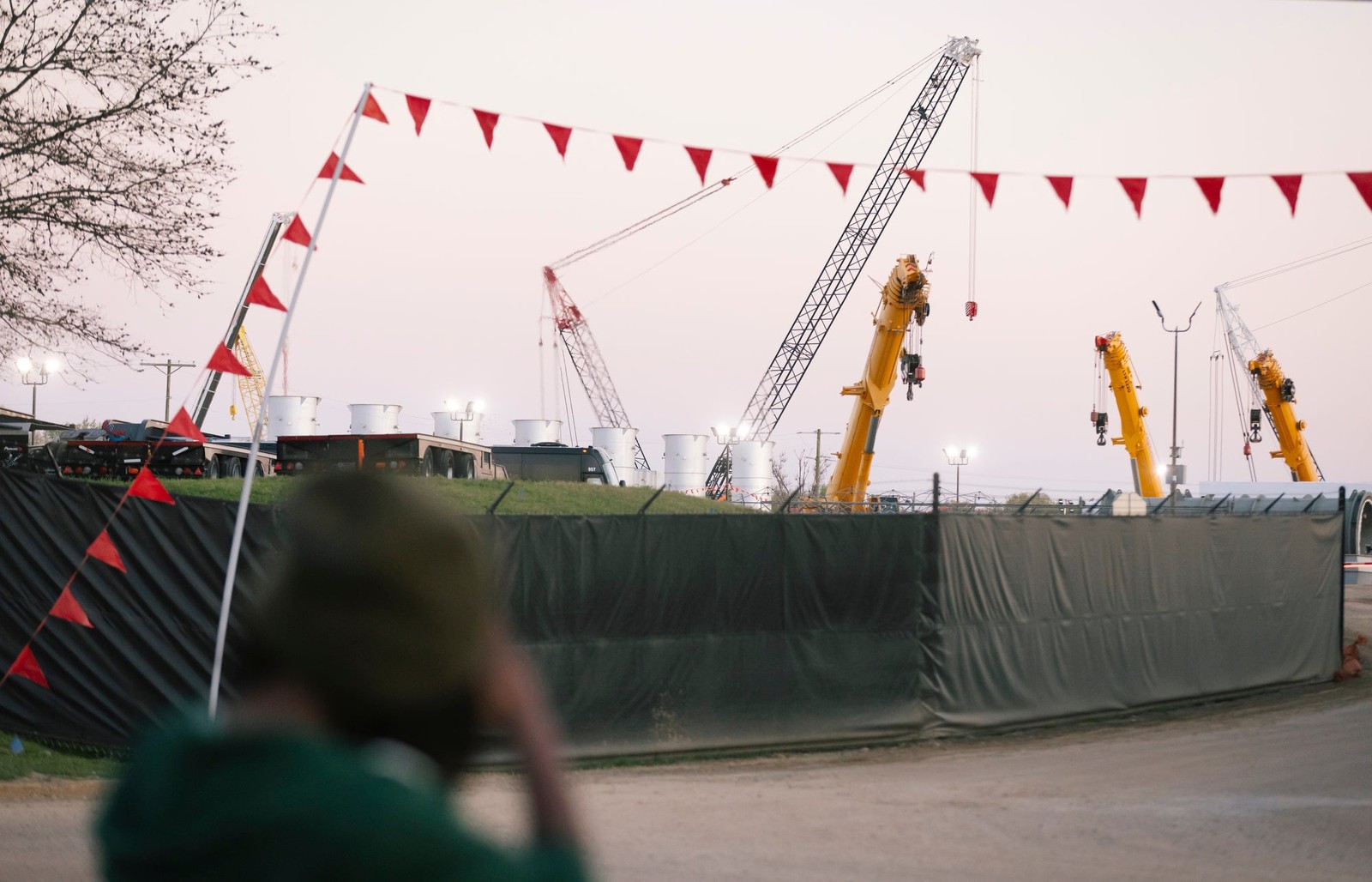
The facts of the case are unusually concrete. The turbines sit outside Memphis and supply the Colossus data center, one of the largest concentrations of computing capacity built for training and serving AI models. The electricity demand of a facility of that size cannot be met from the local grid on the timeline the operator wanted, which is why on-site generation was built in the first place. The same arithmetic is being repeated at dozens of sites, in states with different regulators, different air quality histories and different appetites for litigation.
What makes the ruling more than a local matter is that the federal government tried to end the case and failed. The Department of Justice filed its own motion to dismiss in October, and that motion was denied as well. A defendant with the government on its side still could not get the courthouse door closed. Meanwhile the administration’s stated priority is to accelerate permitting for AI infrastructure, on the argument that compute capacity is now a matter of national competition. Two instruments of the same state are pulling in opposite directions, and the courts have become the place where the contradiction is resolved.
The environmental dimension is the one the industry has been slowest to price. Gas turbines are cleaner than coal and far cheaper to site than new nuclear, which is why they have become the default bridge fuel for data centers. They also emit nitrogen oxides and fine particulates, and the neighbourhoods nearest the plants are rarely the ones benefiting from the compute. The NAACP’s suit is not a claim for damages; it asks for the permit process to be followed. That remedy is cheap to grant and expensive to have ignored, because a facility that loses on it faces an order to stop operating equipment it has already financed.
The ownership structure complicates the defence without changing the law. xAI is now part of SpaceX, a combination that gives the AI business access to capital and engineering capacity it did not have on its own. Corporate reorganisation does not extinguish liability for a plant that was built and run by the operating company, and the successor inherits the exposure along with the assets.
Beyond this case sits the larger question that permit reform is meant to answer. The United States has committed, in effect, to building generation and transmission at a speed its environmental statute was not drafted to accommodate. One route is to rewrite the statute, which Congress has not done. Another is to test whether the existing one can be stretched, which is what the operators have been doing, and what the courts are now declining to ratify. A third is to litigate each plant, which is slow, expensive and produces inconsistent outcomes across circuits.
For the AI companies, the practical consequence is a longer and less certain path to power. A project that assumed on-site generation could be running within a year now has to assume a docket, a discovery schedule and a judge who may not share its view of the statute. Lenders will notice before the operators do. Project finance rests on the assumption that the plant is lawful, and an unresolved permit question is exactly the kind of risk that moves into the interest rate.
The ruling does not shut the turbines down, close the data center or set an emissions standard. It establishes that a private party can ask a court whether the plant was legal, and that the answer will be given in public, on evidence, with a right of appeal. Whether the industry’s power strategy can survive that kind of examination is now a question with a docket number attached to it.