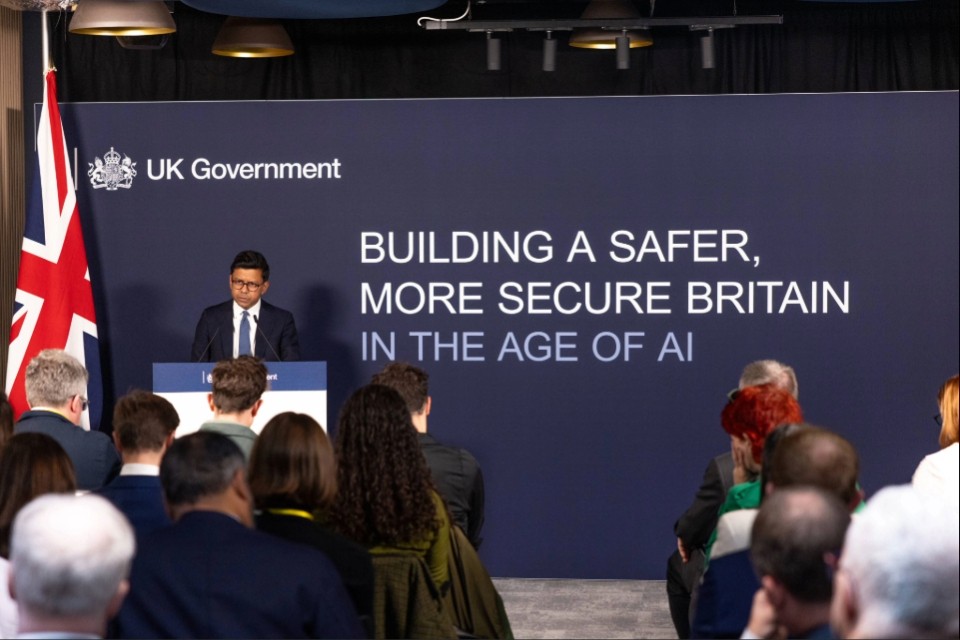
The argument arrived about twenty minutes into a recording made on Oct. 29, in a week when the market had already made most of it for him.
Dominic Wilson, a senior adviser in Goldman Sachs Research, said artificial intelligence had stopped being what he called a “supercharged theme,” the label he attaches to the three-year run, and had become “a more conventional narrative.” The peak in the growth rate of AI investment, he said, is “very likely quite close.”
He was careful about what that means. A peak in growth is not a decline in spending. Capital budgets at the largest technology companies are still rising in absolute terms; it is the second derivative that has turned, and the difference between the two is the whole argument.
The venue was “The Breaks of the Game,” the bank’s markets podcast, where Tony Pasquariello, its global head of hedge fund coverage, was joined by Josh Schiffrin, chief strategy officer and head of financial risk, and Mr. Wilson. The three spend their days talking to the investors who fund the buildout and the traders who hedge it. What they described was a trade that has lost its one-way quality.
Mr. Wilson listed three cracks. Prices, especially in infrastructure, already assume an optimistic path. Earnings have become a scatter plot rather than a broad beat. And the credit raised to finance the spending has begun to leave marks in spreads. Since the sector’s peak in June, he said, the bank has worried less that valuations were absurd than that they required everything to go right.
The equity market has been sending the same signal. For six months, rates, energy and credit have been headwinds, and earnings the only support, leaving the S&P 500 and the Nasdaq roughly where they started. Mr. Pasquariello put this quarter’s results in a sentence: forward estimates were revised up far less than in the first two quarters, “good enough to hold the line, but not enough to add fuel.”
On rates, Mr. Schiffrin said investors had priced 60 to 65 basis points of further increases, and that his baseline was one more, in December, with the total likely to fall short of what the curve implies. Mr. Wilson noted that the 10-year forward overnight index swap rate had traded near 5.20%, close to the top of the policy cycle over the past two decades, which leaves little room for the growth story to disappoint.
The two men also disagreed in a useful way about the Middle East. Mr. Schiffrin ranked an escalation, and the energy prices that would follow, as the largest near-term threat to growth. Mr. Wilson argued that the market had already built a geopolitical premium into oil, so the scenario in which nothing escalates is the one that is underpriced, and the mere absence of new bad news after the midterm elections would be enough to move prices.
His highest-conviction position for the rest of the year is long front-end government debt in the U.S., Europe and Britain, on the view that central banks will act less than investors expect and that any wobble in credit markets would pull short rates down.
The timing explains the attention. The largest American technology companies are on course to spend as much as $828 billion on AI infrastructure this year, according to a tally by Business Insider. Alphabet fell 12.6% on Oct. 29, its worst day on record, wiping out about $500 billion in market value after a revenue miss. The Nasdaq fell 2.9% the following day and closed its worst month in more than a year.
What the podcast added was a mechanism. A capital budget that grows every quarter is easy to finance out of cash flow. One that grows more slowly, while depreciation from the past three years arrives on the income statement, has to be defended to shareholders quarter by quarter, with a number attached to each promise.
The industry has also shifted part of the funding burden onto debt and vendor financing, which is why a widening spread now moves the shares. Useful-life assumptions on servers and buildings have become a live accounting question, since a longer schedule spreads the cost of the buildout over more years and lifts near-term profit. Buyers of the debt have noticed. Credit investors who once accepted the growth story as collateral now ask what the asset is worth if the demand curve flattens.
None of this predicts a bust, and Mr. Wilson did not. His point was narrower: the trade has acquired a left side. When growth was accelerating, bad news was bought. Now the distribution of outcomes runs both ways, and the companies that lead the next leg may not be the ones that led the first, which is what Mr. Pasquariello meant when he said the next rally could be led by “different types of stocks.”
For portfolio managers, the practical consequence is a change in what counts as evidence. Guidance raised again in January would undercut the thesis. So would a new product cycle that lifts forward estimates the way the first half of the year did. Flat revisions, wider spreads and a trimmed capital plan would confirm it.
There is a version of the argument that Mr. Wilson did not make and that some of his colleagues have made elsewhere: that the returns on AI capital will be concentrated in a handful of application companies rather than spread across the infrastructure that serves them. If that is right, the correct trade is not to short the buildout but to stop paying the same multiple for every participant in it.
The recording is still online. The next scheduled test arrives with fourth-quarter guidance in January, when the same companies will have to say whether the curve Mr. Wilson described looks flat from the inside, and whether their boards still believe the second derivative matters less than the size of the budget.