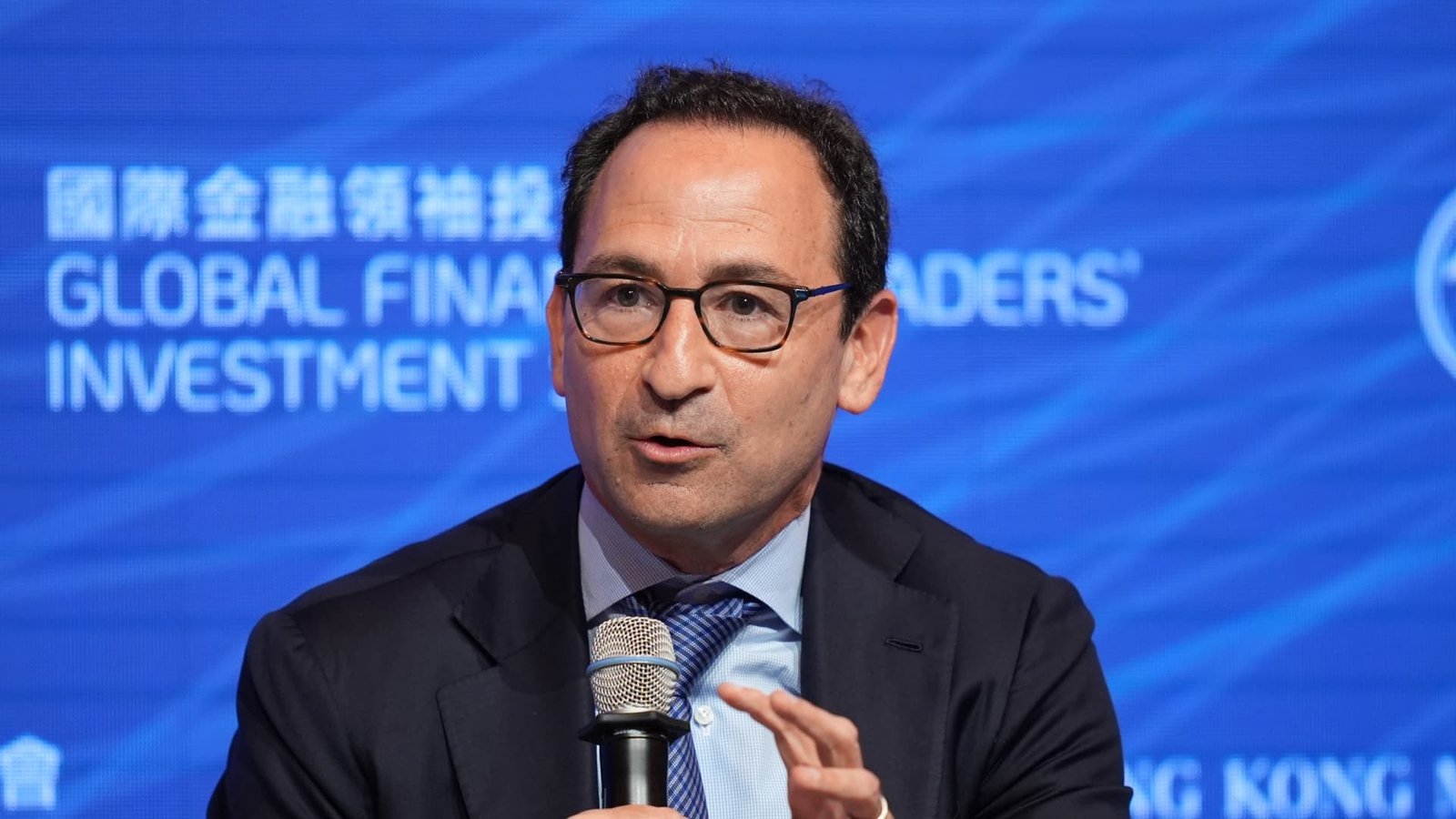
John Ternus, who became Apple’s chief executive in September, used his first earnings call since taking over to do two things at once: celebrate a record September quarter and warn that the cost of memory would take a bite out of the next one.
Apple reported revenue of $114.5 billion for the quarter ended Sept. 26, up 12% from a year earlier, with net income of $30.7 billion, or $2.10 a diluted share. Gross margin was 47.9%, and a tariff refund added $0.05 to the per-share figure. Shares fell 2.5% in after-hours trading, not because of the quarter but because of what the company said about the one it is in.
The quarter itself was the strongest September on record. iPhone revenue rose 17% to $57.6 billion, the best September quarter the company has had for the device. Mac sales climbed 24% to $10.8 billion, helped by a refresh cycle that has run through the year. iPad revenue fell 10% and wearables fell 8%, the two soft spots in an otherwise broad advance. Services brought in $31.57 billion, up 9.8%, a record for the category and the line investors watch for evidence that the installed base keeps paying after the hardware is sold.
Greater China was the part of the story that did not fit. Revenue there came to $17.54 billion, up 21% and still short of the $18.75 billion analysts had expected, a gap that will be read in both Beijing and Cupertino as a sign that the recovery in the region is real but slower than the headline suggests.
For the full fiscal year, Apple booked $478.8 billion of revenue and $132.2 billion of net income. The board declared a quarterly dividend of $0.27 a share.
Then came the guidance, and the tone of the call changed. For the December quarter, Apple said gross margin would land between 45% and 46%, below the 46.3% analysts had modeled. On a base of more than $100 billion of quarterly revenue, a point of gross margin is worth more than a billion dollars, and the company was telling investors to expect roughly a point and a half less than they had assumed.
Mr. Ternus described current memory pricing as “unlike anything we’ve seen.” Kevan Parekh, the chief financial officer, said the company had built a higher memory cost assumption into its outlook, and that the effect would be felt most in the products carrying the largest storage configurations, where the bill for memory is highest per unit.
The inventory line explains the caution. Apple ended the quarter with $14.54 billion of inventory, up from $11.09 billion three months earlier and 154.3% higher than a year before, and its manufacturing purchase obligations rose by $3.3 billion from June. A company that expects input costs to keep climbing buys ahead. A company that has bought ahead also has to sell what it bought, and the holiday quarter is now the test of whether demand meets the stock it has accumulated.
There is a version of this quarter that is entirely about execution, and the numbers support it. Twelve percent revenue growth at Apple’s scale, with services compounding and the iPhone cycle intact, would be an excellent result in any year that did not include a memory shortage. The company sold more phones, more laptops and more subscriptions than it did a year ago, in a market where most of its competitors sold fewer.
The other version is about the limits of pricing power. Apple has spent a decade demonstrating that it can charge more for hardware than its rivals and keep its margin while doing it. Memory is a different kind of input, because the shortage is industry-wide and the suppliers have their own customers to serve. The company can absorb the increase, pass it to buyers, or ship devices with less memory than the software would like. Each choice costs something: margin, volume, or the performance claims that sell the next phone.
The iPhone Duo question arrived late in the call. Asked about reports of screen problems on the new device, Mr. Ternus said the affected units were a “very small percentage” of the total and that Apple was replacing them for customers who reported the issue. It was a brief exchange, and it came after an hour of questions about component costs, which is where the market’s attention now sits.
Mr. Ternus inherits a company in better shape than the stock reaction suggested. The September quarter set records on three of its five lines, the installed base is still converting to services, and the product cycle has another year of upgrades in it. What he does not control is the price of the parts inside those products, and that price is being set in a market where every device maker, data center operator and automaker is bidding for the same supply.
Apple enters the holiday quarter with the strongest product line it has had in years and the least visibility on component prices it has had in a decade. The December numbers will settle which of those two facts the market decides to price.