By the closing bell on the last trading day of October, Intel had lost 29% of its market value in a single session, its worst day since the 1970s, and 45% over the month, the worst month on record according to FactSet. The first trading day of November took another 8%.
The trigger was a guidance range. Intel told investors to expect fourth-quarter revenue of $15 billion to $16 billion and adjusted earnings of $0.25 a share. Analysts had modeled $17.1 billion and $0.43, and the size of the gap, rather than its direction, is what did the damage: a company that misses by a few percent is having a bad quarter, and a company that guides a tenth below consensus is telling the market it cannot see its own demand.
The miss landed on the part of the business that has been shrinking for a decade. Personal computers still generate roughly half of Intel’s revenue, and that market is being squeezed from both ends. Memory and component costs have climbed, which raises the price of the machines Intel’s customers sell, and management now expects the PC slump to last into the first half of 2027, with a further 10% decline next year on top of a 12% drop in 2026.
Data center is the counterweight, and it is growing quickly. Third-quarter data-center revenue rose 78% to $7.3 billion, and Chief Executive Lip-Bu Tan told investors that the market for server processors could reach about $200 billion within five years. Demand is not the constraint on that business. Capacity is.
That constraint has begun to reshape the company’s manufacturing plan. Intel is converting part of its 18A production lines in Oregon back to Intel 3 to build server processors, a decision that puts volume ahead of the process technology the company has spent years promising to customers.
The move is defensible on its own terms. The older node is mature, its yields are known, and the server chips that buyers want can be built on it now rather than after another qualification cycle. But it complicates the account Intel has given of 18A, the node that was supposed to prove the company could manufacture at the leading edge for other people’s designs, and it confirms that the internal customer comes first when wafers are short.
For the foundry business, that is a worse signal than a delay would be. A foundry sells certainty. A customer hands over a design and expects wafers on schedule, at a known price, for years, and the entire economics of the business rest on the supplier being able to say yes when the order grows. When the same company’s product division competes for the same capacity, the customer has to ask whose order moves first in a tight quarter.
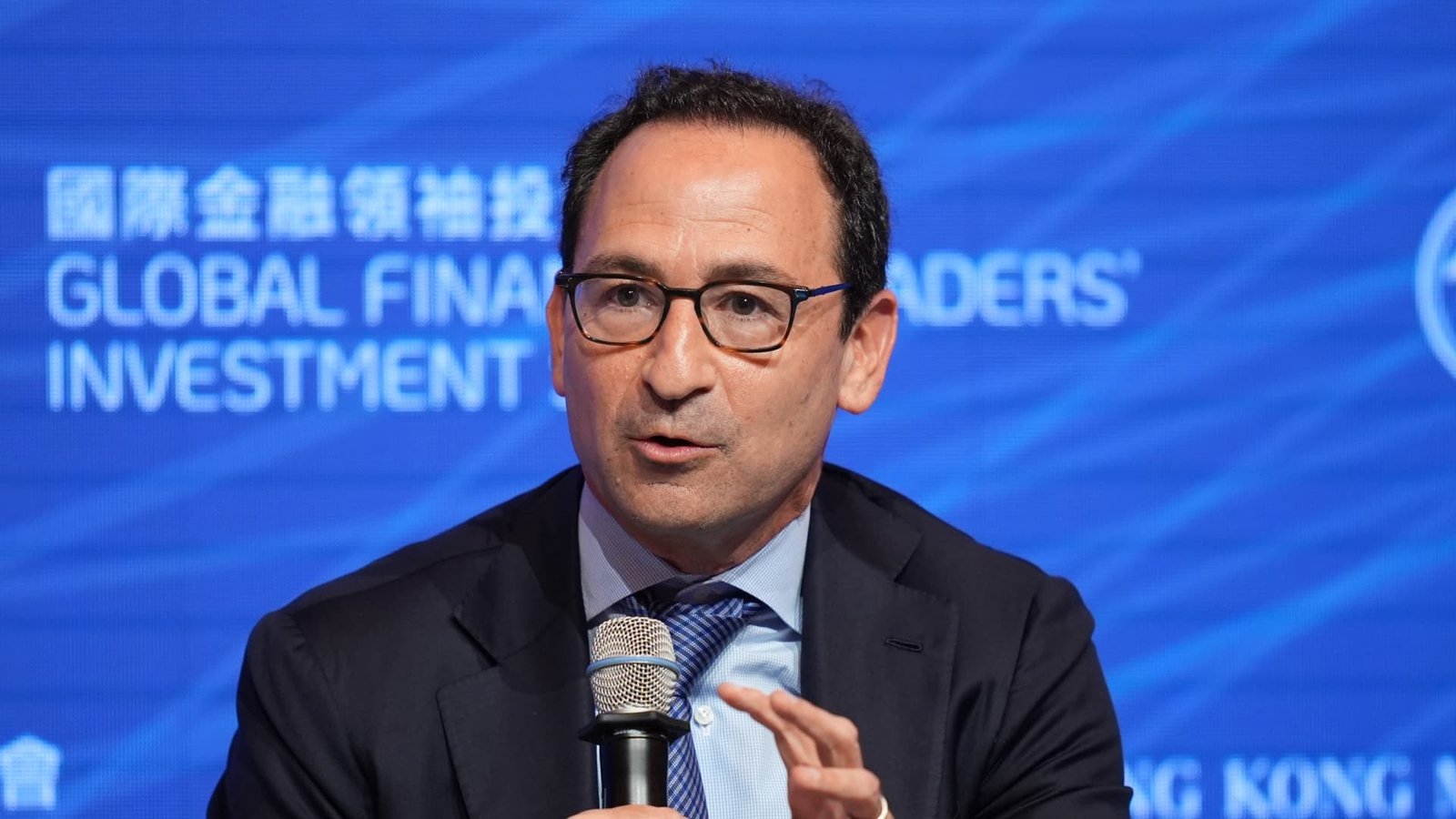
David Yoffie, a professor at Harvard Business School, put the problem plainly. Customers worry that Intel cannot be a credible supplier if it has no spare capacity to offer them, he said, and the remedy he proposes is to separate the foundry from the rest of the company.
The reasoning behind that advice is not complicated. A foundry that is also a chip designer asks its customers to fund the improvement of a process that will then be used against them in the server market. Intel’s own products compete directly with the designs that AMD and others would hand to a foundry, and no amount of contractual language fully answers the question of priority.
Mr. Tan has said repeatedly that capacity, not demand, is the binding constraint on the data-center business, and the Oregon conversion is the proof. It is also the reason the foundry story has slipped: every wafer that goes to an Intel server processor is a wafer that cannot be used to demonstrate to an outside customer that the company has room to take on their work.
The stock reaction has a mechanical cost as well. A company that has fallen this far pays more for capital, and Intel needs capital for fabs that will not produce revenue for years. It also loses the currency that acquisitions are made with, and the credibility that hiring senior engineers depends on, since the best people in the industry can choose where to work.
None of this settles the argument about whether Intel should be one company or two. The case for keeping it together is scale: the product business funds the process development, and the process development is what makes the products competitive. The case for breaking it up is that the two halves now need opposite things, one needing volume at any node and the other needing the appearance of neutrality.
What the October quarter established is that the market has stopped waiting for the argument to resolve. Investors priced Intel as a company whose product business is cyclical and whose foundry business has not yet proven it can win an outside customer at volume, and both of those readings are supported by what management said.
Intel’s answer, for now, is to sell what it can make. Whether that is a strategy or a holding pattern will be settled by the first large customer that signs for leading-edge capacity, and by whether Intel still has any spare to sell when that customer calls.