
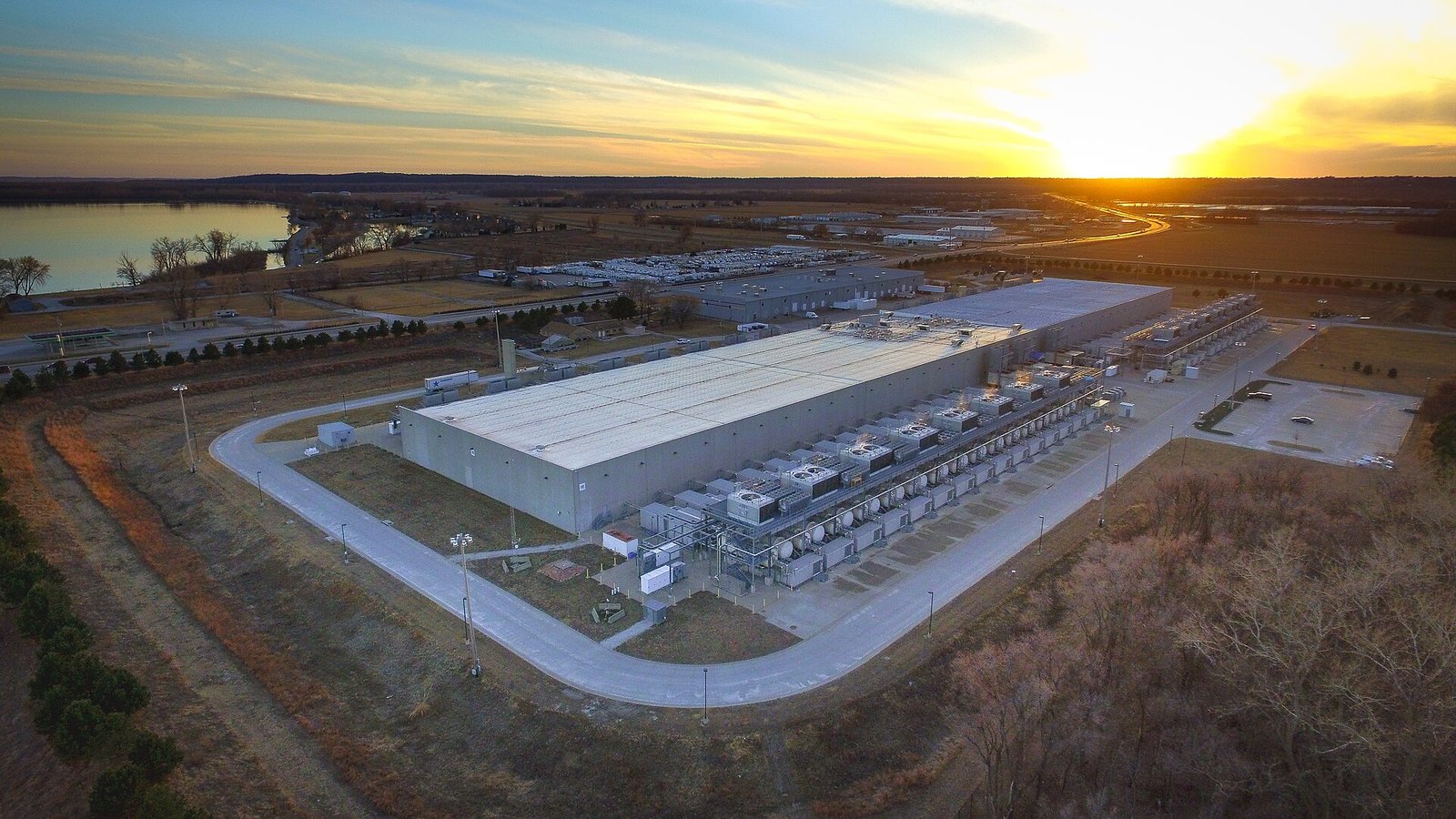
Since last year, Crusoe had been pitching a site in southeastern Wyoming to the customer it wanted most. Google never signed. This week the search company bought the building instead.
Crusoe confirmed on Nov 6 that it sold the unfinished project to Google. The price was not disclosed. The site was announced last year by Crusoe together with Tallgrass, an infrastructure company tied to Blackstone, and was designed to expand eventually to 10 gigawatts of computing capacity.
Google said it will invest $17 billion to develop the campus. The purchase turns a customer relationship that never closed into an ownership position, and it hands the largest search company control of a project whose scale was drawn up for somebody else’s appetite.
Ten gigawatts of eventual capacity is not a number a single tenant usually commits to at signing. It is a number a developer advertises to make a site legible to the few companies that could fill it. That list is short: a handful of hyperscalers, two or three AI labs, and whoever is willing to sign a twenty-year power contract before the first building goes up.
The hard parts of a project like this are not the buildings. They are the interconnection agreement, the water, the county approvals and the land, each of which takes years and none of which can be assembled at the last minute. An unfinished project with those pieces in place is worth more than its concrete. That is one reason the price went undisclosed, and one reason it was probably not small.
The sale also settles a question about Crusoe’s model. The company, valued at $30.9 billion, raised $3.9 billion in September and has operated as both a developer and a landlord. Selling a flagship site to the customer it courted turns capital tied up in construction into cash it can spend elsewhere, and it leaves Crusoe with a second project, in Amarillo, Texas, that is also being built for Google. Two campuses, one buyer, and a developer that now knows exactly how much its land is worth to a hyperscaler.
Google has been buying capacity as well as building it. The same day, a 13F filing showed that Alphabet established a position in Qualcomm during the third quarter worth nearly $548 million. Qualcomm supplies silicon for data centers as well as phones, and a stake that size in a supplier functions as a hedge as much as an investment.
Chips are the reason. Google designs its own accelerators and buys Nvidia’s, and a campus of this size will need both. Taking equity in a second supplier gives Alphabet a seat at a table where it is otherwise a customer, and it spreads a supply chain that currently runs through one dominant vendor.
Power is the constraint nobody has solved. Ten gigawatts has to come from somewhere, and in Wyoming that means gas, coal with capture, or a transmission line from another state, each of which needs permits that take longer than the buildings do. Google’s $17 billion covers the campus. It does not cover the generation, and the generation is where the schedule will slip first.
Local politics is the second constraint. Of 41 data center ballot measures decided on Nov 3, 40 went to the side that wanted to restrict development, according to Ballotpedia. Wyoming is friendlier than most jurisdictions, which is part of why this site exists, and part of why Google can build here when it has struggled elsewhere.
The counterargument is that a 10-gigawatt site is a bet on demand arriving on a timetable nobody controls. Occupancy is built in stages, and each stage needs a tenant or an internal workload to justify it. A campus that large, sitting half-built through a slower year, is an expensive option rather than a productive asset.
There is also the possibility that Google is buying the option precisely because it does not want to commit to the demand. Land and interconnection rights in the right county are scarce, and a company that owns them can wait for the workloads to appear. A company that has to lease them pays whatever the landlord asks at the moment it needs them, which is what Crusoe was counting on when it pitched Google in the first place.
Crusoe’s own numbers suggest how the economics have shifted. A developer worth $30.9 billion that raised $3.9 billion two months ago still chose to sell its most advanced site rather than finance it to completion. Building ten gigawatts requires capital that does not come from a single equity round, and the buyer with the strongest balance sheet ends up owning the asset.
What Google gets for $17 billion is a shell, a queue position and a county that will take its calls. Whether the accelerators that fill it come from its own design teams or from Nvidia, and whether the power arrives before the buildings do, are questions the next set of filings will not answer either.



