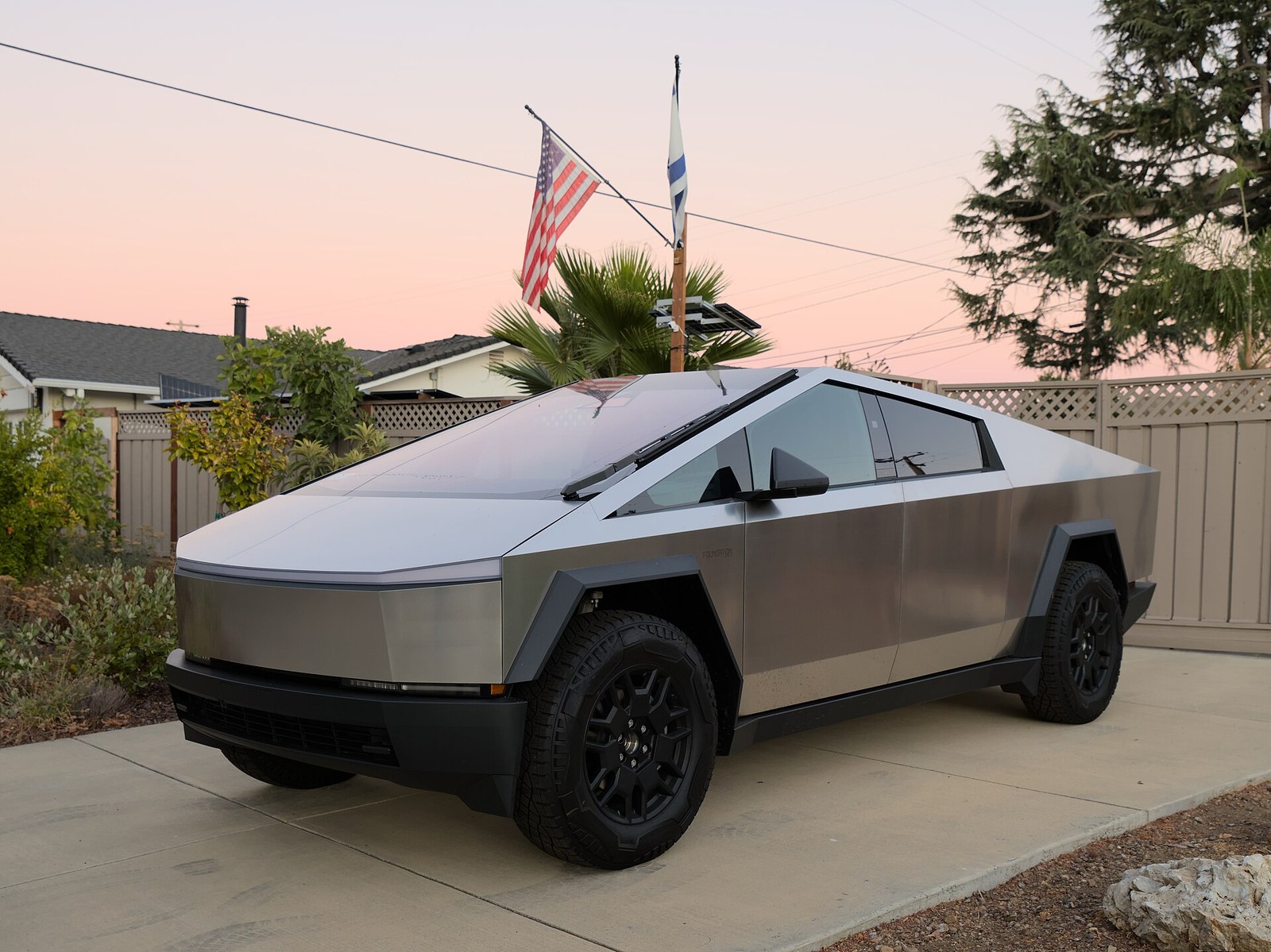
The pickup arrived with a stainless shell, a window that broke on stage, and a promise of 250,000 sales a year. Three years later it has sold in the tens of thousands, and the factory space built for it is being handed to a vehicle with two seats and no steering wheel.
Elon Musk said on X on Nov 6 that Tesla will stop producing the Cybertruck next year and free the space at its Texas plant for a two-seat version of the Cybercab robotaxi. The truck, delivered from late 2023, now starts at about $60,000, up from the $40,000 he promised when it was revealed.
The volume math explains most of the decision. A line tooled for 250,000 vehicles a year pays for itself at that rate. Running at a fraction of it, the same tooling, the same stamping equipment and the same labor carry fixed costs that never get absorbed, and the depreciation lands on the vehicles that do get built. The Cybertruck’s price rose because the units that would have justified the original sticker never showed up.
Tesla has not said what it will do with the tooling, or what the shutdown costs in write-downs. It has also not said what happens to the suppliers who tooled up for a vehicle that was supposed to run for years. The announcement was a single post, and it addressed none of that.
The robotaxi is a different business with a different arithmetic. Revenue comes per mile rather than per vehicle. The fleet is owned by Tesla or by operators rather than sold to dealers. A vehicle designed for that work can be stripped down: two seats, no dashboard, no paint, fewer parts to warranty. Every one of those decisions lowers the cost of the thing that has to be duplicated a hundred thousand times.
The Cybercab is already carrying passengers in Austin, and Tesla says it will expand to Dallas by the end of the month. Those are small numbers of rides in a market that has been friendly to the company. The regulatory picture in most other states is unresolved, and a two-seat car with no controls cannot be sold to consumers, only operated as part of a fleet.
There is a second current running through the decision. The lines that built the Model S and the Model X were cleared earlier for Optimus, the humanoid robot. Tesla is converting a car factory into a set of bets, each of which needs volume it does not yet have. The building stays. What changes is what management believes will fill it.
That pattern is worth naming. In a few years the company has moved factory space from sedans to a pickup to a robotaxi to a robot, and each move resets the payback clock on the equipment installed. A plant that is retooled every eighteen months never runs long enough at design rate to earn back what the retooling cost.
The Cybertruck’s failure is easy to misread as a verdict on electric pickups. It is closer to a verdict on one vehicle. A stainless body that cannot be stamped like a normal truck, a shape that polarizes buyers, and a price that drifted up 50% from the reveal narrowed the pool to people willing to pay a premium for a statement. That pool turned out to be tens of thousands deep, not hundreds of thousands.
Buyers who did pay the premium now own a discontinued vehicle. Parts availability, service training and resale value all depend on a production base that is about to stop growing, and Tesla’s treatment of its earliest cars suggests the company treats older products as historical artifacts rather than service obligations. The owners who paid well above the promised $40,000 will find out what that means over the next few years.
The counterargument to all of this is that Musk has been early before, and being early looks like failure until it doesn’t. Tesla built a charging network when nobody thought it mattered, and it built a battery plant when the industry was outsourcing cells. A robotaxi fleet with no driver is the same kind of bet: expensive, unproven, and worth a great deal if the regulatory and technical pieces land.
The difference is capital intensity. A charging network could be built one station at a time. A robotaxi business needs vehicles, depots, remote operators, insurance and a state-by-state legal campaign, and it needs all of them before the revenue arrives. Tesla’s automotive gross margin is what funds that campaign, and the Cybertruck was supposed to contribute to it rather than consume it.
For the Texas plant the practical question is utilization. A building that produces a low-volume pickup and a robotaxi that is not yet for sale runs below the rate that justifies its fixed cost, and the humanoid robot program sits in the same footprint. Three products, one address, and a schedule that assumes at least two of them reach scale.
The Cybertruck will end as a vehicle that sold in the tens of thousands against a target of a quarter million, at a price 50% above what was promised, on a line that now belongs to something else. What replaces it on that line is a bet on a market that barely exists, made by a company that has run out of easy places to put its factory floor.