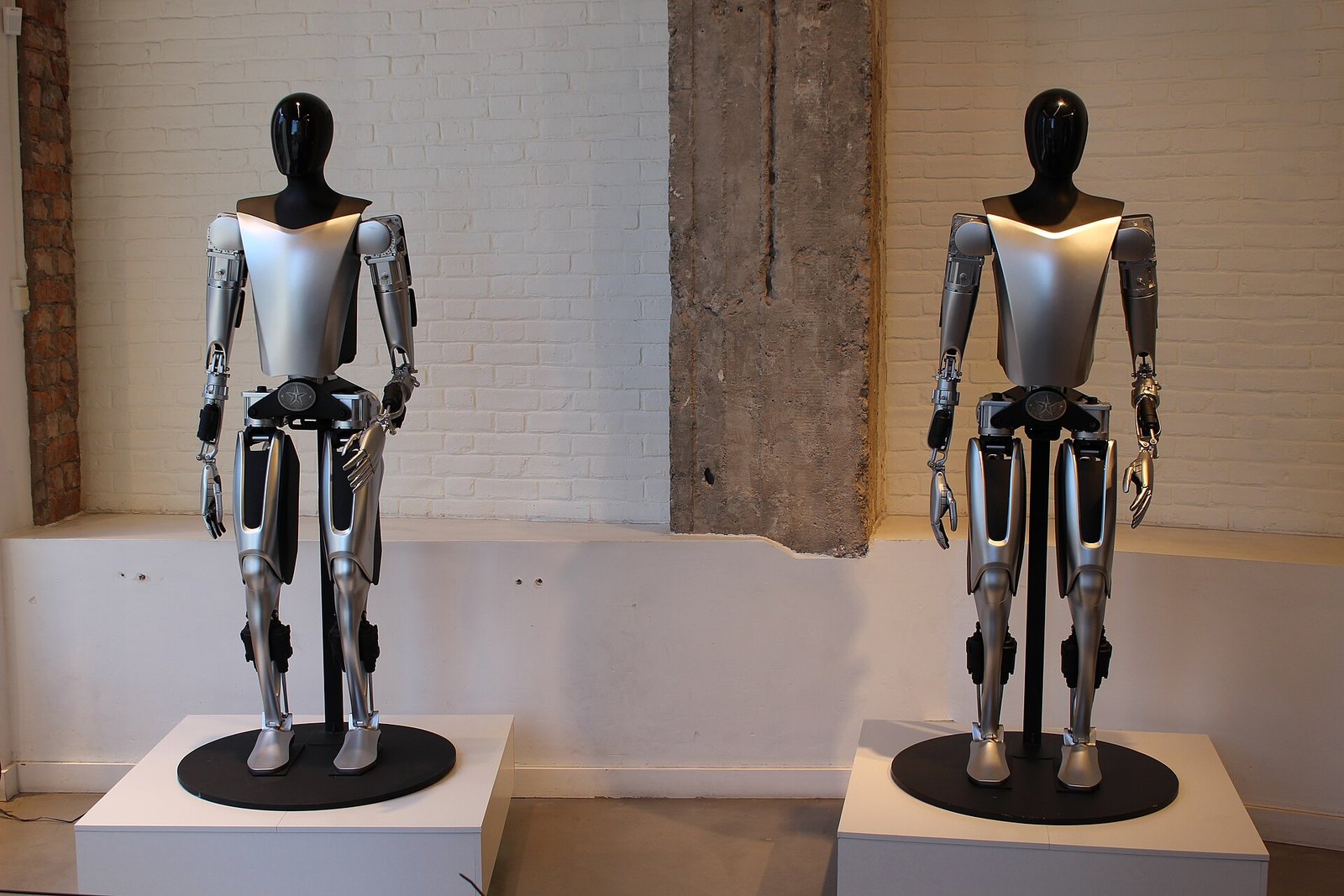
A plant manager weighing a humanoid robot has three lines to fill in: purchase price, maintenance contract, resale value. Elon Musk’s latest description of Tesla’s Optimus removes the first line and, with it, most of the certainty a capital budget requires.
Speaking at the 33rd Baron Investment Conference, Musk said the robot may be rented rather than sold. He gave no rental price and no specification of what the machine would be able to do. He has previously said the initial cost of building one is about $30,000, a figure that describes manufacturing, not what a customer would pay.
The distinction matters more than it sounds. Selling a robot transfers the asset to the buyer and books revenue at delivery. Renting keeps the machine on Tesla’s balance sheet, converts the sale into a stream of payments, and leaves the company holding the depreciation, the maintenance and the question of what happens when a customer stops paying.
For customers, the appeal is straightforward. A lease turns capital expenditure into an operating cost, which is easier to approve, easier to cancel and easier to justify to a board that is not sure the technology works. Factories that automated with fixed robots in cages know exactly what those machines do. Nobody yet knows the uptime of a humanoid on a loading dock.
For Tesla, the appeal is recurring revenue and control. A rented fleet stays inside the company’s service network, which means software updates, telemetry and repairs run through Tesla rather than a third-party integrator. Musk has argued the robot could become the company’s largest product. A leasing model also smooths revenue in a way that one-off sales do not, and investors have spent two years asking for evidence that Tesla is more than a car maker.
The risk sits in the same place. A leasing business is a financing business, and financing businesses need capital, credit models and a residual value they can defend. If a humanoid’s useful life is three years rather than ten, the monthly rent has to cover that, and nobody has the data. Tesla would be underwriting an asset with no resale market, no depreciation history and a customer base that has never operated one.
Utilization is the harder problem. A sold robot that sits idle is the customer’s loss. A rented robot that sits idle is Tesla’s, because the machine was built, shipped, insured and depreciated whether or not it moved a pallet that week. Industrial leasing works when utilization is predictable and the equipment is standardized. Humanoid labor is neither, at least not yet.
Insurance is the part nobody has priced. A machine that walks through a working factory can injure a person, damage a product line or fall through a mezzanine. Under a sale, the operator’s insurer carries that exposure and sets the terms. Under a lease, the line between operator error and equipment defect becomes a negotiation between two companies and two carriers, and the premium has to be estimated before the first claim exists.
There is a labor-politics dimension Musk did not address. A purchase is a capital investment a company owns and can resell. A rental is closer to hiring, and hiring a machine that replaces a shift is a different conversation with a union, a works council or a state labor board. Rentals make that conversation continuous rather than one-time.
The $30,000 figure deserves a note of caution. Musk has used it as a target for production cost at volume, a number that assumes a factory building thousands of units and a supply chain that does not yet exist. Renting converts that cost into a capital requirement Tesla must fund itself, and the return arrives over years rather than at the invoice date. The accounting is less flattering than the announcement.
Tesla’s other hardware offers a partial precedent. The company sells cars, sells software subscriptions and operates a charging network, three models with different margin structures. It has no experience running a leased fleet of industrial machines at customer sites, and the service organization that would support one is smaller than an installed base of thousands would require.
The counterargument is that Musk’s statements at investor conferences are not product plans. He has given dates for robotaxis, fully autonomous driving and factory automation that arrived late or not at all. A rental model announced without a price, a specification or a customer may describe an intention rather than a business, and the details that matter will be settled by whoever signs the first contract.
What can be said with confidence is narrower. Somebody has to own the machine, and Musk has now suggested it will be Tesla. That decision moves the risk off the customer’s books and onto the company’s, and it will be judged by whether the robots work enough hours to pay for themselves.