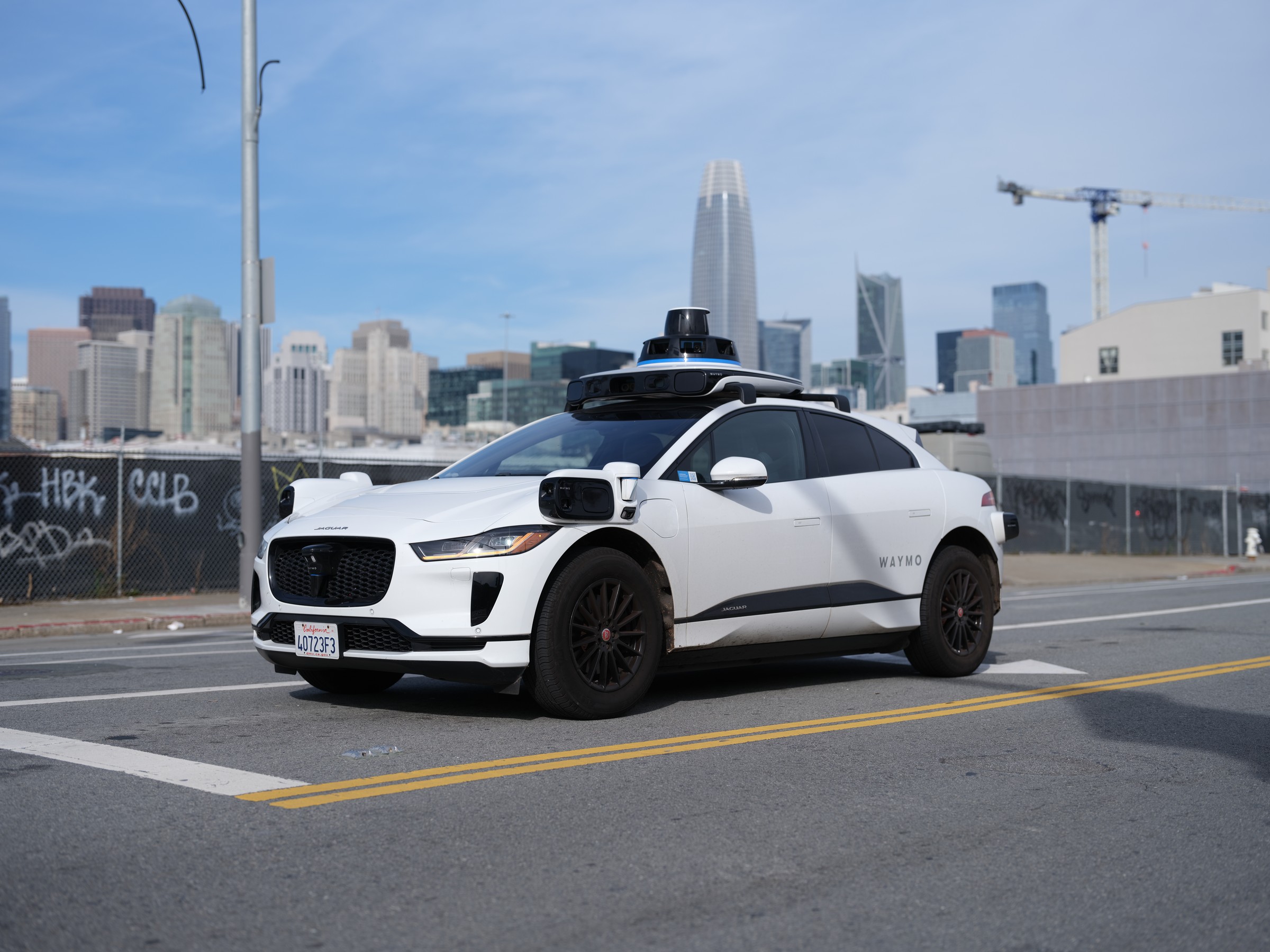
The announcement arrived as a sentence in a local interview, and it described the least dramatic part of an expansion: a company talking to city governments before it has anything to show them. Rich Harrington, a policy adviser at Waymo, told North Carolina outlets on Nov 7 that the company has held active conversations with officials in Raleigh and around Research Triangle Park, and that it wants to offer driverless rides in Raleigh and Durham. He gave no date. The missing date is the informative part. Waymo has spent the past several years converting a research project into a service, and the constraint on that conversion is no longer whether the cars can drive. It is how long it takes to map a city street by street, build a depot with chargers and cleaning bays, hire local staff, satisfy a state regulator and persuade a city council that a fleet of empty cars is an improvement. Each of those steps is a fixed cost paid before the first paying passenger.
North Carolina shows how the sequence works. Charlotte, not the Triangle, is the state’s first market. Waymo has finished digital mapping there, has begun testing with a human behind the wheel, and expects to open a commercial service in and around the city center before the end of 2027. Charlotte is one municipality with one mayor, one police department and one downtown grid, and the negotiating surface is small enough for a company to work through in a single planning cycle. The Triangle is a harder shape. Raleigh, Durham and Chapel Hill are separate governments in separate counties, joined by a park that has employers and roads but almost no residents.
A robotaxi network earns money on density, on the number of trips that can be served per vehicle per day, and the Triangle spreads its demand across a suburban footprint where a car sitting idle between rides costs the same as one moving. The research park fills at nine in the morning and empties at six, which is the profile an operator least wants. Waymo currently runs in fifteen American cities, with eighteen more in the pipeline along with London and Tokyo. That pipeline is the number to hold onto, because it reframes what a Raleigh conversation means. The company is not choosing between Raleigh and everywhere else. It is running a repeatable process in as many places as its capital and its engineering staff allow, and every new metro is a claim on a fixed pool of mapping crews, remote operators and vehicles.
The economics of that process are unusual for a technology business. Software usually scales at close to zero marginal cost, which is why investors tolerate years of losses. A robotaxi fleet scales like a taxi company with a large research department attached: vehicles are bought or leased, depots are rented, technicians are hired, insurance is negotiated. The software is the moat and the fleet is the cost, and the two grow together rather than the first outpacing the second. Competitors have built their strategies around that asymmetry. The argument against mapping every city in advance is that the method is too slow and too expensive to reach national scale, and that a system trained well enough on general driving should be able to enter a new city in weeks. Waymo’s answer is that the map is what makes the safety record reproducible, and that a company selling trust in a vehicle with no driver cannot afford a method that is merely fast. Both claims are testable, and the test is the launch calendar.
North Carolina adds a layer that is political rather than technical. Rules for testing and deploying vehicles without a driver are written at the state level, and every state has written its own. A company that has mapped Charlotte still needs the capital to permit what it has mapped, and a city council that has read about a stalled car blocking an intersection has its own reasons to ask for conditions. Harrington’s phrasing, that the company is in active conversation with several local governments, is what a policy operation says when the technical work is ahead of the political work.
The customer base in the Triangle is at least favourable. A workforce built around universities, hospitals and software companies is accustomed to substituting an app for a possession, and a large share of its trips are short, repeated and predictable: home to campus, campus to a clinic, office to a restaurant. Those are the trips a robotaxi serves best, because they can be pooled and because the passenger has alternatives if the vehicle is late. The weather is a smaller obstacle than the trip pattern, though ice on February roads gives an engineering team conditions that Phoenix never supplies.
What would make the talk into a plan is visible: a depot lease, a hiring notice, a mapping vehicle with a roof rack of sensors photographed on Interstate 40, and eventually a date. Charlotte’s launch before the end of 2027 is the first test of whether the company’s eastern expansion holds its schedule, and a slip there would say more about Raleigh than any statement from a policy adviser. The company has been careful in public for a reason. Every city it names becomes a place where a crash is a local news story, and an operator that arrives without a permit can turn a council that was curious into one that is opposed.
The larger point is that the autonomous vehicle industry has entered its permitting phase. The demonstrations are over, the technology arguments have narrowed to a debate about method, and the work that determines who wins is now done in planning offices, at state motor vehicle departments and in the negotiations over who pays to repaint a curb. Waymo’s expansion map is, increasingly, a map of governments that said yes.