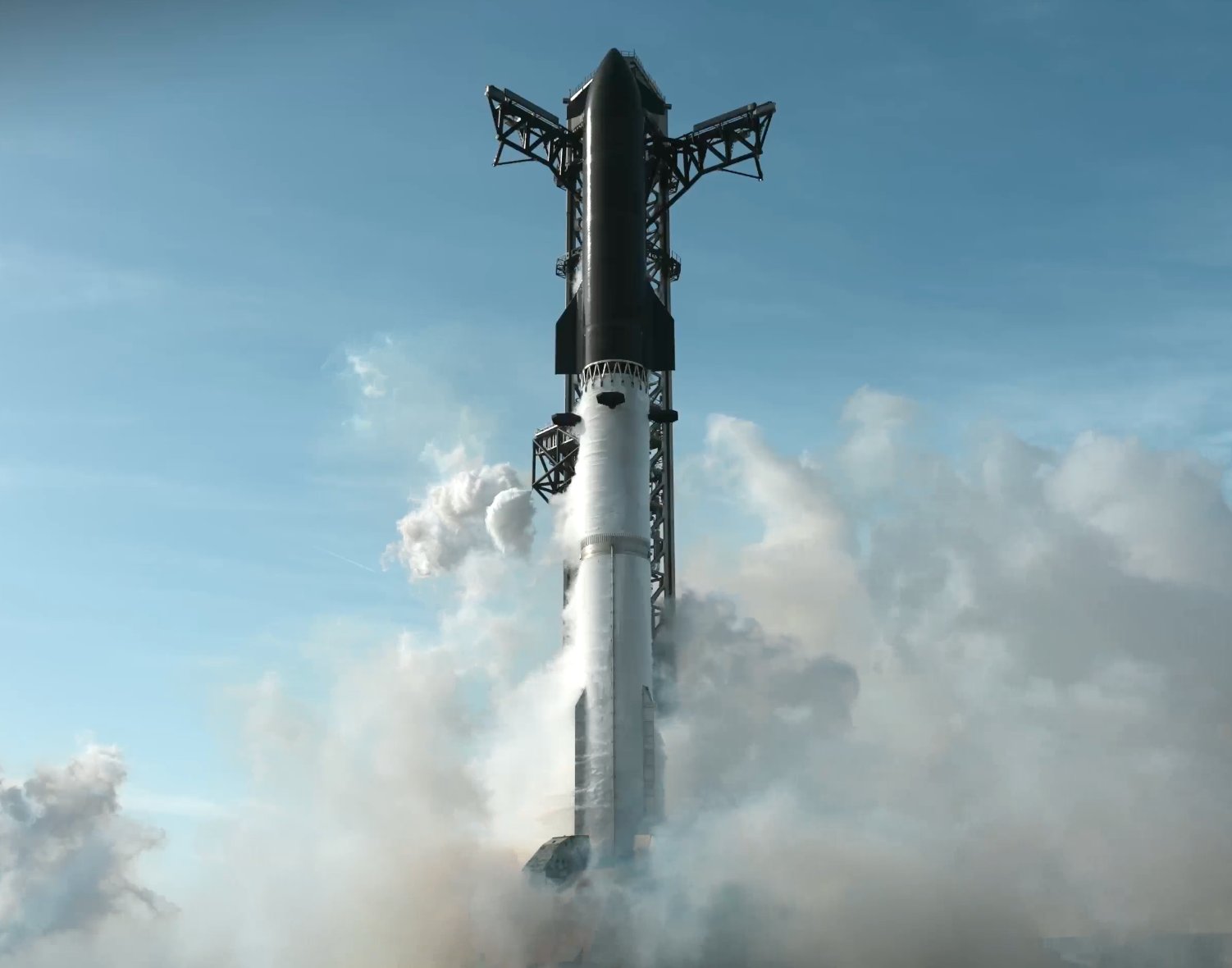
The countdown had reached the final second. SpaceX’s Starship rocket, its engines already lit, was moments from leaving the ground at the company’s launch site in South Texas on Thursday afternoon when the flight computer called a halt, shutting the engines down and aborting the vehicle’s 13th test flight.
“As we started the Raptor engine ignition sequence, the booster triggered a hold that stopped the launch,” a SpaceX spokesperson said. “We will take the time to investigate what caused the booster to trigger the hold during the ignition stand-by phase, then determine the next launch plan.” The company said the mission would be delayed by at least 24 hours.
An abort at this stage of a countdown is the last line of defense built into a rocket’s software: the vehicle checks thousands of parameters during the ignition sequence, and if any fall outside limits, the computers stop the show. Engines that had begun firing were commanded off, and the booster stood on its pad with propellant venting, a scene that has become familiar to the engineers and spectators who gather on the Texas coast for each attempt.
The scrub came during a period when SpaceX had been trying to accelerate the pace of Starship flights. The fully reusable two-stage system, designed to carry crews and cargo to the moon and beyond, is central to NASA’s Artemis program and to SpaceX’s plan to deploy ever-larger batches of Starlink satellites. Each successful flight clears the way for the next, and each delay pushes the schedule out.
The test campaign has been a study in controlled risk. Early Starship flights ended in explosions over the Gulf of Mexico, and SpaceX treated each failure as data. Later flights completed full missions, including the maneuver that has become the program’s signature: the Super Heavy booster returning to the launch tower and being caught by mechanical arms, a feat the company has repeated on recent outings. Thursday’s abort was, by that standard, a minor event, but it is the kind of minor event that accumulates into schedule slips.
For NASA, the timing matters. The agency is counting on a Starship variant to land astronauts on the moon, and any stretch of scrubs and investigations narrows the margin in a program that has already slipped repeatedly. The rocket’s flight cadence is also tied to the commercial engine of the company: Starlink, the satellite network that supplies most of SpaceX’s revenue, grows faster when Starship can lift larger batches of satellites in single flights than the older Falcon rockets can.
A hold at T-minus one second is not unusual in rocketry. NASA’s Space Launch System and the Saturn V before it both suffered last-second aborts, and commercial vehicles from Blue Origin’s New Shepard to United Launch Alliance’s Atlas have scrubbed at the pad with engines lit. The engineering question is specific: which sensor, valve or software check tripped the hold, and whether it reflects a hardware fault or a conservative control algorithm.
The launch attempt unfolded at Starbase, the sprawling complex SpaceX has built in the border town of Boca Chica, where the company assembles Starship boosters in open-air high bays and rolls them to the pad on mechanical launch towers. Each attempt draws crowds of onlookers and a stream of amateur livestreams, and Thursday’s abort was no exception: the engines lit, the flame trench flashed, and then, a heartbeat later, the fire went out. For the engineers watching from the control room, the sequence was familiar, a choreography of countdown, ignition and stop that has played out across the industry for sixty years.
SpaceX engineers will now work through the data from the ignition sequence, looking for the parameter that triggered the stop. Such investigations typically take days rather than weeks, though the company has sometimes grounded vehicles for longer after anomalies. The launch tower and the pad appeared undamaged, according to people familiar with the situation, suggesting the hardware can be recycled for another attempt quickly.
The company hasn’t set a new target date beyond the 24-hour minimum. The next windows depend on the investigation, on the range, and on weather along the Texas coast, which has a way of complicating the best-laid launch plans. Musk has said in the past that scrubs are part of the business; the goal is to reach a point where Starship flies often enough that any single abort is an inconvenience rather than an event.
The vehicle that was meant to fly remains on the pad, its engines silent, while engineers do what engineers do after a hold: figure out exactly why the computers said no. The answer will determine when the biggest rocket ever built gets its next chance, and how quickly SpaceX can push the test program toward the operational cadence its customers, NASA and the Starlink business both depend on.