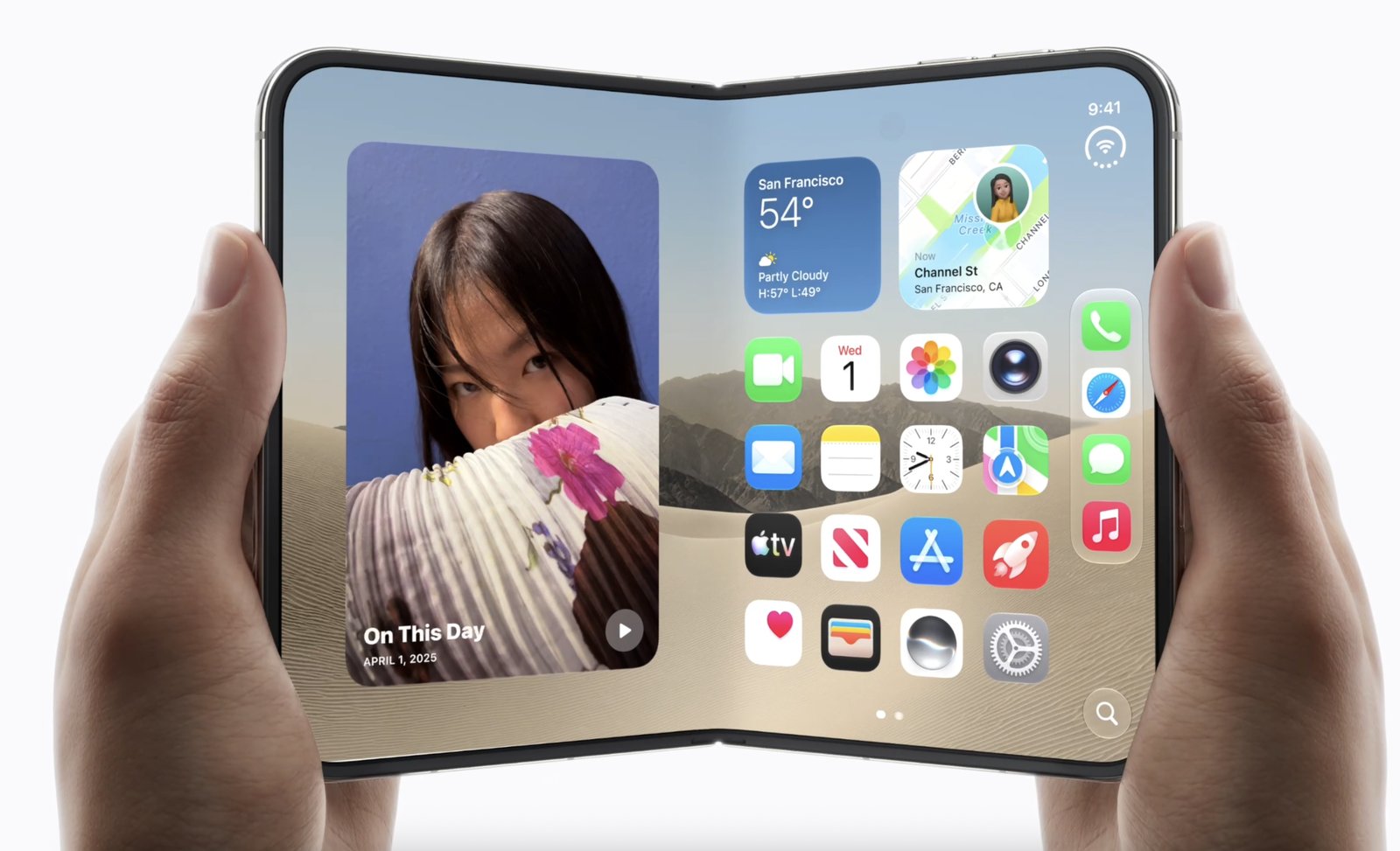
The detail that analysts kept returning to on Wednesday was the phone that did not appear. Apple’s September 9 event introduced the iPhone 18 Pro, the Pro Max, and the first foldable iPhone Duo. The standard iPhone 18 was absent.
The omission was deliberate, according to analysts, and it amounts to the biggest change to Apple’s launch rhythm in seven years. The standard iPhone 18 is expected to move to spring 2027, launching alongside the iPhone 18e and a second-generation iPhone Air, breaking the autumn all-models-at-once pattern Apple has used for years.
The motivation has two parts. The first is financial: spreading launches across two quarters smooths revenue that has historically spiked in December and sagged in spring. The second is supply chain. Counterpoint vice president of research Neil Shah said that with memory chip prices high, launching several iPhone models at once does not help Apple.
The shift has an immediate consequence on the income statement. The December quarter will carry only the premium models, which lifts the average selling price but concentrates risk in expensive devices. The March quarter, normally a lull, will instead get a launch. And the year-over-year comparisons for fiscal 2027 will no longer line up cleanly against 2026.
Apple has spent two decades conditioning buyers and the supply chain to a September cadence. Changing it touches more than marketing: carriers plan promotions around the event, component suppliers schedule output around the launch, and investors model the quarters around a predictable spike.
The foldable introduces a new variable. The iPhone Duo is Apple’s first foldable, priced at the top of the range, and analysts differ sharply on how many it will sell. Some expect supply constraints to cap first-year volume in the single-digit millions; others see the device drawing Android foldable buyers and luxury Android users into the Apple ecosystem.
The memory crunch gives Apple a reason to be conservative with volume. Paying elevated prices for DRAM and NAND on a device whose bill of materials is already high squeezes margin, and Apple’s executives have historically preferred to ship fewer, better-supplied units than to chase volume into a shortage.
Analysts said the split also reveals how Apple thinks about its lineup. By grouping the standard iPhone with the budget iPhone 18e and the iPhone Air in spring, Apple is quietly redefining the standard model as a mid-cycle product rather than a flagship co-lead.
The risk is that the December quarter, stripped of the volume model, underwhelms. A quarter of only high-priced phones tests how far up-market Apple can push its base. The spring launch, by contrast, will have to carry the standard iPhone’s volume without the halo of a flagship debut.
Apple’s September ritual is only a decade and a half old. The company moved its flagship launch to September with the iPhone 5 in 2012, and since then the calendar has barely shifted. The exceptions are instructive: the iPhone 4S arrived in October 2011, the iPhone X was announced in September 2017 but shipped in November, and the iPhone 12 came in October 2020 after the pandemic scrambled supply lines. Each detour was a reaction to constraints, not a plan.
The scale involved makes any change to the rhythm expensive to manage. Apple ships hundreds of millions of iPhones a year, and months before a launch its suppliers have committed fab time at TSMC and booked freight and assembly capacity. Memory is a particular bind this year: DRAM and NAND are in a shortage, and the foldable Duo and the Pro models both carry more of it than earlier phones, at prices Apple would rather not pay across an entire lineup at once.
The financial logic runs deeper than smoothing a quarter. Apple’s gross margin is among the most closely watched numbers in technology, and memory costs feed directly into it. Spreading launches lets the company ship the memory-heavy foldable in one season and the volume models in another, rather than absorbing the full component bill in a single quarter. It also gives services and the installed base two marketing moments a year instead of one.
Rivals have noticed. Samsung and a group of Chinese Android makers now launch foldables and flagships on their own schedules, and Apple has watched the foldable category it ignored grow slowly elsewhere. Splitting the calendar lets Apple answer the premium foldable market in autumn and the volume market in spring, keeping its most expensive device in the news while the standard models catch up.
The ‘e’ line is part of the same calculation. Apple introduced the e suffix in early 2025, replacing the iPhone SE with a budget model that sits below the standard iPhone, and the company has long used spring to sell value models without the fall fanfare. Moving the standard iPhone next to the iPhone 18e and the second-generation Air in the same season turns spring into a proper launch window rather than a clearing house for last year’s design.
Apple has not confirmed the spring timing, and plans can shift. But the absence of the standard iPhone from the biggest launch of the year was not an oversight. The company has decided that a two-season calendar, not a single September event, is the way to run a phone business during a memory shortage.