The bonus is the size of a career. Micron has told employees in Taiwan they will receive payments of up to 68 months of salary, according to a CNBC report on Friday, a figure that only makes sense inside the memory industry’s hottest cycle in years.
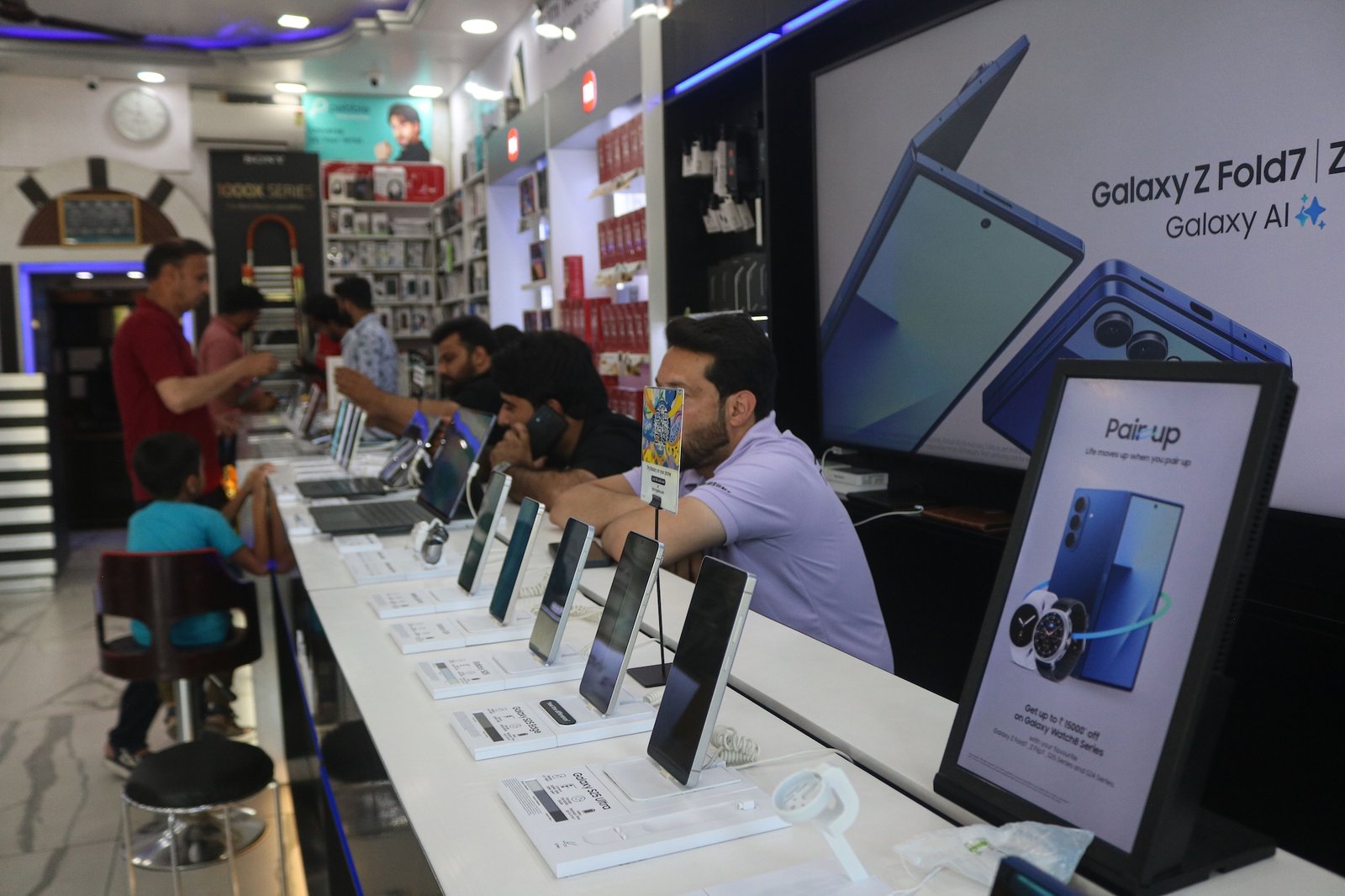
The other end of that boom is showing up at the checkout counter. Counterpoint data shows sales of smartphones priced below $100 fell 64 percent in the second quarter from a year earlier, as manufacturers either raised prices or stopped shipping cheap devices altogether. IDC expects global smartphone shipments to drop 16.7 percent in 2026 while the average selling price rises 27.6 percent to $581, and it predicts the shortage will run into 2027.
The squeeze began in the data center and spread outward. Memory makers have shifted capacity from consumer products toward the high-bandwidth memory that AI accelerators require, leaving the consumer and server markets short. Nvidia has already told Microsoft, Google, and Oracle that it will raise server prices by 15 percent because of higher DRAM costs.
Consumer DDR5 prices tell the story in a single line. Over the past 12 months, consumer DDR5 has risen roughly 500 percent, an extraordinary move for a commodity that spent most of the past decade getting cheaper.
Micron sits near the center of the cycle. It is one of the three large DRAM makers alongside Samsung and SK Hynix, and it has said its high-bandwidth memory is sold out through the coming year. The company’s financial results have surged as AI customers have booked capacity far in advance, and its stock has climbed with the pricing power that shortage confers.
The Taiwanese bonus is a direct product of that. Micron, like its rivals, pays a large portion of employee compensation through performance bonuses tied to profitability, and a 68-month payout is the kind of number that appears only at the top of a supercycle. It is also a recruiting and retention tool in a labor market where skilled engineers are scarce.
Analysts said the cycle is different from past memory booms in one respect: demand is concentrated. Earlier upswings rode the broad PC and smartphone replacement cycles; this one is driven by a handful of AI customers buying memory at prices that would have been unthinkable two years ago.
The concentration cuts both ways. While AI orders hold, memory makers can allocate capacity to the highest bidders and pass costs down the chain. If AI spending slows, the industry would be left with consumer markets that have been hollowed out by two years of price increases.
For consumers, the bill is already arriving. Cheap phones are disappearing, midrange devices are being positioned up-market, and the components inside servers, cars, and appliances are all quietly more expensive. The memory boom that began in a data center is now being paid for by everyone who buys a device.
Memory has cycled like this before. In 2017 DRAM revenue jumped 76 percent, only to reverse sharply in late 2018 and into 2019 as new capacity came online and demand cooled. Prices fell for two years, and the industry’s habit of spending heavily at the top of a cycle to be ready for the next one is precisely what creates the bust. The current run is the strongest since that episode, and how it ends is already being priced.
The difference this time is high-bandwidth memory. AI accelerators pair each GPU with stacks of HBM, and the largest chip buyers have reserved that supply years ahead. Memory makers have steered wafers toward HBM because it sells at a premium, which is why ordinary DRAM and NAND have tightened even as PC and phone demand stays soft. The same factory capacity cannot serve both markets, and the AI bid is winning.
Three companies supply nearly all of the world’s DRAM: Samsung, SK Hynix, and Micron. Samsung and SK Hynix lead in HBM for the biggest accelerator makers, while Micron has won a place with its own high-bandwidth products and has said its supply is sold out through the coming year. That concentration gives the trio unusual pricing power, and it is why the cost of a memory chip is now moving prices across the whole hardware chain.
The consequences run past phones. PC makers have warned that component costs are rising, server prices have followed Nvidia’s increase, and automakers that load vehicles with memory are absorbing the same bill. The cheap end of the market is disappearing first because its margins cannot take the increase; everyone else is passing the cost along, which is how a data-center boom becomes a consumer inflation story.
Most of this memory is fabricated in Taiwan and South Korea, which makes the supply chain itself part of the story. The shortage has concentrated pricing power in a handful of fabs and given the governments that host them a seat in a debate that used to be purely commercial.
Memory executives have said they expect tightness to persist, and the IDC forecast through 2027 supports that view. What remains unresolved is how much pain the downstream absorbs before demand cracks. For now, the industry is running flat out, and the bonuses in Taiwan are the clearest proof that the boom has not peaked.