The promise arrived in the annual Goalkeepers report, released on the evening of September 14. The Bill & Melinda Gates Foundation said it would commit $1 billion over the next two years to push the benefits of artificial intelligence into low- and middle-income countries, where the technology’s rewards have so far barely arrived.
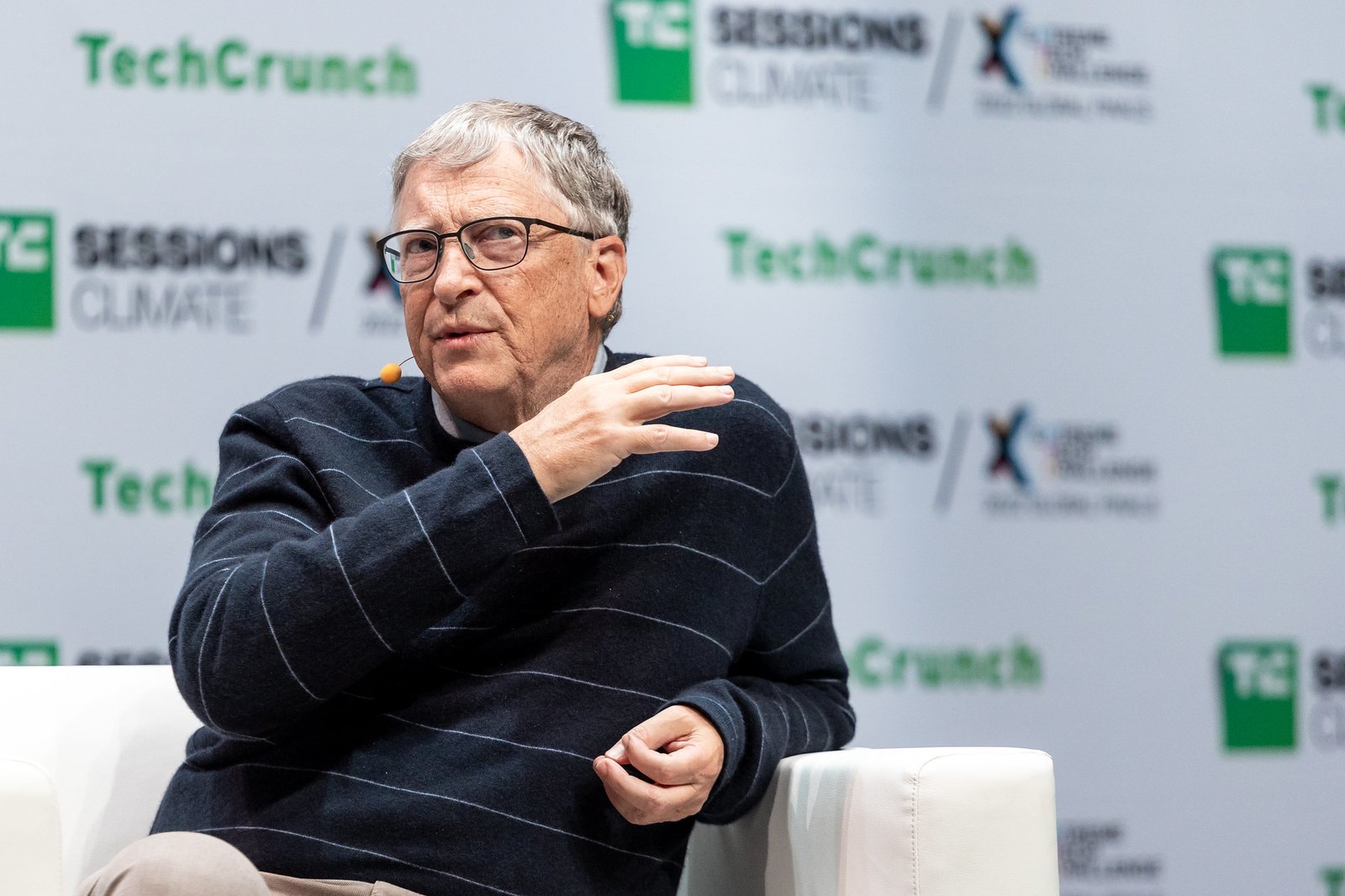
Bill Gates wrote the framing himself. AI will either be the greatest equalizer, he said, or the worst source of injustice. The sentence is not a throwaway. It sets the stakes for a program that will spend real money on the unglamorous work of making AI useful to people who are not its current customers.
The largest single slice, about $100 million, is earmarked for datasets in the native languages of underserved groups. The rest will flow to health, education, and smallholder farming, the three areas where the foundation has spent decades and where it believes AI can do the most immediate good.
Gates did not pretend the technology is only a force for good. He acknowledged in the report that AI will also be used for fraud, disinformation, and bioterror. The billion-dollar bet is not that AI is safe. It is that the risk of leaving the developing world out of the technology is greater than the risk of letting it in.
Mark Suzman, the foundation’s chief executive, addressed the political reality directly. Even if the United States cuts foreign aid, he said, the foundation will keep talking to Congress and the White House. The message was that private philanthropy is preparing to fill a gap that public money may leave behind.
The program already has partners. Google.org and Microsoft’s AI for Good Lab are helping launch an open call for projects in African low-resource languages, the kind of languages that have almost no training data and therefore almost no AI. OpenAI and Anthropic are also on the collaboration list.
That roster is notable. The companies building the most advanced models are signing on to make sure the languages they have never trained on are not left out, and to make sure their technology has a path into markets that will one day be enormous.
The data gap is the program’s real insight. Most AI models are trained on English and a handful of other high-resource languages. For a farmer in a low-resource language, the technology simply does not speak their language, and no amount of compute fixes that without data that does not yet exist.
Building that data is slow, expensive work. It means recording, transcribing, and annotating languages, many of which are primarily spoken. The foundation’s $100 million is a down payment on a problem that private companies have little commercial reason to solve on their own.
The health and agriculture spending follows the foundation’s established playbook. AI that helps a community health worker diagnose a disease, or a smallholder farmer time a planting, is the kind of application where the foundation’s on-the-ground networks give it an advantage that no AI lab has.
Analysts who follow the foundation said the announcement is also a statement about the direction of AI governance. By funding access rather than regulation, the foundation is betting that the best answer to the technology’s risks is to distribute its benefits, rather than only to constrain its developers.
There is a competitive undercurrent too. As the world’s richest AI companies debate how fast to move, the largest philanthropy in the field is spending on the assumption that the technology is coming regardless, and that the question is who gets to use it.
The Goalkeepers report has been an annual event since 2017, and it is where the foundation sets out its view of the world’s progress, or lack of it, toward its own goals. Using that platform to commit a billion dollars to AI is a signal that the foundation now regards the technology as central to its mission, not a side interest.
The two scenarios Gates described carry different policy implications. If AI is an equalizer, the task is to distribute it. If it is an injustice, the task is to constrain it. Gates has placed his money on the first answer, betting that access, not restriction, is the more urgent work.
The language problem is bigger than most people realize. Thousands of languages are spoken across the countries the foundation serves, and the vast majority have little or no digital footprint. Without datasets in those languages, AI simply does not exist for the people who speak them, and the $100 million is aimed squarely at that absence.
What the billion dollars will actually buy will take years to measure. The foundation’s bet is that the difference between an equalizer and an injustice is not the model, but the data, the distribution, and the deliberate choice to point the technology at people who have never been its target.