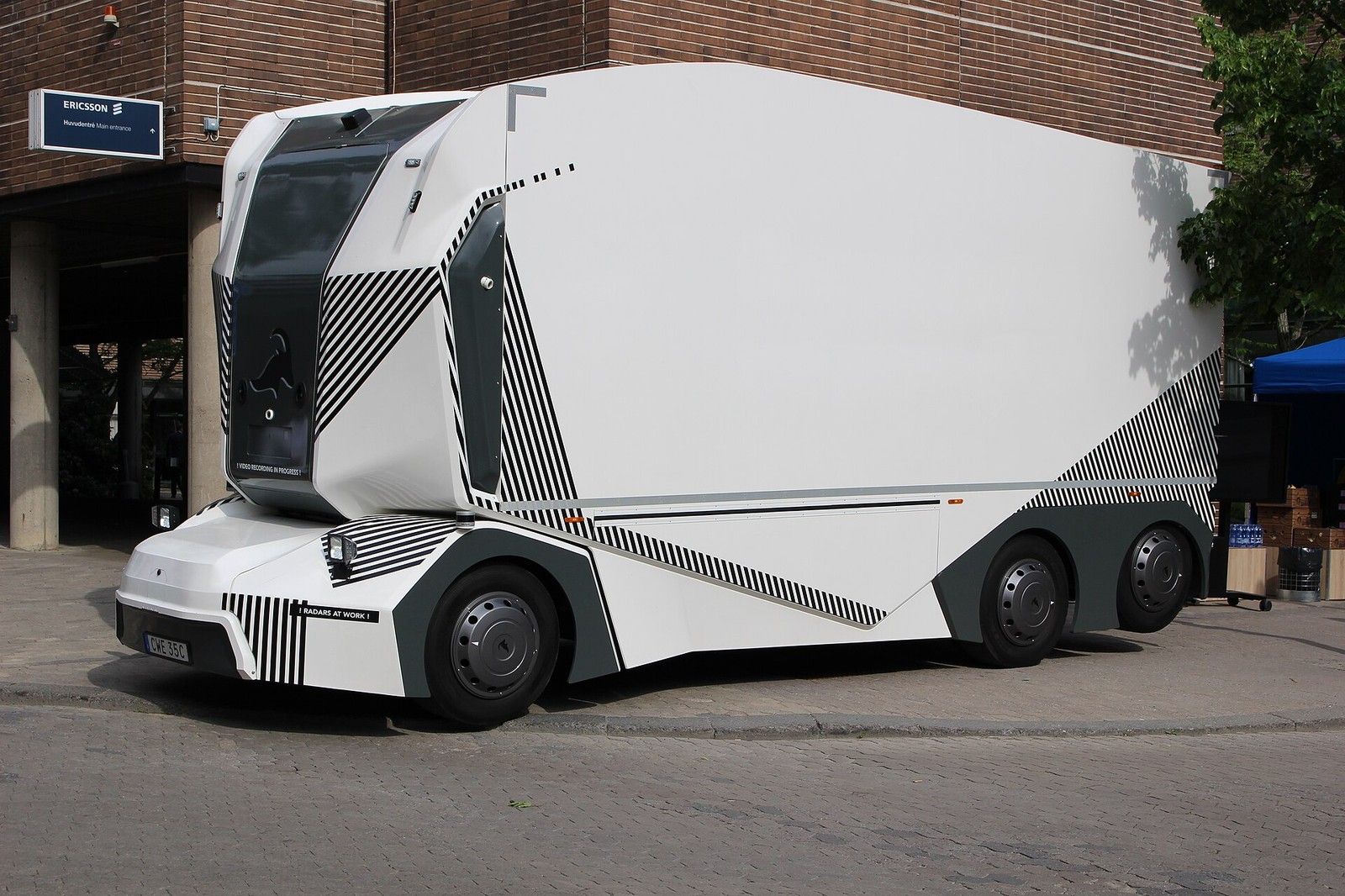
Nvidia has signed a strategic partnership with Einride, the Swedish autonomous trucking company, in a deal that will build Einride’s driverless freight platform on top of Nvidia’s computing and software stack. The announcement sent Einride’s shares markedly higher, as investors read the tie-up as a shortcut for a small operator to the kind of chip supply that larger rivals secure only after years of negotiation.
The arrangement works for both sides in a way that is unusual for its symmetry. For Nvidia, it pushes the company’s silicon out of the data center and into the physical business of moving freight, a market that runs on schedules and margins rather than on model training runs. For Einride, binding itself to a chipmaker, rather than to a single truck manufacturer, is a way to control the cost that will decide whether autonomous trucking is ever profitable at scale.
Einride operates autonomous and electric freight systems, running routes in Sweden and a growing set of pilot programs elsewhere. Its pitch has always been that trucking’s costs are mostly driver hours and fuel, and that software can attack both. The bet on Nvidia gives that software a hardware foundation it does not have to build or buy on the spot market, where leading accelerators have been hard to come by.
The timing is telling. Nvidia has spent the year extending its reach beyond the cloud companies that made it the world’s most valuable chipmaker, moving into cars, robotics, and now the logistics networks that carry the physical economy. Each of those moves follows the same logic: the chip is the input, and the software stack around it is what keeps customers from drifting to a rival.
Autonomous trucking has burned through several waves of enthusiasm and cash, and the survivors are the companies that found a way to shrink the cost of the onboard computing that a driverless truck requires. Processing the sensor feed of a truck moving at highway speed is a heavy load, and the economics of the whole business rest on doing it cheaply enough to beat a human driver’s wages. Nvidia’s stack is expensive, but it is also proven, and for Einride the partnership is a way to buy certainty.
The market treated the news as a validation of Einride’s model rather than as a routine vendor agreement. A small Swedish company signing with a chipmaker of Nvidia’s weight is the kind of event that changes how investors price the risk of the business, and the share move reflected that shift immediately.
Nvidia’s interest in freight is not sentimental. Logistics is one of the last large industries that runs mostly on human labor, and the company has made clear it wants its processors inside every machine that could reasonably carry one. A truck that drives itself is, from Nvidia’s view, a data center on wheels, and the more of them there are, the larger the addressable market becomes.
For Einride, the deal is a hedge as much as a partnership. Tying its platform to one automaker would have left it exposed to that company’s production schedules and pricing. Tying it to the chip supplier instead keeps the company free to work with multiple vehicle makers while locking in the component that matters most, a position that gives it room to negotiate the rest of the stack.
Einride has spent nearly a decade building what it calls a freight mobility company, one that pairs autonomous electric trucks with a digital platform for planning and routing. It runs commercial routes in Sweden and has exported pilot programs to other markets, but it has always been smaller than the automakers and logistics giants it competes with, which makes the Nvidia relationship a disproportionate win for a company of its size.
The partnership extends a pattern. Nvidia already sells a full stack for passenger cars under its DRIVE line, and it has pushed the same playbook into warehouse robotics and humanoid machines. In each case the company supplies not just the chip but the training tools and safety software around it, a bundle that raises the cost of switching and keeps the customer inside Nvidia’s ecosystem for the life of the vehicle.
Neither company has disclosed the financial terms, and the announcement was light on detail beyond the strategic intent. The substance will show up over the next year in the routes Einride actually runs and the fleets it manages to scale. For now, the deal is best understood as a signal from both sides that the autonomous trucking market, long promised and repeatedly delayed, is again worth betting on, and that the chips will come first. The bet, for both parties, is that the market is finally ready for them.