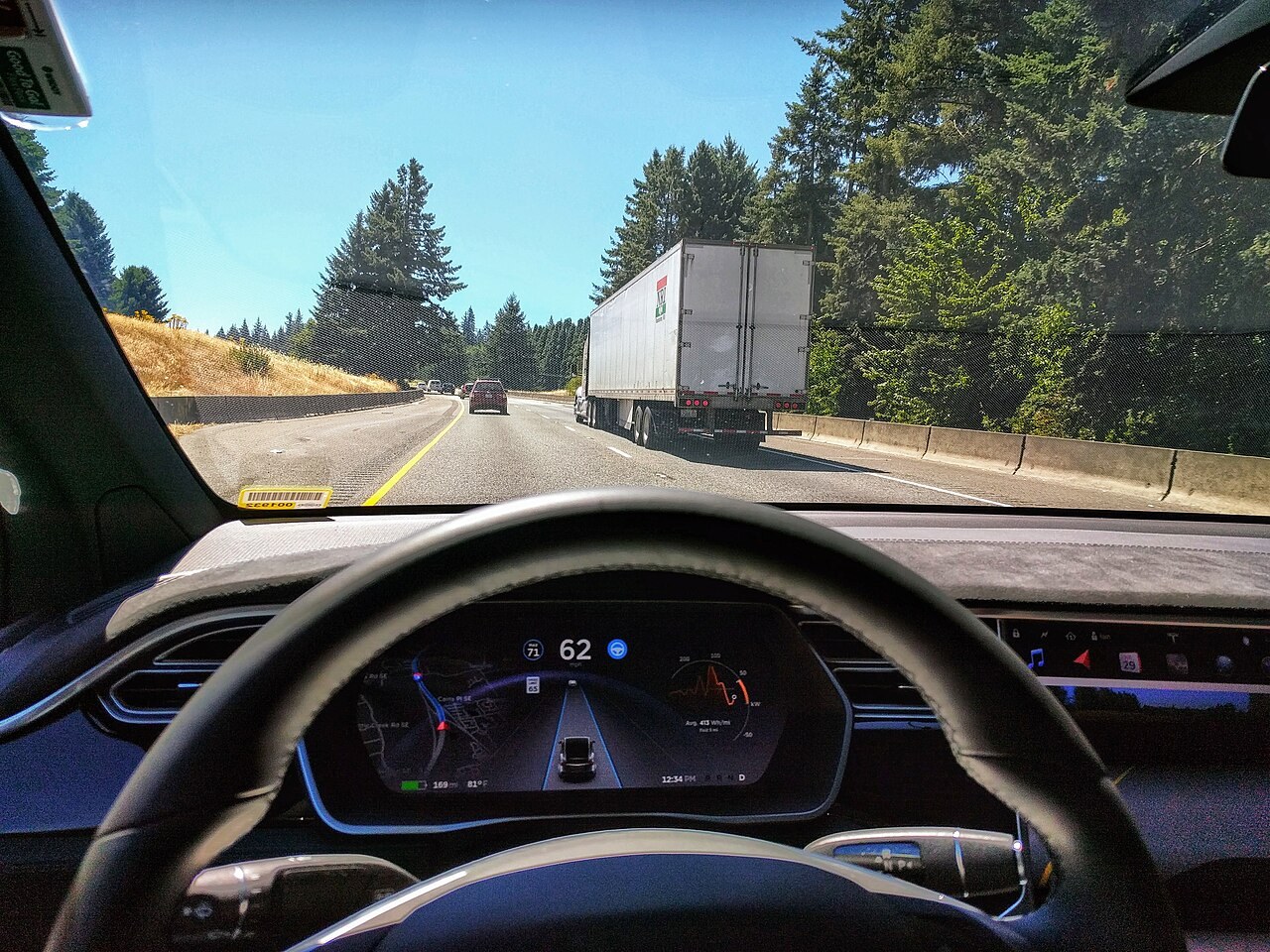
On a road in Brussels where the limit is 30 kilometers an hour, a Tesla’s dashboard told the driver the limit was 50. The car had seen the sign. It reported the wrong number.
A Belgian road-safety group found that Tesla’s supervised Full Self-Driving system frequently exceeded speed limits and displayed incorrect ones during three days of testing in July, raising fresh questions about software that European regulators approved only months ago. The group, Johanna.be, which advocates for pedestrian and cyclist safety, drove roughly 400 kilometers, or about 249 miles, and recorded the results on video.
The findings were most pronounced in the 20 km/h and 30 km/h zones that European cities use to protect cyclists and pedestrians. The group found the system exceeded the limit in the majority of 30 km/h segments it tested around Brussels, traveling at an average of 44 km/h. Even when the car’s screen showed it had recognized a 30 km/h sign, it often displayed 50 km/h as the limit, the report said.
“It is akin to a passenger constantly reassuring the driver that the speed limit is 50 km/h in nearly every 30-zone through which they pass,” the report said.
The problems extended beyond speed. In none of six bicycle-street segments did the system display the correct 30 km/h limit, and video showed it trying to overtake cyclists where overtaking is banned. In five of twelve residential zones, it exceeded the 20 km/h limit. The test was conducted by the group’s chairman, Geert van Waeg, at the wheel of a new Tesla Model 3 with a camera mounted inside.
The report was not entirely negative. The group found the system “behaved cautiously and courteously around pedestrians and cyclists, often yielding proactively,” but concluded that those strengths “do not offset the documented failures to comply with speed limits and cycle-street regulations.”
The report arrives roughly three months after the Flemish government approved FSD for use on public roads. Mobility Minister Annick De Ridder authorized the software in June, citing figures from Tesla showing only five minor accidents across roughly 25 million kilometers driven in Belgium and arguing that the risk of accidents off the highway was far lower than for manual driving.
Tesla Belgium said it was difficult to go into detail on specific cases and stressed that FSD is designed and approved as a Level 2 system, meaning the driver is responsible at all times. A company spokesperson said the driver must remain alert and ready to intervene.
Xavier Lesenne, a spokesperson for the Flemish transportation ministry, described FSD as “a learning system that continuously processes new and additional information” and said the driver “remains 100% responsible” when the system makes an error or fails to apply a traffic rule. Johanna.be has asked the ministry to suspend the approval; the ministry has said it will not.
Steven Latré, head of AI research at the Belgian research center Imec, said the behavior looked like a bug. Tesla vehicles determine speed partly from traffic signs and partly from digital speed maps, he said, and in dense urban areas the car may choose to follow the map over the sign it has just read.
The findings have become politically charged in a country where road rules differ by region. Brussels Mobility Minister Elke Van den Brandt said Tesla “does not pass the driving exam today,” while the quick Flemish approval effectively forced Brussels and Wallonia to follow. The report lands weeks before a possible European Union-wide vote on the software, after Dutch regulator RDW approved the system in April and other countries followed.
The stakes extend well beyond Belgium. Tesla has been rolling FSD out across Europe country by country, and every approval adds weight to the argument that the system is ready for wider use. The software costs 99 euros a month in Belgium, and drivers who pay for it are buying the promise of a car that can handle city streets. A report showing the car misreading the most common sign in Brussels strikes at that promise directly.
Tesla has argued the technology prevents accidents, and Flemish officials have cited crash data to support that view. But independent researchers told reporters in June that safety figures Tesla supplied to Dutch and Swedish regulators, including a claim that the software could have saved 32,000 lives, were built on misleading comparisons.
The scrutiny is not confined to Europe. U.S. regulators have opened inquiries into FSD over its behavior in recent years, and the questions there mirror the ones raised in Brussels: how a supervised system handles signs, edge cases and the unpredictable movements of vulnerable road users. The Belgian test offers regulators something statistics cannot — a record of how the car behaves where pedestrians, cyclists and 30 km/h signs share the road.
For Tesla, the question is whether a system sold as supervised can hold public trust when it reads a sign correctly and then tells the driver the wrong number. For the regulators who approved it, the video raises a harder question: whether their reviews were thorough enough.