In August, safety drivers guiding Zoox’s autonomous test vehicles through the streets of Atlanta began reporting dizziness, vomiting and strange odors inside the modified SUVs. The Amazon-owned robotaxi company has now pulled the entire fleet off the road.
Zoox has grounded its autonomous vehicle test fleet in Atlanta after workers reported symptoms of exposure to toxic gases, including carbon dioxide and hydrogen sulfide, according to people familiar with the matter and company correspondence with regulators. As many as 40 workers may have been exposed, according to a letter from the U.S. Occupational Safety and Health Administration, though Zoox said the actual number is lower.
The test vehicles are Toyota Highlander SUVs that Zoox modifies with sensors and an autonomy computer. Because the company runs them through much of the day to keep sensors calibrated and avoid long boot times for the onboard computer, drivers spend long stretches inside the vehicles, according to employees. Zoox also added an interior air duct, described by workers as a “snorkel,” above the infotainment screen to push air toward rear-seat passengers.
The symptoms surfaced in August. One worker filed a complaint with OSHA, which opened an inquiry and directed Zoox to investigate. In a September 10 letter to the agency, Zoox said it examined the test vehicles for carbon dioxide and replaced their 12-volt batteries, which can emit hydrogen sulfide — the gas behind a “rotten egg” smell — when damaged.
Zoox told OSHA it had identified 28 employees who rode in six test vehicles with an “unexplained odor” and that 10 workers voluntarily underwent medical evaluation. The company said it received only one medical report identifying carbon dioxide exposure, and it did not say whether its testing found leaks in the exhaust systems or damage to the batteries.
“The safety and well-being of our Zoox test fleet operators is our primary concern in this situation,” the company said. Zoox said it will add carbon dioxide monitors to the vehicles. OSHA has since closed its inquiry.
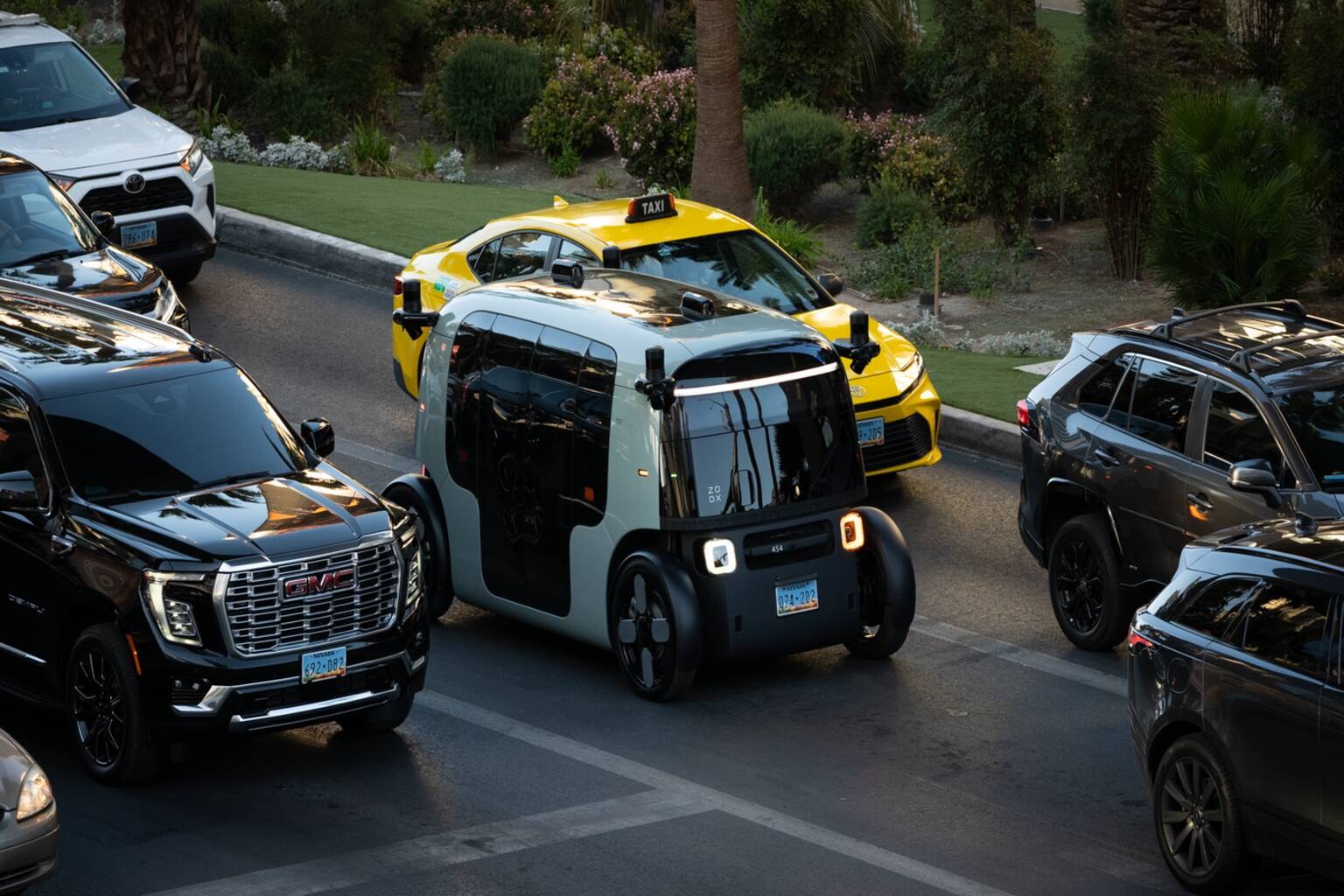
The suspension is limited to the test fleet in Atlanta. Zoox’s purpose-built robotaxis, which are fully electric and carry no combustion engine, are not affected, and the company continues to operate ride-hailing pilots in Las Vegas, San Francisco and other cities. The Atlanta facility has run at limited capacity while the vehicles are quarantined, according to employees.
Zoox’s approach to autonomy differs from Waymo’s in one respect that matters here. The company designed its robotaxi from scratch, with no steering wheel or pedals, but that purpose-built vehicle is not the one running the Atlanta tests. The gap between the polished robotaxi Zoox shows the public and the modified Highlanders doing the real-world data collection is where the trouble appeared.
The episode exposes a risk that rarely surfaces in public discussion of autonomous vehicles. Before a company can field electric robotaxis at scale, it tests its software on existing gasoline or hybrid cars, and those vehicles can fail in ways that have nothing to do with autonomy. A leaking exhaust system or a damaged battery is a garage problem, but it is a garage problem that belongs to a company whose entire product is safety.
Zoox is not alone in reporting test-driver injuries to OSHA. Waymo has reported similar cases, according to people familiar with the matter. Analysts said the incidents are unlikely to change Zoox’s overall timeline but add scrutiny to a sector already under pressure to prove its safety record as it expands into new cities and courts public approval.
The reporting that surfaced the incident also points to the thin line between corporate safety claims and the daily reality of the workers who train autonomous systems. Safety drivers are paid to sit in vehicles that drive themselves, and their complaints about the vehicle itself — not the software — have now drawn the attention of federal regulators and the press.
Zoox has spent years preparing to scale. Amazon acquired the company in 2020 for about $1.3 billion, and it has since moved from a handful of test vehicles to operating robotaxis that carry paying riders. The Atlanta work, conducted with a different class of vehicle, is part of the effort to collect the driving data the software needs before wider launches. Every week the fleet is grounded is a week of data not collected.
The timing is uncomfortable for a company competing with Alphabet’s Waymo for the lead in U.S. robotaxi service. Waymo has expanded rapidly and reported its own test-driver incidents, and both companies are pushing to move from limited pilots to citywide service while regulators watch closely. A safety lapse inside the test program, even one unrelated to the driving software, becomes part of that public record.
For Zoox, the immediate task is to find what produced the odor and to prove the fleet is safe to run again. The larger one is convincing regulators and the public that a company whose product is safety can manage risk inside its own garages.