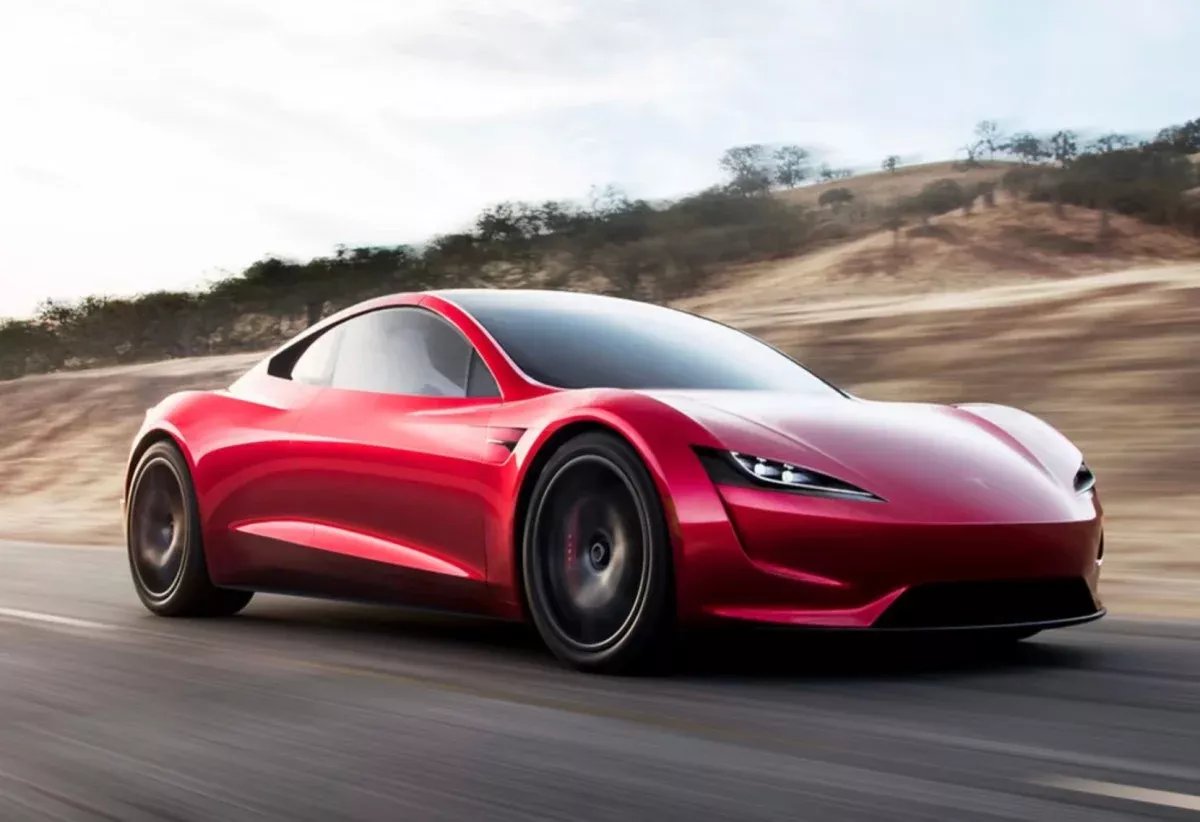
The Tesla Roadster has been delayed by engineering, by supply chains, and by a company that keeps finding more pressing things to build. This week, the culprit was simpler: the weather.
TechCrunch reported on September 28 that Tesla has postponed the reveal event for the second-generation Roadster, citing poor conditions. The company did not immediately name a new date. For a car that has been waiting nearly a decade, another slip barely registers, but it lands at an awkward moment for a project that has spent years being pushed down the list.
The car has been waiting a long time. In November 2017, Elon Musk drove a prototype out of the back of a semi trailer at a Tesla event, promising a $200,000 base price, a 0-to-60 time under two seconds, and deliveries in 2020. None of that happened on schedule. The delivery target slid to 2021, then 2022, then later still. At a shareholder meeting in November 2025, Musk said production would begin in 2027 or 2028, and the first 1,000 Founder’s Series cars were priced at $250,000, with a $50,000 deposit required to reserve one.
The name reaches back to Tesla’s founding product. The original Roadster, built on a Lotus Elise chassis, went on sale in 2008 and sold about 2,400 units before it was retired, a proof of concept for a company that had not yet built a factory line. Musk has said a SpaceX package using cold-gas thrusters would one day make the new car quicker still, a promise that has aged as poorly as the delivery date itself.
Musk has long framed the Roadster as proof of what the company’s engineers can do, the car that would embarrass the Italian supercar makers and set a benchmark for electric performance. In 2019 he said the base model would reach 60 miles an hour in 2.1 seconds, and the promises have only grown from there. The Roadster was never meant to be a volume car; it was meant to be the one that made people pay attention.
That job now belongs to other products. Tesla’s capital and its public narrative are pointed at autonomous driving, at humanoid robots and at the AI systems that underpin the valuation investors have assigned to the stock. A six-figure sports car that would sell a few thousand units a year does not move that story, and analysts said the repeated postponement says less about the car than about where it sits on the priority list.
The supercar field the Roadster was meant to disrupt has not stood still. Rimac, the Croatian maker, and a line of Chinese electric startups have shipped the kind of headline-grabbing electric performance the Roadster once promised, and the legacy marques Musk once taunted now sell hybrids and electric cars of their own. Every year the Roadster waits, the gap between its promised numbers and the cars already on the road narrows.
Musk has been candid about the car’s place in the hierarchy. At a shareholder meeting in 2023, he called the Roadster “the cherry on the icing on the cake,” adding that it would “definitely not be a huge contributor to revenue.” It was an offhand remark, but it described the situation precisely: a car whose job is to look good at the top of the range, not to carry the company.
For a company whose valuation rests on an AI story, the logic is plain. The Roadster is a halo product with no halo left to lend. Tesla no longer needs a $200,000 supercar to make people believe it can build an electric car; it needs to keep the robotaxi and the humanoid robot on schedule, because those are the bets the market has already priced in. A $200,000 car with a waiting list of enthusiasts is a rounding error in a business that delivers millions of vehicles.
None of this changes the calculation for the customers who have waited. Thousands of buyers handed over deposits years ago for a car that has now outlasted several product cycles, and Tesla has not returned the money. The deposit was always a bet on Musk, and the bet has quietly become a test of patience.
The weather delay is trivial on its own. What it reveals is not. A reveal event that keeps slipping because a company would rather talk about robots than about a sports car is a signal about what the company now thinks it is. The Roadster was once the promise; now it is the thing that waits.
What remains open is whether it ever ships. Musk has set and missed more dates for the Roadster than for almost any other product, and each delay has been absorbed without much consequence. A car that can be postponed this many times is a car the company can afford to postpone again. The question is whether the people who put down $50,000 in 2017 feel the same way.